Ecommerce SEO Strategy: A Practical Guide for UK SMEs
The UK isn't a market where ecommerce SEO can sit on the marketing wishlist. In June 2026, internet sales represented 29.4% of all retail spending in Great Britain, the highest proportion since April 2021, while online spending rose 3.8% quarter on quarter and 11.7% year on year, according to the Office for National Statistics retail sales bulletin. For a Dorset retailer, that means search visibility is tied directly to a retail channel carrying nearly one-third of total demand.
A practical ecommerce SEO strategy must therefore do more than chase blue-link rankings. It needs to make products discoverable, categories easy to understand, filters technically controlled, and landing pages persuasive when shoppers arrive through Google, social platforms or AI-assisted journeys.
Table of Contents
- Why ecommerce SEO strategy matters more than ever in the UK
- Building the technical foundations that everything else depends on
- Optimising product and category pages for rankings and revenue
- Content, internal linking and faceted navigation working as one system
- Local, national and international SEO choices for UK retailers
- Measuring success with KPIs that connect rankings to revenue
- Your phased ecommerce SEO roadmap and final action checklist
Why ecommerce SEO strategy matters more than ever in the UK
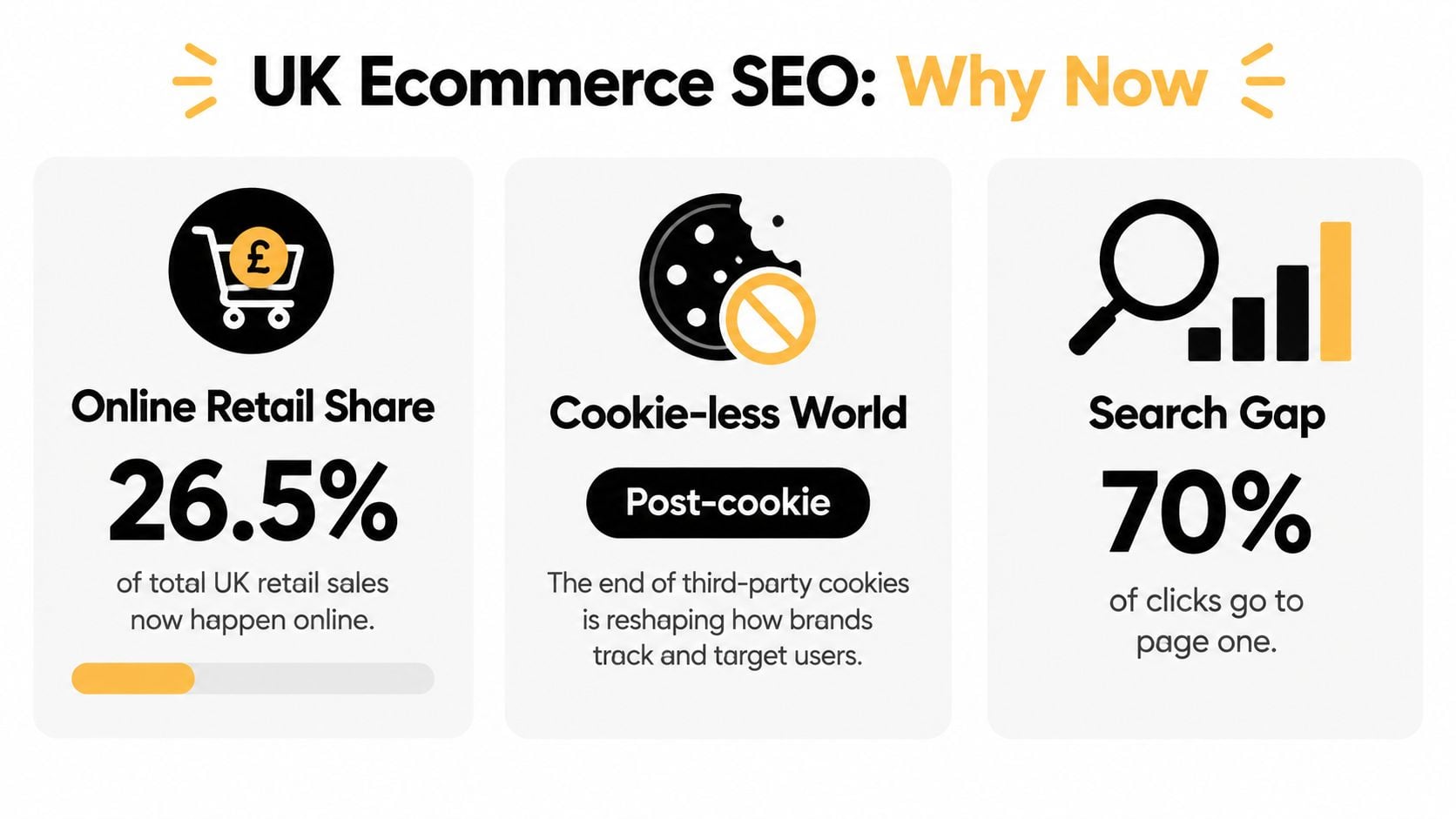
UK retail has shifted structurally online. Internet sales accounted for 27.4% of total retail sales in 2025, compared with 19.2% in 2019, according to ONS data. For a Dorset retailer, that change makes organic visibility part of the sales infrastructure. If shoppers cannot find your products online, paid campaigns and strong merchandising cannot recover every missed opportunity.
The buying audience is broad and established. A UK government-backed literature review found that 77% of UK adults bought goods or services online in 2016, compared with 53% in 2008. It also found that nearly 90% of consumers aged 55 or below had bought online during the previous 12 months. Organic search therefore supports discovery across age groups, not only among highly digital shoppers.
Commercial reality: A ranking earns its value only when the page matches the shopper's intent and makes the next action obvious.
SEO also deserves budget because it can deliver substantial qualified traffic. According to the UK ecommerce industry report, SEO generated 65,233,725 visits, representing 58.6% of total traffic across the ecommerce sites measured. The report recorded an average Lighthouse Performance score of 0.53/100, exposing the cost of treating acquisition and store quality as separate projects. Visibility cannot compensate for a slow, poorly rendered shopping experience.
Search is no longer the only discovery route. DHL reports that 63% of British shoppers have purchased through social media, while 53% expect social media to become their primary shopping destination by 2030, in its UK ecommerce trends coverage. The same source notes that 59.4% of internet users research products and brands before buying. Category pages, product details, reviews and supporting content must therefore reinforce one another across search, social discovery and AI-assisted journeys. Ranking gets attention. Relevance, trust and a clear route to purchase generate revenue.
Building the technical foundations that everything else depends on
Technical SEO comes before content production. If search engines can't reliably crawl, interpret and index the right URLs, rewriting product copy won't solve the underlying problem. A useful technical review should follow a strict order.
Start with crawl and indexation
Audit robots.txt, XML sitemaps, status codes, canonicals, redirects and parameter behaviour first. Split sitemaps by template type, such as products, categories and editorial pages, so Search Console data is easier to interpret. Keep canonical tags self-referencing on the preferred product and category URLs, and don't canonicalise distinct landing pages merely because they share products.
Faceted navigation needs a documented policy. A size and colour combination may deserve an indexable landing page for an apparel retailer, while sorting, price ranges and arbitrary combinations usually shouldn't create competing URLs. Don't allow every filter click to generate crawlable pages with duplicate titles and little unique value.
Make the catalogue easy to reach
Use a shallow, logical hierarchy with clear department, category, subcategory and product relationships. Breadcrumbs should reflect that structure, even when a product belongs to more than one merchandising collection. Give each product one preferred canonical URL, then use internal links to expose it from relevant categories, buying guides and related-product modules.
Out-of-stock products need rules rather than ad hoc deletions. Keep temporarily unavailable products live with accurate stock information and alternatives. For permanently discontinued products, retain useful demand pages or redirect them only to an equivalent replacement. Remove thin, irrelevant URLs rather than sending every expired SKU to the homepage.
Protect experience and machine readability
Product imagery, filter scripts, reviews and personalisation tools can make ecommerce templates heavy. Test representative category and product pages on mobile, then fix image sizing, unused scripts, layout shifts and slow interactions. HTTPS and HSTS are basic requirements, not differentiators.
Use structured data that matches visible information. Product, Offer, BreadcrumbList and MerchantReturnPolicy markup can help systems understand the catalogue, pricing, navigation and returns terms. Validate every template rather than assuming a plugin has implemented everything correctly.
For a deeper explanation of crawlability, indexation and technical priorities, use this technical SEO guide.
| Foundation layer | What to do | Common SME pitfall |
|---|---|---|
| Crawl and indexation | Control parameters, sitemaps, canonicals, redirects and low-value filters | Blocking useful pages or indexing every filter combination |
| Site architecture | Build clear category paths, breadcrumbs and canonical product URLs | Burying priority products behind JavaScript-only navigation |
| Page experience | Optimise images, scripts, interactions and layout stability | Testing only the homepage while product templates remain slow |
| Structured data | Deploy accurate Product, Offer, BreadcrumbList and returns markup | Marking up information that doesn't appear visibly on the page |
Optimising product and category pages for rankings and revenue
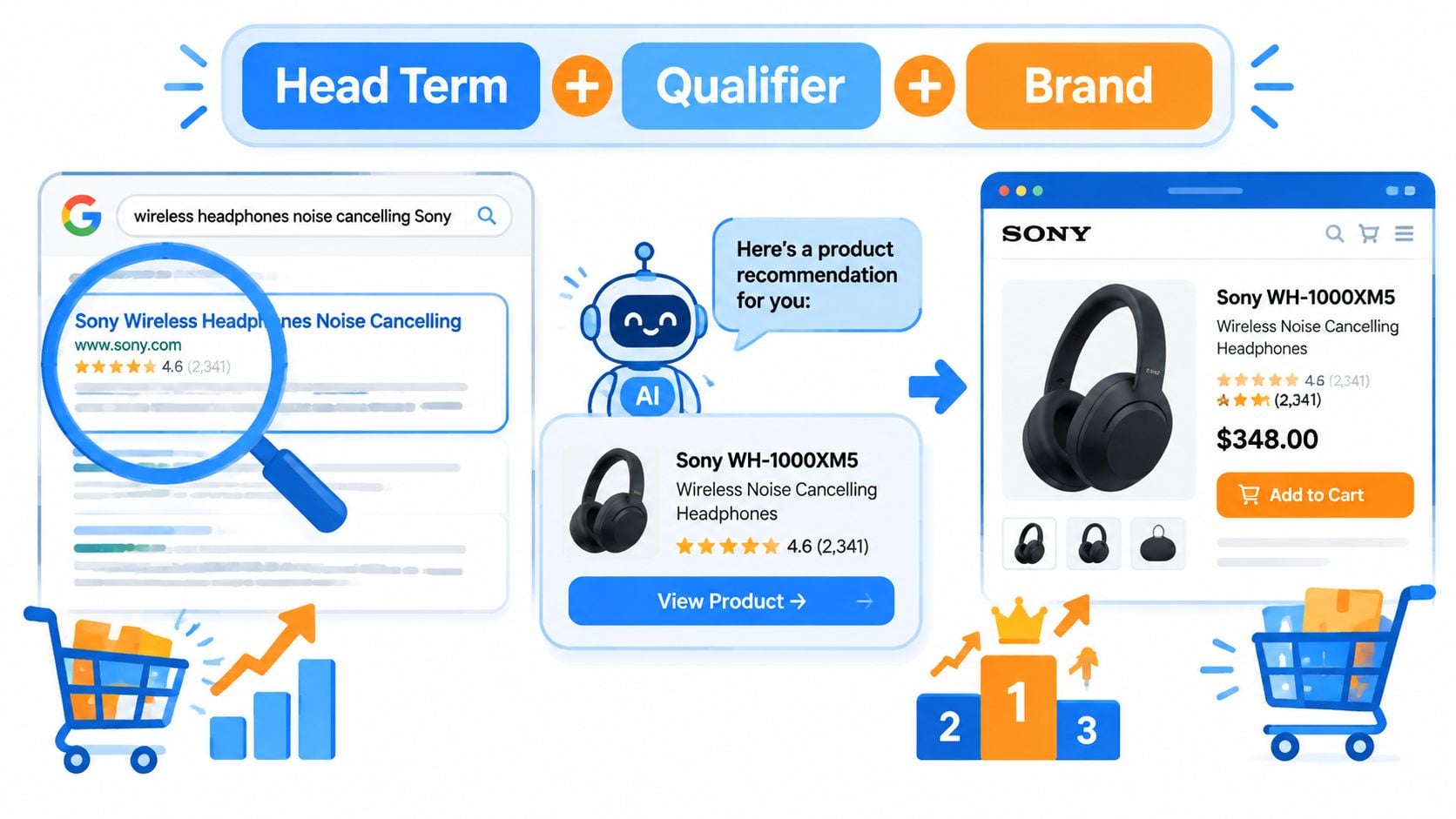
A category page should behave like a knowledgeable shop assistant, not a thin product grid. Lead the title tag with the commercial head term, then add a useful qualifier such as material, audience, location or delivery promise. Write the meta description as sales copy, using the information that removes hesitation, such as fit, stock, shipping or returns.
The H1 should match the primary intent, while subheadings organise buying criteria, related categories, sizing, compatibility and frequently asked questions. Keep the opening copy concise, but give the page enough useful detail to explain what belongs in the category and how shoppers should choose.
Give product pages information competitors can't copy
A product description should explain use, fit, specifications, limitations and practical benefits. Manufacturer copy can provide facts, but it rarely answers the questions that distinguish one retailer from another. Add original photography, dimensions, compatibility details, care instructions, delivery information and clear returns guidance.
Structured data should reflect the visible page. Product, Offer, AggregateRating and Review markup can clarify identity, price, availability and customer feedback when implemented accurately. Q&A and verified reviews add the language real shoppers use, which can strengthen relevance while resolving purchase objections.
For practical guidance on turning specifications into persuasive copy, see how to write product descriptions that sell.
A useful category-page example is a Dorset outdoor retailer targeting a transactional query for waterproof walking jackets. A weak page might show products with generic manufacturer names, while a stronger page leads with the category term, explains waterproof ratings and fit, links to women's, men's and lightweight subcategories, and answers delivery and returns questions. The stronger page gives both search engines and shoppers clearer reasons to choose it.
AI-assisted discovery raises the same standard. Clear headings, visible facts, consistent product data and concise answers give systems more reliable material to interpret. For fashion retailers creating richer visual product assets, this resource on AI model outfit ecommerce may help connect product presentation with modern discovery journeys.
The product page should then support the decision with reviews, sizing guidance and related items. A shopper considering walking boots may need socks, insoles or wide-fit alternatives, but those links should be relevant, not a random carousel.
Content, internal linking and faceted navigation working as one system
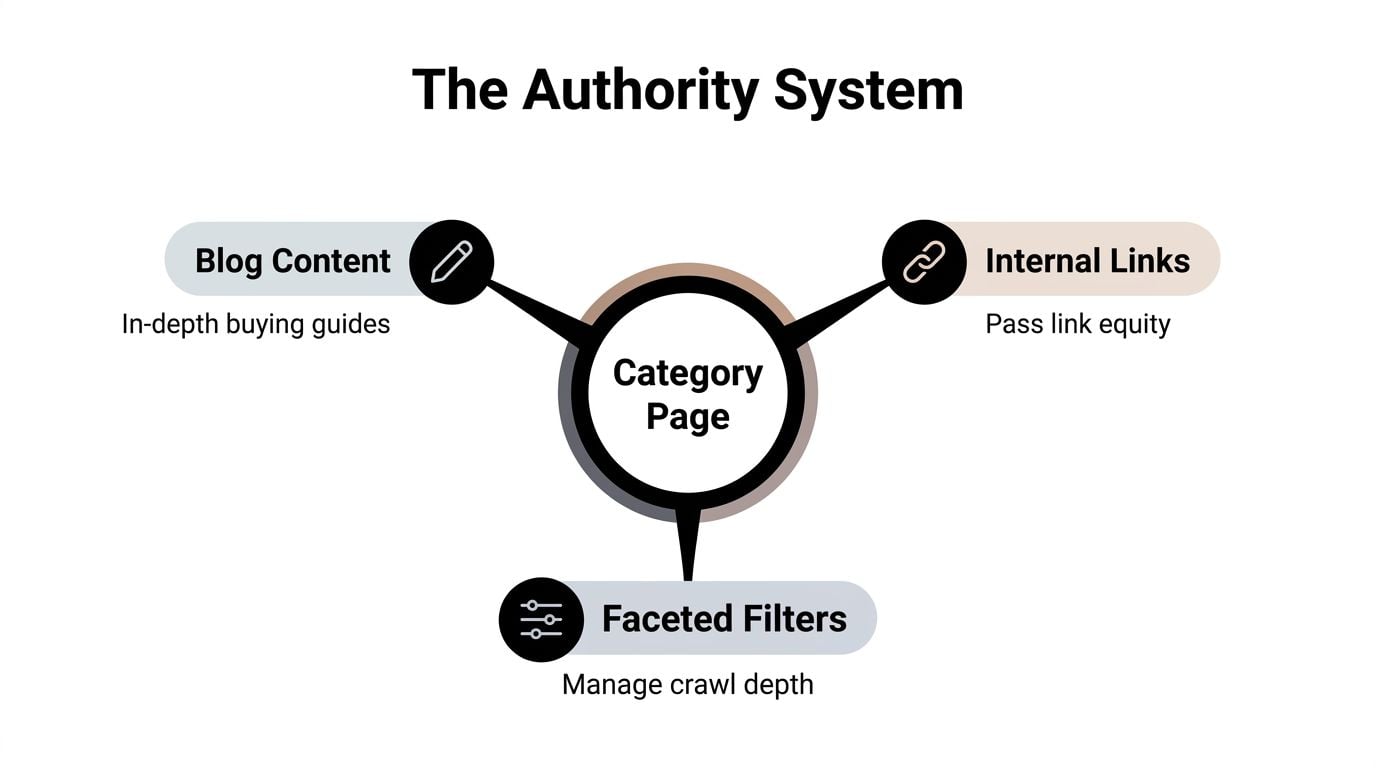
Content, internal links and filters should be planned as a single authority system. Treat the main category page as the commercial hub, product pages as conversion spokes, and guides or comparison articles as supporting routes that answer questions before purchase.
A guide about choosing wide-fit trainers should link to the relevant category with descriptive anchor text. The category should link back to the guide where fit is a meaningful buying concern. Product pages can then connect to wide-fit alternatives, care advice and compatible accessories. This creates useful paths for people and search crawlers instead of leaving editorial content isolated from revenue pages.
Use filters selectively
Faceted navigation is where many SMEs leak authority into thin URLs. Choose indexable combinations only when they represent a real search demand and can support unique titles, headings, copy and product selection. For apparel, size and colour may create useful landing pages in some categories. Price sorting, arbitrary multi-filter combinations and empty result pages generally need tighter controls.
Use canonicalisation, noindex directives, robots controls and internal-link decisions consistently. The correct choice depends on how the platform generates URLs and whether the filtered page has a genuine job. A noindex tag alone isn't a complete crawl strategy if thousands of low-value URLs remain heavily linked.
For a mid-sized catalogue, map the structure before commissioning articles. Identify the commercial categories that deserve the strongest links, then create supporting content around use cases, comparisons, sizing, installation and care. The editorial plan should follow stock, margin and customer questions, not a disconnected blog calendar.
Authority rule: Every important article should have a clear commercial destination, and every important category should have supporting evidence that helps shoppers choose.
A clear content strategy framework helps the team decide which pages deserve investment. Add contextual cross-sell modules with intent-specific anchors, such as “wide-fit walking boots” or “replacement filters for this model”. That improves discovery without forcing irrelevant internal links into the page.
Local, national and international SEO choices for UK retailers
A retailer shipping from Dorset to customers across the UK needs a national ecommerce footprint, not dozens of weak town pages. Use a UK-targeted folder or domain structure, GBP currency, UK spelling, clear delivery coverage and a self-referencing hreflang setup. National category pages should carry the main organic investment, supported by useful guides and credible links.
Local SEO matters when the business has a real shop, depot, showroom or trade counter. Claim each genuine location in Google Business Profile, keep name, address and phone details consistent, and include accurate opening hours, categories, products and photographs. Don't create city pages filled with interchangeable copy. They rarely help shoppers and can dilute the site's quality.
International expansion should follow commercial readiness. Build localised folders only when the business can support regional pricing, delivery, returns, sizing, stock information and customer reviews. Translate the shopping experience, not just the metadata, then implement reciprocal hreflang between equivalent pages.
| Tactic | Local SEO | National SEO | International SEO |
|---|---|---|---|
| Primary focus | Genuine premises and local intent | Category demand across the UK | Market-specific commercial journeys |
| Essential signals | GBP, consistent NAP, opening hours | UK language, architecture, content and links | Local pricing, delivery, returns and hreflang |
| Content approach | Location-specific services and stock | Buying guides and category support | Fully localised product and support content |
| Resource demand | Ongoing listing updates and review management | Continuous technical, content and authority work | Additional development, translation and market operations |
A genuine local presence benefits from a structured local SEO approach for businesses, but don't let location work distract from national product discovery when most orders are delivered rather than collected.
Measuring success with KPIs that connect rankings to revenue
Rankings are diagnostic signals, not the final score. A page moving upwards can still lose money if the snippet attracts the wrong intent, the product is unavailable, or the landing experience creates friction. Report visibility, engagement, commercial outcomes and efficiency together.
Start with Search Console for impressions, clicks, click-through rate and non-brand query movement. Combine it with GA4 landing-page behaviour, assisted conversions, ecommerce revenue and product-level performance. Segment by category, product, brand and intent so a strong branded result doesn't hide weak non-brand acquisition.
Build one commercial reporting view
Your dashboard should answer whether organic work is producing profitable demand this month. Track:
- Visibility: Impressions and share of voice for branded and non-branded queries.
- Engagement: Organic click-through rate, landing-page engagement and movement between category and product pages.
- Commercial outcome: Assisted conversions, last-click conversions, organic revenue and revenue per 1,000 organic sessions.
- Efficiency: Cost per acquired organic customer compared with the paid-search cost of reaching similar demand.
UK ecommerce benchmarks show why context matters. One benchmark reports an average brand ranking for 1,783 keywords, generating 9,625 organic monthly visits, with an estimated paid-search replacement cost of £11,790.58 per month. The same ecommerce SEO benchmark reports organic conversion rates between 2.99% and 4.4% across the period from November 2023 to October 2024.
The benchmark also found that 90% of the lowest-performing ecommerce sites had UX issues, while the average Lighthouse score was 67/100. That reinforces a practical point: if rankings are healthy but revenue is weak, inspect speed, reviews, trust signals, sizing, delivery and the add-to-basket journey before commissioning more content.
| KPI layer | Metric | Healthy UK benchmark | Revenue link |
|---|---|---|---|
| Visibility | Non-brand impressions and clicks | Compare against your own category baseline | Shows whether new demand is entering the funnel |
| Engagement | Organic CTR and landing-page interaction | Segment by SERP feature and intent | Identifies weak snippets and mismatched pages |
| Commercial | Organic conversion and assisted conversions | Use the benchmark range as context, not a promise | Connects visits to orders and revenue |
| Efficiency | Organic acquisition cost | Compare delivery cost with paid alternatives | Shows whether SEO deserves more investment |
For implementation and reporting support, use a structured website analytics approach rather than relying on position screenshots.
Your phased ecommerce SEO roadmap and final action checklist
A Dorset retailer doesn't need a large in-house department to make progress. It needs a sequence that prevents the team from publishing content onto a technically confused store.
Days 1 to 90
Begin with a crawl of the full site and separate findings by template. Identify blocked categories, duplicate product URLs, faceted index bloat, broken internal links, redirect chains, soft 404s and sitemap mismatches. Check mobile performance on representative product and category pages, not only the homepage.
Set canonical rules before making large-scale metadata changes. Then deploy accurate Product, Offer, BreadcrumbList and returns markup on priority templates, starting with commercially important products. Rewrite category title tags, meta descriptions, H1s and opening copy where intent is already clear.
The first quarter should produce a clean technical baseline and visible improvements to priority landing pages. Don't spend the budget on hundreds of blog articles while important product URLs remain slow, duplicated or difficult to crawl.
Days 91 to 180
Build the content and linking system around commercial categories. Produce buying guides, comparisons, fit advice, care information and compatibility content that answer real customer questions. Each piece needs a planned route to a category or product page, while category pages should link to the most useful supporting resources.
Improve product detail with original descriptions, specifications, reviews, Q&A, delivery information and related products. If the business has physical premises, update Google Business Profile listings and connect them to accurate location pages. Start a review acquisition process that follows platform and customer-consent requirements.
Days 181 to 365
Once the foundations are stable, invest in authority. Digital PR, supplier partnerships, useful tools, original research and linkable buying resources can strengthen priority categories. Consider international folders only when margins, fulfilment, returns and customer support can sustain the additional complexity.
Run CRO tests on organic landing pages. Test review placement, product-grid ordering, trust content, size guidance, shipping clarity and add-to-basket elements, while monitoring organic revenue rather than isolated conversion events.
Final prioritised checklist
| Action | Impact | Effort |
|---|---|---|
| Fix indexation and faceted-navigation waste | High | Medium |
| Establish canonical product and category rules | High | Medium |
| Improve mobile template performance | High | High |
| Rewrite priority category titles and descriptions | High | Low |
| Add accurate product and offer structured data | High | Medium |
| Strengthen product descriptions and specifications | High | Medium |
| Build category-to-product internal links | High | Medium |
| Add useful reviews, Q&A and sizing content | Medium | Medium |
| Create buying guides linked to commercial hubs | Medium | Medium |
| Improve Google Business Profile for genuine locations | Medium | Low |
| Earn links through digital PR and useful assets | Medium | High |
| Test organic landing pages for conversion friction | High | Medium |
| Expand internationally with localised infrastructure | Medium | High |
The sequence is straightforward. Fix crawlability first, improve template experience second, strengthen commercial pages third, then scale content and authority. Measure every stage against organic revenue, assisted conversions and the quality of customers attracted, not just ranking movement.
DesignStack can help Dorset and UK retailers plan SEO structure into a responsive WordPress or WooCommerce build, including page titles, headings, sitemaps, readable URLs and product-focused schema. Visit DesignStack to discuss a conversion-focused ecommerce website, technical foundations and ongoing support for organic growth.