


Website Traffic Increase: A Practical Playbook for UK SMEs
- The Traffic Reality Most UK Small Businesses Face
- Why UK Consumer Behaviour Sets the Rules
- The 7-Day Quick-Win Audit for Your Existing Site
- On-Page, Technical and Local SEO Working Together
- Building a Content Engine a Small Team Can Actually Run
- Diversifying Beyond Google Without Spreading Too Thin
- Measuring What Matters and Ignoring the Vanity
Table of Contents
- The Traffic Reality Most UK Small Businesses Face
- Why UK Consumer Behaviour Sets the Rules
- The 7-Day Quick-Win Audit for Your Existing Site
- On-Page, Technical and Local SEO Working Together
- Building a Content Engine a Small Team Can Actually Run
- Diversifying Beyond Google Without Spreading Too Thin
- Measuring What Matters and Ignoring the Vanity
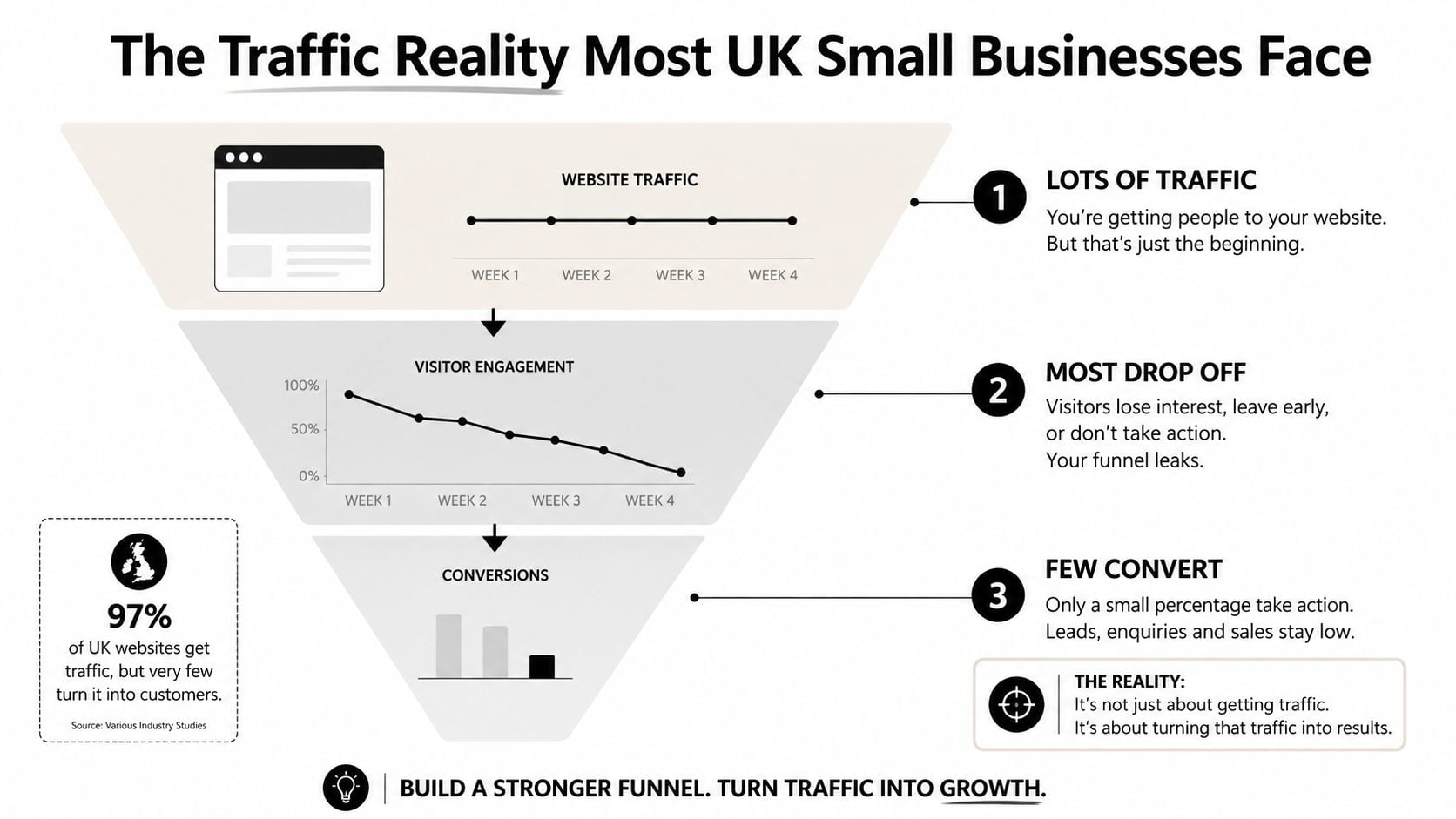
The Traffic Reality Most UK Small Businesses Face
You've got a WordPress site, a few decent photos, and maybe a service page that sounds better than the old one. The graph still won't move much, because traffic doesn't improve just because a site looks newer. It improves when the site starts answering real searches, convincing real visitors, and removing friction before someone gives up.
Qualified visits beat raw visits every time
A lot of owners still chase “more visitors” as if bigger is always better. It isn't. Ten extra visits from people looking for the wrong thing are worthless next to two enquiries from someone already ready to buy, and that's why a website traffic increase should be judged by quality first.
That's also why the usual channel-first thinking falls apart. If you obsess over social posts or low-value clicks, you can make the graph go up while the sales line stays flat. The better lens is simple, which pages attract intent, which pages move people towards contact, and which pages just create noise.
Practical rule: if a page brings visits but no calls, no form fills, and no booking starts, it's not doing its job.
Three phases keep the work manageable
Use a three-phase plan instead of a random checklist. Quick wins clean up the current site, compounding growth builds the pages and content that keep earning visits, and measurement tells you whether the traffic is useful.
That structure matters because SEO isn't a same-week fix. Some changes can move clicks quickly, especially on pages that already have impressions, but the meaningful gains come from steady work across search, page quality, and local relevance. If you want a candid benchmark on whether SEO is worth the spend for a small business, the question is less about the channel and more about whether the site can turn attention into enquiries, which is exactly the point made in this SEO value guide for small businesses.
The key trade-off is this. A site can be busy and still be underperforming. Or it can have modest traffic and still outperform because the visitors are closer to action. Pick the second problem to solve.
Why UK Consumer Behaviour Sets the Rules
A UK customer does not browse like a vanity metric. They compare on a phone in a hurry, check whether the site feels local and credible, then decide whether to call, fill in a form, or leave. That means traffic growth is not just a marketing task, it is a business problem shaped by mobile intent, local search behaviour, and how quickly your site gets to the point.
The practical implication is straightforward. If people are used to buying online and moving fast, your site has to do the same. Businesses that win are the ones that make comparison easy, reduce doubt, and give visitors a clear next step without making them work for it.
Why Mobile Intent is the Deciding Factor
Mobile is the filter that matters first. Most UK visits now come from phones, so a cramped layout, slow load, or fiddly navigation cuts off a large chunk of demand before anyone gets to the offer. The DesigniScope mobile traffic analysis underlines the point, and the lesson for owners is simple, design for the screen people use.
Mobile-first UX is not a style choice. It is a conversion decision. A page with tight copy, clear buttons, fast loading, and one obvious action will beat a prettier desktop layout that makes a phone user think twice. On a small-business budget, that is where the money should go first.
A lot of traffic advice treats mobile as a technical box to tick. In practice, mobile decides whether the visit had any value at all.
If you want a website traffic increase in the UK, build for the device people are already holding. Use tap-friendly calls to action, short forms, readable sections, and a layout that does not punish someone arriving from search on a phone. That is what closes the gap between a visit and an enquiry.
Good traffic strategy also depends on how the site is planned. A clear content strategy framework helps you decide which pages deserve attention, which ones support the sale, and which ones should be cut back so they stop wasting clicks.
You also need to think beyond a single channel. The BlitzReels repurposing tips approach is useful here because it shows how one core piece of work can be reshaped without turning the site into a random pile of posts. That matters for UK firms that need steady output from a small team, not a content factory they cannot maintain.
The 7-Day Quick-Win Audit for Your Existing Site
A good first week isn't glamorous. It's mostly unsexy housekeeping, but it pays for itself because it clears the junk that stops search engines and users from trusting the site. If you do nothing else this month, do this audit and hand the findings to whoever maintains the site.
Start with visibility and crawl basics
Open Google Search Console and GA4 first. If Search Console isn't connected, you can't reliably see which pages are being indexed or which queries are already sending impressions. If GA4 isn't tracking form submits, phone clicks, or booking starts, you're staring at traffic with no sense of what it did.
Then check for obvious crawl or indexing problems. Look for pages that should rank but aren't being indexed, pages with broken internal links, and service pages that are buried too deep in the site structure. If a page matters commercially, it should be easy for both people and bots to reach.
Fix the page signals that shape clicks
Titles, meta descriptions, H1s, and image alt text are still the basics because they tell both users and search engines what a page is about. You don't need clever copy here, you need accuracy, specificity, and a reason to click. If your title is vague, your click-through rate will usually be vague too, and the YipSMS Inc. tips for higher click rates are a useful reminder that clear messaging wins attention.
For WordPress sites, I'd prioritise three things straight away. Use a lightweight theme, add caching, and compress images before upload. If your theme is bloated, no amount of content polish will fully offset the drag.
- Check Search Console first: Confirm indexing, inspect key pages, and look for broken coverage.
- Verify GA4 events: Track contact form submissions, click-to-call taps, and booking actions.
- Rewrite weak metadata: Make titles and descriptions match the search intent, not your internal jargon.
- Repair internal links: Push visitors from high-traffic pages towards pages that convert.
- Trim WordPress overhead: Remove unnecessary plugins, compress images, and keep the theme lean.
If you want a broader checklist for the site itself, the practical version of this work sits alongside the advice in this website SEO improvement guide. Treat this week as a triage sprint, not a renovation. By Friday, you should know exactly which pages are healthy, which ones are underperforming, and which fixes will make the next month worth the effort.
On-Page, Technical and Local SEO Working Together
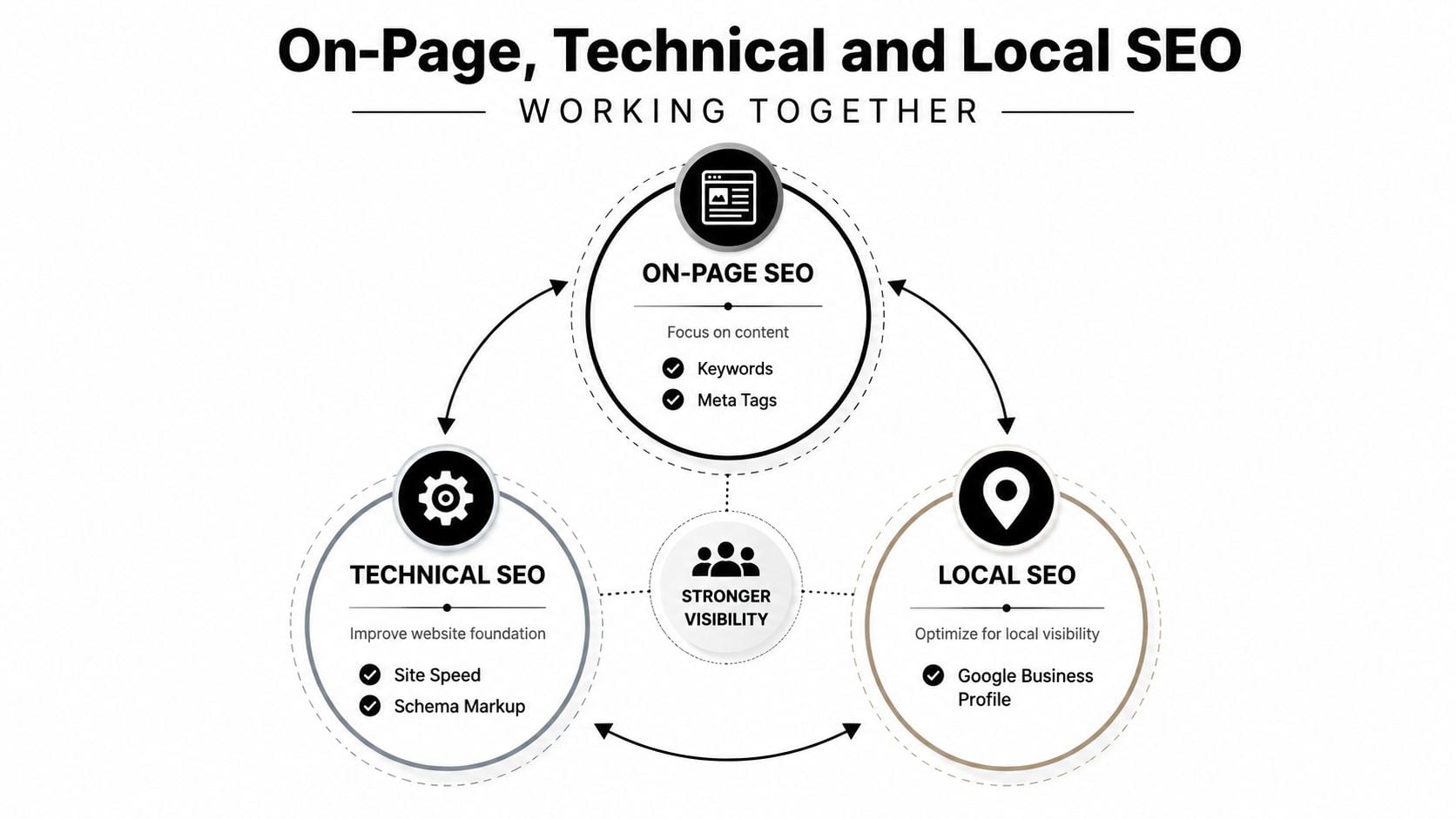
Most small businesses still separate SEO into three buckets, then wonder why the site feels disjointed. That's the wrong model. On-page SEO, technical SEO, and local SEO only work properly when the structure, content, and location signals all point in the same direction.
Build pages around commercial intent
Start with the searches that could realistically turn into business. For a Dorset electrician, that means service-led phrases, not fluffy blog topics. For a consultancy, it means problem-led service pages and sector pages that explain how the work helps a client decide.
Service pages should answer three questions fast. What do you do, who is it for, and why should the visitor contact you now? Location pages should not be cloned near-copies with different town names, because that creates thin pages with no clear value.
Use internal linking to connect the site properly. A homepage should send people to key services, services should point to relevant case studies or FAQs, and blog content should feed authority back into the money pages. If you want a practical local search framework for that structure, the approach in this local SEO guide for businesses is the right mindset, which is to make every page support a real local buying decision.
Make technical SEO invisible, not noisy
Technical SEO should disappear into the background. Fast pages, clean navigation, structured data, and sensible URL architecture make it easier for search engines to understand the site and for users to move through it. In WordPress, that usually means keeping the plugin stack tidy, using schema where it helps, and making sure the site doesn't collapse into category chaos.
Treat local SEO like proof, not decoration
Local search works when your business details look consistent and credible everywhere people check. That includes your Google Business Profile, your name, address, and phone details, reviews, and local citations. If your brand details vary wildly across listings, you create doubt, and doubt kills enquiries.
A good rule is simple. Make one strong service page per offer, one honest location page where it helps, and one local authority trail through reviews and citations. That combination does more than scattered tricks ever will.
Building a Content Engine a Small Team Can Actually Run
Content is where most traffic plans become either sustainable or exhausting. The mistake is obvious. Small teams try to publish like media companies, burn out, then stop. A better approach is to build one clear topic cluster and keep it alive long enough for it to matter.
One pillar, a few clusters, and no nonsense
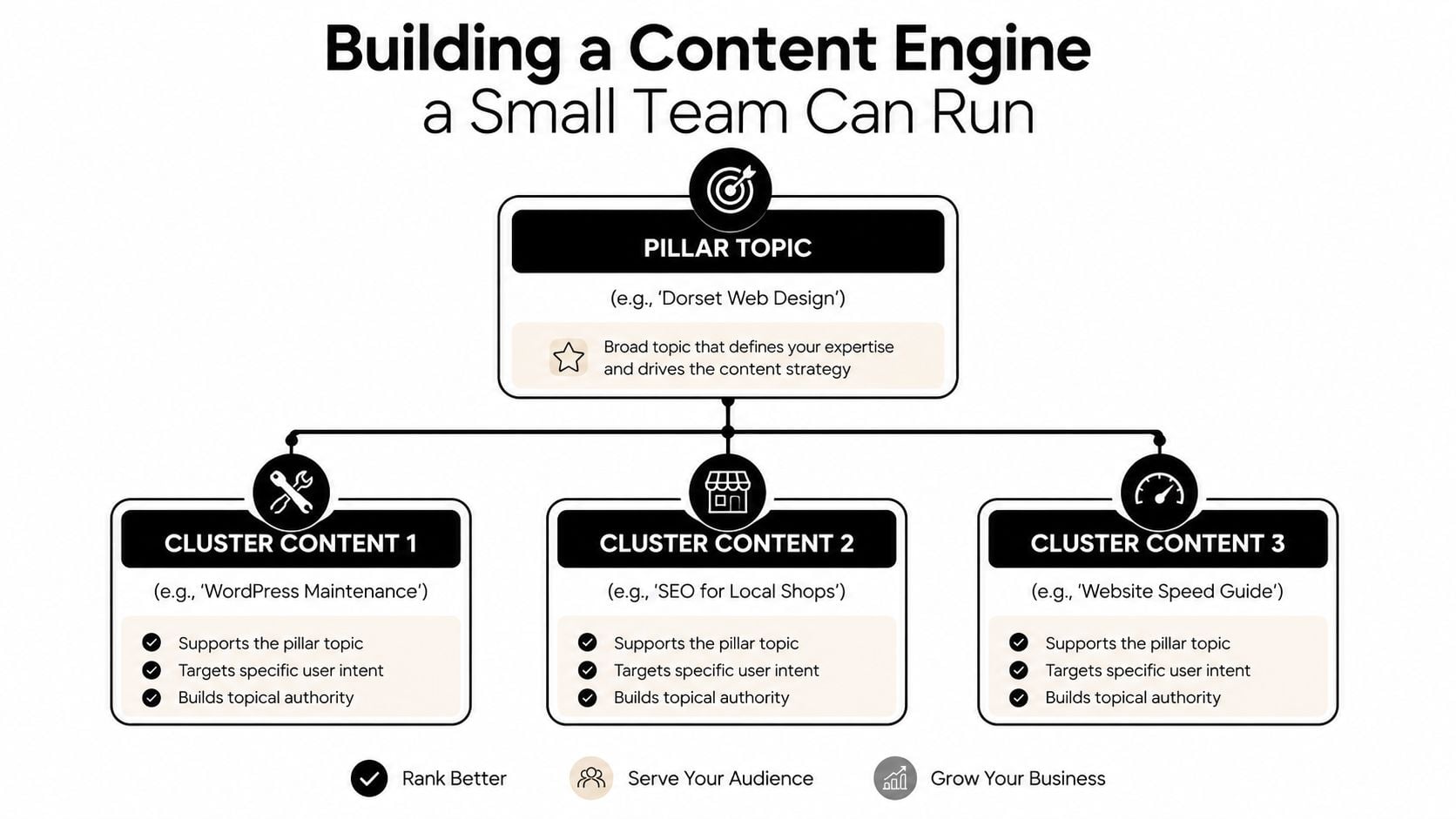
The pillar and cluster model works because it keeps the site organised. The pillar page covers the broad topic, then supporting pieces answer the specific questions people search. For a Dorset trades business, that might mean a main page on the core service, plus cluster posts on maintenance, pricing questions, and local buying considerations.
For hospitality, the pillar could be a destination or booking theme, with cluster content on events, menus, parking, and seasonal planning. For professional services, the pillar is often the service itself, and clusters cover FAQs, comparison pages, and case-study style proof. The format changes, but the logic stays the same.
The useful part is that you don't need a huge publishing machine. One pillar and one supporting update a month is enough to keep momentum if the topics are right and the pages interlink cleanly. If you want a better framework for planning that work, this content strategy guide sits nicely beside the practical approach here.
Reuse what you already have
Updating old posts is often the quickest win on an established site. Refresh the intro, tighten the headings, add missing internal links, and rework anything that no longer matches current buying intent. Then republish it as a useful update, not a cosmetic shuffle.
If you need help turning one strong article into multiple formats without wasting hours, BlitzReels' repurposing tips are a sensible reference point for turning one core idea into more than one asset. That matters because the point isn't to create more work, it's to squeeze more value out of the work you've already done.
A realistic publishing rhythm looks boring, and that's good. Keep the topics close to sales, write for search intent, and update the best pages before chasing brand new ones. That's how content starts carrying its weight.
Diversifying Beyond Google Without Spreading Too Thin
Google still matters, but depending on it alone is a bad business habit. Search visibility shifts, snippets absorb clicks, and algorithm noise can take a page from useful to invisible without warning. A resilient traffic plan needs a couple of channels that you can defend.
Pick channels by usefulness, not fashion
For most UK SMEs, email is the safest secondary channel because you own the list and you can use it to bring people back when you publish something relevant. LinkedIn is strong for professional services, because it puts your thinking in front of people who already buy through trust and familiarity. Instagram and short-form video make sense for consumer brands where the work is visual and the audience is already there.
Referral partnerships are underrated for local businesses. A complementary business often sends warmer traffic than a cold social audience, because the audience already trusts the referrer. Podcast guest spots and guest articles are useful for thought leadership, but only if the audience overlaps with your ideal buyer.
| Channel | Monthly effort | Traffic defensibility | Best for |
|---|---|---|---|
| Email newsletter | Low to medium | High | Re-engaging existing customers and warming leads |
| Medium | Medium | B2B visibility and expertise-led selling | |
| Instagram or short-form video | Medium to high | Medium | Consumer brands with visual proof |
| Referral partnerships | Medium | High | Local traffic with strong buying intent |
| Podcast or guest articles | High | Medium | Authority and selective reach |
The point isn't to do all of these. It's to choose two secondary channels that fit your buyer and your bandwidth. If a channel won't keep working after a busy month, it's not defensible enough for a small team.
A simple rule works well. Own one list, dominate one platform where your buyers already pay attention, and build one referral pathway that doesn't depend on algorithms. Everything else is a distraction until those three are stable.
Measuring What Matters and Ignoring the Vanity
Traffic reports can waste an owner's time if they're built around the wrong numbers. You don't need a wall of charts. You need a small set of signals that tell you whether the site is attracting the right people and whether those people are doing the things that matter.
Set up tracking before you trust any trend
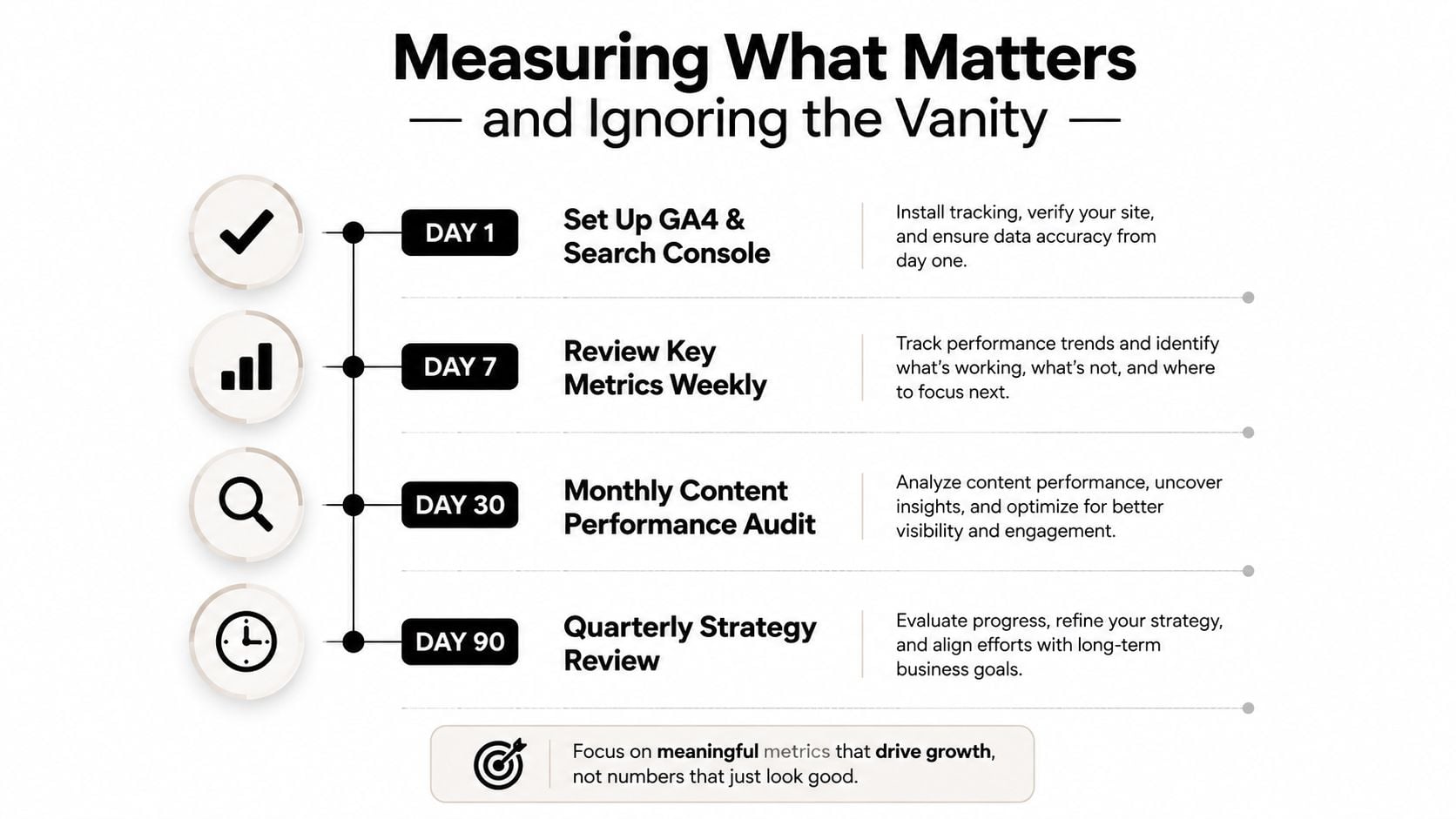
GA4 should track the actions that matter, not just pageviews. That means contact form submissions, click-to-call taps, booking starts, and other meaningful events. Search Console should be connected too, because it shows what queries are getting you seen.
The reason this matters is simple. A flat traffic line with better conversion can be a win, and a rising traffic line with weaker enquiries can be a problem. If you don't track the actions that lead to revenue, you'll end up optimising for visibility instead of business results.
Watch a small set of numbers
Forget vanity. Social shares, raw sessions, and “time on site” without context won't tell you much on their own. Watch organic sessions, engagement rate, clicks from Search Console, and conversion events from forms, calls, or bookings.
If one page brings impressions but weak clicks, fix the title and description. If a page gets traffic but no leads, fix the offer, layout, or call to action. If a page converts well and ranks modestly, give it more internal links and more supporting content. That's the kind of logic that improves a site.
Keep the review cadence simple
Run a short monthly review. Open Search Console, look at what's moving, review the pages that send enquiries, and note what changed. Then decide one thing to improve next month.
- Week 1 to 2: Fix the quick-win audit, event tracking, and obvious page problems.
- Week 3 to 6: Improve service pages, technical basics, and local SEO consistency.
- Week 7 to 10: Publish pillar content, cluster posts, and updates to older pages.
- Week 11 to 12: Add one or two non-Google channels and check whether traffic quality improved.
If you're wondering how long SEO takes, the honest answer is that it's a medium-term game, not a weekend project. If the budget is tight, fix the pages that already have demand before building new ones. If traffic drops, check tracking first, then rankings, then the site itself before panicking.
If you want a more practical way to read your numbers, this analytics guide for websites is a sensible companion to the process here. The goal is a dashboard you trust, because once you trust the numbers, you can make better decisions without guessing.
If you want a blunt, practical plan for a website traffic increase that fits a real UK business, DesignStack can help you sort the site structure, WordPress build, SEO priorities, and tracking setup without the usual fluff. Visit DesignStack if you want a Dorset team to turn this into a clear, workable plan for your site.



Leave a Reply