Website SEO Packages Compared for UK SMEs
A ranking isn't the same as a customer visit. That's the most useful starting point when comparing website SEO packages, because a proposal can promise better positions without explaining how those positions will produce enquiries or sales. Buy a defined programme of improvements, with a written fee, delivery dates and commercial measures, not a longer list of SEO tasks.
Table of Contents
- Common Website SEO Package Tiers and Prices
- Reporting Standards That Separate Real Packages
- Which Package Fits Shops Services and Retailers
- AI Search Scope Without Dropping Google Results
- Accessibility Work Packages Often Leave Out
- Checklist for Choosing a Website SEO Package
- How an Agency Package Differs and Next Steps
Common Website SEO Package Tiers and Prices
Four labels cover most agency proposals: local starter, growth, ecommerce and managed programmes. Treat the names as marketing rather than standards. One agency's growth retainer can contain less implementation than a rival's starter offer, so compare the work, the price and the delivery dates a buyer can check.
Published UK fee benchmarks are thin. The honest comparison is a written quotation against a defined scope, not a market average invented to suit the proposal. Use this table to make competing quotes comparable.
Typical UK website SEO package tiers
| Tier | Typical monthly fee | Usual deliverables | When movement shows | Best fit |
|---|---|---|---|---|
| Local starter | Quoted for a limited local scope | Audit, on-page fixes for priority service pages, Google Business Profile care, baseline report | Review after fixes are published and relevant pages are recrawled | Single-location services |
| Growth | Quoted with content and implementation separated | Technical backlog, content plan, internal links for regional non-brand queries, monthly reporting | Assess sustained query and enquiry changes against the baseline | Regional SMEs |
| Ecommerce | Quoted across templates, development and tracking | Category and product templates, performance fixes, seasonal content, conversion tracking | Publish and validate improvements before peak trading | Online retailers |
| Managed programme | Quoted with named delivery capacity and specialist work | Strategy, content, technical work, authority building, conversion tests | Judge against agreed delivery milestones and commercial reviews | Competitive national queries |
The fee should buy completed work, not recommendations alone. A local starter earns its fee when the site is technically sound and the main job is improving service relevance and local information. It becomes the wrong buy the moment every useful technical fix arrives as a separate development invoice.
A growth retainer should leave room to investigate, implement and revise. Expect a prioritised backlog, identifiable content assignments and internal links that guide visitors to the right service page. Refuse a compulsory blog quota while existing commercial pages still need work.
What makes the larger scopes worth buying
Ecommerce work needs access to templates, product information and merchandising decisions. A provider who can edit metadata yet cannot touch category navigation, duplicate URLs or product availability has a narrower remit than the package name suggests.
A managed programme should add coordination and specialist capacity, not more reports. Get content approval routes, development availability and authority-building methods in writing before signing.
Google handles the large majority of UK search activity, so it earns the largest share of measurement attention. That priority never turns rankings into guaranteed revenue: judge each tier on incremental non-brand leads, field-measured Core Web Vitals and clearly scoped AI-answer readiness, not page-one promises.
Before discussing a retainer, establish what needs repairing through a website SEO audit. Keep the resulting project separate from ongoing management.
Buying rule: A fixed-fee audit buys diagnosis and an agreed output. A monthly retainer should buy continuing execution, measurement and decisions.
Have the quotation state whether VAT, development, copywriting, paid tools and reporting meetings are included. Require delivery dates for work the agency controls, and treat search-performance forecasts as forecasts. Nobody controls when a search engine will reward an edit.
Reporting Standards That Separate Real Packages
A polished Lighthouse screenshot isn't proof that customers have a fast website. It records a laboratory test under particular conditions, not every visitor's experience on a phone, with a slow connection and competing scripts.
Field Core Web Vitals provide a stronger acceptance test. Shopify's website benchmarking guide describes Google's good thresholds as LCP of 2.5 seconds or less, INP of 200 milliseconds or less and CLS of 0.1 or less, assessed at the 75th percentile of real-user visits.
The distinction matters when a proposal includes performance work. A developer can improve a test score while leaving visitors waiting for the main image, struggling with delayed buttons or tapping content that moves.
The reporting illustration is a reminder to compare measurement conditions, not presentation quality.
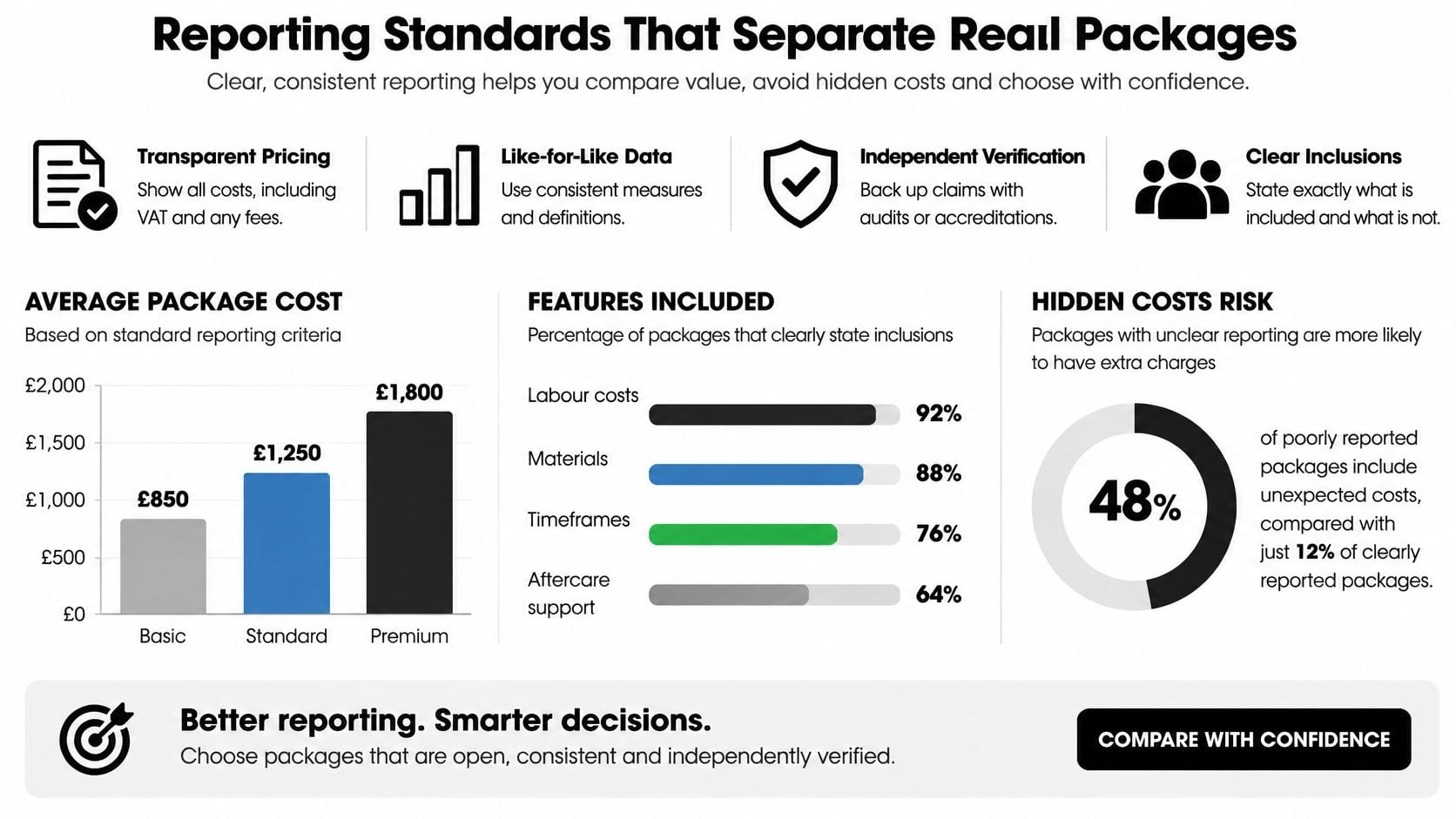
Standards a website SEO package should report
| Standard | Credible package | Weak substitute |
|---|---|---|
| Core Web Vitals | Monthly field measurements against the thresholds above, by important template and device where data is available | A Lighthouse score labelled speed optimisation |
| Search Console cuts | UK, device, brand versus non-brand, landing page and search appearance | A ranking screenshot |
| Commercial outcome | Calls, forms, bookings, purchases or memberships connected to organic acquisition | An undifferentiated promise of page-one rankings |
| Index health | Indexed pages and technical errors trended monthly | An audit PDF with nobody named to fix items |
| Local visibility | Named areas such as Weymouth, Portland and wider Dorset | A vague national traffic target |
Paste these standards into the proposal as acceptance criteria. Then add the practical details: which templates are covered, where the baseline lives and who investigates a deterioration.
Require a repair plan alongside the measurement
Use Search Console to establish the starting position, then identify whether the report relies on the Chrome User Experience Report or a separate real-user monitoring setup. Where field data is insufficient, label the gap. Don't present a laboratory result as a substitute without explanation.
The technical scope should identify likely work on:
- Server response and caching, including whether the developer can change hosting-related settings.
- Images and fonts, covering appropriate formats, loading behaviour and reserved layout space.
- JavaScript execution, including third-party tools that delay interaction.
- Template stability, especially product options, banners and checkout elements.
A homepage result doesn't establish that service pages, product pages and checkout work well. Require representative templates and separate mobile and desktop reporting wherever the available data supports it.
Finally, check that the analytics setup records successful actions rather than button clicks alone. A form submission event shouldn't fire merely because someone pressed send on an invalid form. A website analytics plan should define each event and its validation method.
Without these measurement conditions and a named implementation owner, a speed optimisation package cannot be compared fairly with a technically managed retainer.
Which Package Fits Shops Services and Retailers
Say a Weymouth electrician wants more enquiries from nearby homeowners. The site already explains the main services, but its location information is inconsistent and visitors struggle to find the enquiry form. A local starter is the sensible starting point, provided it includes publishing the fixes.
The priority isn't a national library of electrical advice. It's accurate Google Business Profile information, useful service pages, clear service boundaries and a straightforward route to contact. Commission specialist content only when it answers a real customer question.
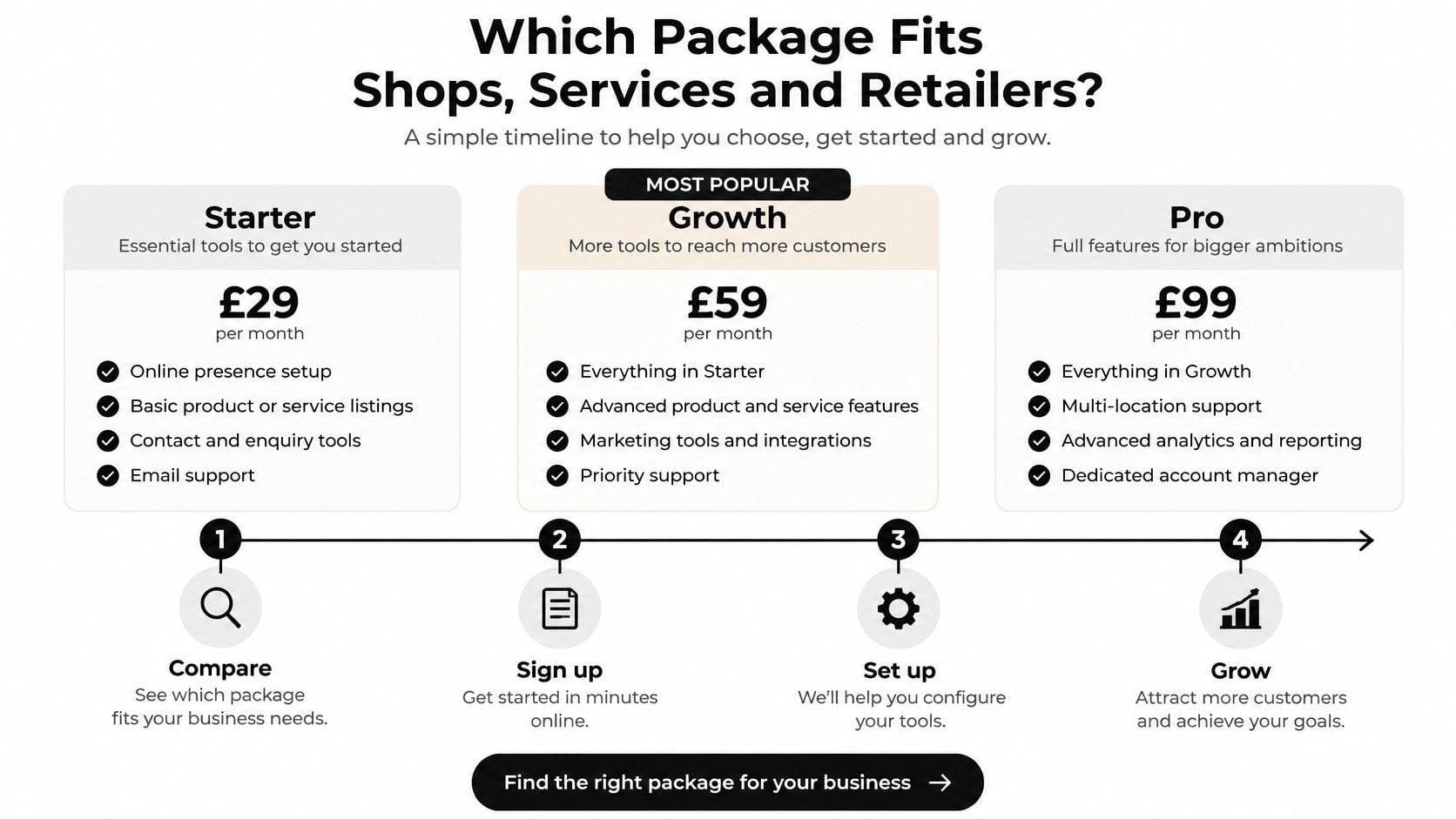
The package illustration below offers a visual way to discuss increasing scope, but the written deliverables should determine the purchase.
A regional firm needs broader coverage
Consider an accountancy practice serving businesses across Dorset. Its prospects search by service and location, and some enquiries require detailed explanations of suitability before a call.
A growth retainer makes more sense here. It should strengthen the main service pages, identify genuine regional demand and develop supporting material that helps prospective clients decide. Avoid interchangeable town pages with nothing locally useful to say.
A focused SEO approach for service businesses should connect those pages to enquiry quality. The useful question is whether suitable prospects are getting in touch, not whether every newly published article attracts traffic.
An online retailer needs a seasonal delivery plan
Now consider a gift retailer whose busiest trading period falls towards the end of the year. Category structure, product descriptions, stock handling and checkout measurement need attention before the buying rush.
The Office for National Statistics internet retail sales series records Great Britain sales of £2,199.2 million in January 2024, compared with £3,227.5 million in December 2024. Those are all-channel internet retail totals, not sales attributed to SEO.
For this retailer, the ecommerce scope should work backwards from its trading calendar. Allow time for development, product checks, tracking validation and search engines to discover the changed pages. Don't schedule a category restructure for the moment customers are already shopping.
Use the following video as a discussion aid when reviewing website priorities with the delivery team.
A community organisation may need a lighter scope than any of these examples. Clear membership information, findable events and a usable registration journey can matter more than competing nationally.
Seasonality sets a planning deadline, not a traffic guarantee. Choose the package that can deliver the necessary changes before demand arrives, with room to test them.
AI Search Scope Without Dropping Google Results
Can a fixed-price SEO package improve how a business is represented in AI answers without abandoning measurable search outcomes? Yes, through defined preparation and observation, not guaranteed inclusion.
The commercial interest is understandable. The UK government's AI Adoption Survey executive summary reports that AI adoption rose from 16% of businesses in 2025 to 32% in 2026. That describes business adoption, not the proportion of customers using AI to choose suppliers.
For a small business, the buying decision should remain practical. What will the provider inspect, change and report that isn't already covered by ordinary content or technical work?
The illustration offers a useful prompt for that scope discussion.
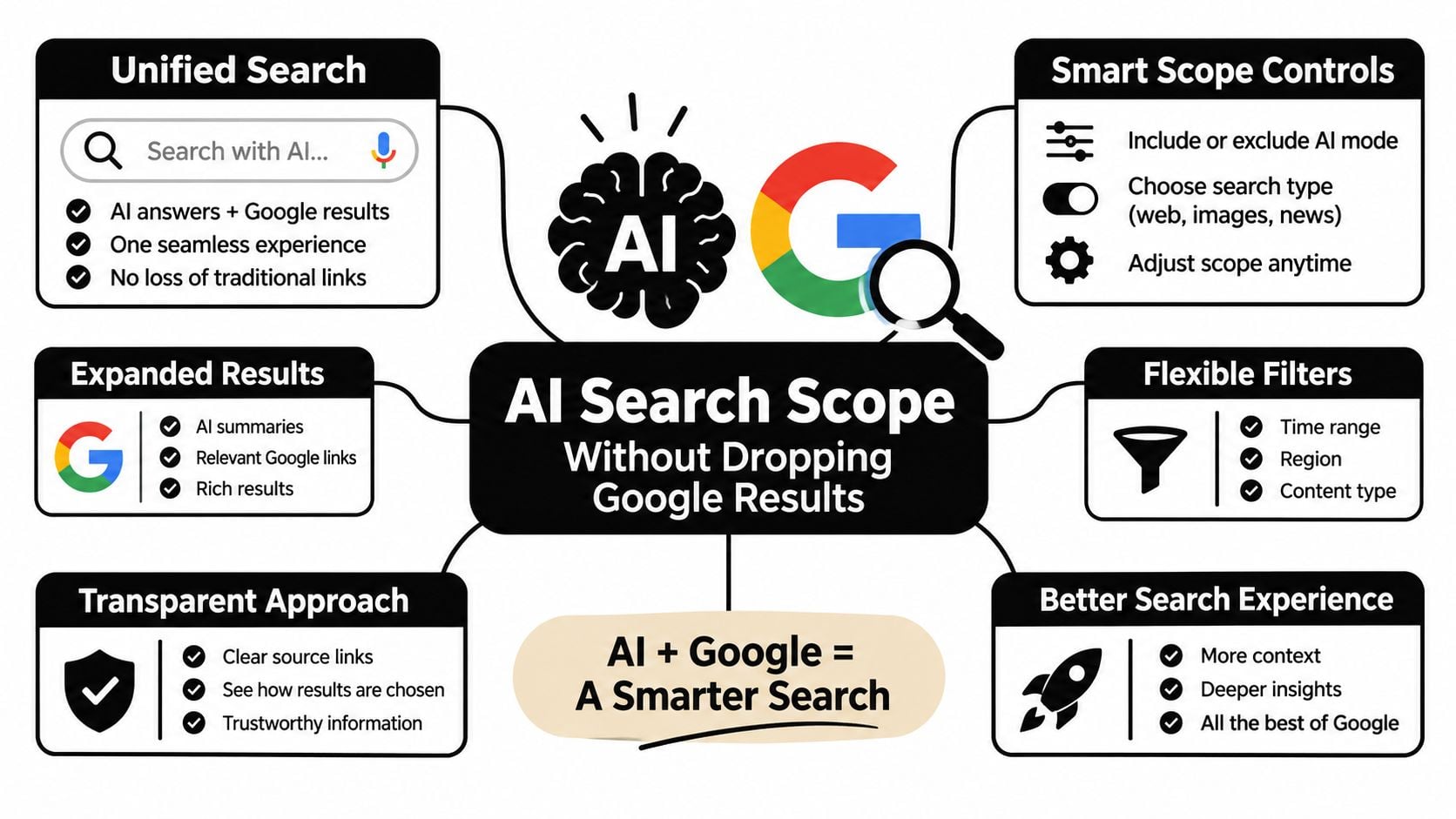
Buy a task list rather than an AI label
A credible AI-answer readiness scope should include:
- Business identity checks. Reconcile the business name, services, location and contact information across the website and reputable third-party profiles.
- Evidence-led content. Replace unsupported claims with clear descriptions, relevant experience and useful answers to customer questions.
- Structured information. Review appropriate structured data and ensure it matches visible content.
- Local credibility. Check whether service areas, reviews and genuine local relationships are described accurately.
- A documented observation log. Record the prompts, tool, observation date and whether the business was mentioned, cited or misrepresented.
LPagery's guide to optimizing content for AI Overviews is a useful resource for discussing content preparation. Treat it as a prompt for specific implementation decisions, not evidence that any supplier can secure a citation.
Keep the measurement streams separate
Search Console should continue to report conventional search performance. AI-answer observations belong in a separate log because a mention isn't equivalent to a visit, and a visit isn't equivalent to a qualified lead.
Nobody can guarantee a citation in an AI answer. The results are volatile and opaque, and the provider doesn't control their selection.
Agree what counts as completion: corrected business facts, revised service explanations, validated markup and a repeatable observation method. A vague promise to make the brand AI-ready isn't an acceptance criterion.
A content strategy for SEO should also include editorial judgement. Publishing generic answers at scale isn't a substitute for explaining what the business does, who it serves and why its information deserves trust.
Reject any tier that replaces accountable search reporting with an unmeasured claim about AI visibility. AI-answer readiness should extend the work, not excuse weaker reporting.
Accessibility Work Packages Often Leave Out
A visitor reaches your service page, understands the offer and tries to enquire. The form fields are not labelled clearly, the error message is hard to find and keyboard focus gets stuck inside a menu. Better rankings will not rescue that journey.
Put accessibility inside the delivery scope, next to crawlability and conversion paths. Otherwise the agency can report healthier visibility while buyers still cannot finish the task that brought them to the site.
Test the customer task alongside the template
An automated scanner can flag problems worth investigating. It cannot prove that someone can understand an instruction, recover after a form error or complete a confusing booking journey.
Pair the scan with a human pass through the tasks that make money or stop it:
- Find a service. Use a keyboard and check that focus stays visible and the order makes sense.
- Understand the page. Inspect heading structure, contrast, link wording and meaningful image alternatives.
- Complete an action. Test labels, required-field instructions, error recovery and confirmation messages.
- Use the mobile layout. Check menus, zoom, controls and content that appears after interaction.
Treat any website accessibility audit as a starting point only: its findings must become assigned implementation tasks. A list of failures without owners leaves you coordinating designers, developers and content editors after the invoice arrives.
Ask for the retest rule before work starts. Each fixed item needs a named template, an owner and a repeat check through the same customer task.
Prioritise barriers that stop people
Repair an unusable enquiry form before polishing a decorative image. Fix keyboard-blocking navigation before rewriting a minor footer description. Sequence work by what prevents people reaching information, asking for a quote or completing a purchase.
Accessibility can make tasks clearer for everyone. It is not a ranking shortcut, and it should not be treated as a legal-risk add-on to consider after launch.
WordPress does not remove the need for testing. An easy editor can still publish unclear headings, inaccessible controls or instructions that depend on colour alone.
Make handover practical. Editors need to write useful alternative text, preserve heading order and avoid replacing descriptive links with vague wording such as “click here”.
Judge the result through completed enquiries, successful purchases and fewer identified points of friction. Do not let anyone claim every accessibility repair produces a ranking gain. Before comparing monthly fees, establish who owns the fixes, who retests them and which customer task must now work.
Checklist for Choosing a Website SEO Package
Whito's UK SEO benchmark reporting indicates that 69.5% of Google searches ended without a click to the open web. That's a strong reason to distrust proposals that treat a prominent position as the finished result.
A business can appear in an answer feature or local result without receiving a website visit. Judge the proposed work by relevant discovery and qualified actions, with incremental non-brand leads as a central commercial measure.
Keep this checklist beside the proposal rather than relying on the sales presentation.

Require these written artefacts
A fee and scope schedule. Name the tier, recurring charge, setup work, exclusions and cancellation terms. Separate diagnosis from ongoing execution so you don't pay twice for an audit.
A page and template register. List the commercial pages, category templates or local profiles included in the opening delivery period. A promise to optimise the website is too broad to verify.
A field-performance specification. Require the Core Web Vitals acceptance criteria, covered templates, device breakdown and treatment of missing data.
A Search Console reporting specification. Include country, device, brand and non-brand queries, landing pages and search appearance. These cuts help distinguish new discovery from existing brand demand.
A conversion measurement plan. Define qualified calls, forms, bookings, purchases or memberships. Include attribution limitations, assisted conversions and an agreed method for calculating acquisition cost.
A responsibility register. Name who writes, approves, publishes, develops and verifies. Give blocked work an escalation route rather than allowing it to disappear into the next report.
An accessibility acceptance task. Include a named owner and human testing of the main customer journey, not merely a scanner export.
An AI-answer readiness output. Specify the factual audit, content changes and observation log. Exclude promises of guaranteed citations.
A commercial review agreement. Set a review point and define how non-brand lead quality, conversion rate and delivery progress will influence the next scope.
Make the signing decision straightforward
A proposal missing field measurement, segmented search reporting or conversion definitions isn't ready to sign. Return it for clarification rather than hoping those details will appear after onboarding.
For a Dorset firm, define the actual trading area. Weymouth, Portland and wider Dorset are useful reporting boundaries only if they reflect where the business can serve customers profitably.
Keep the review commercially honest. Exclude spam enquiries, distinguish existing customers from new prospects where possible, and record changes in capacity or availability that affect whether leads turn into work.
How an Agency Package Differs and Next Steps
An agency package is useful when the team can connect the website, content and measurement. It's less useful when the SEO contact recommends changes that nobody has the access, budget or responsibility to implement.
The difference isn't the agency label. It's whether the proposed team can take a problem from diagnosis through to a verified change.
Look for joined-up decisions
Suppose a service page attracts relevant visitors but few suitable enquiries. The right response could involve clearer positioning, a revised form, stronger evidence or a technical repair. Publishing another article may do nothing for that page's immediate problem.
A joined-up brief should allow that decision without forcing every issue into a predetermined content quota. It should also explain when work belongs outside the retainer, with a separate quotation and approval.
DesignStack is based in Weymouth and works with businesses across Dorset and beyond. We discuss requirements before recommending a package, rather than treating the menu as the starting point.
Our offer brings SEO audits and strategy across content, technical work and supporting channels alongside responsive WordPress websites built at a fixed cost. Paid promotion and social media should support the agreed brief, not be added to make the proposal look broader.
Arrive with a brief the team can price
Bring practical inputs to the scoping conversation:
- Priority pages and services. Identify what you most want to sell and which customers are suitable.
- Trading constraints. Explain service boundaries, seasonal demand, stock limitations and available capacity.
- Existing access. Establish who controls the website, hosting, Search Console and analytics accounts.
- Approval responsibilities. Name the person who can approve copy, technical changes and additional project work.
- Commercial expectations. Explain what makes an enquiry valuable and how the business records the outcome.
Then require a written opening delivery agreement. It should connect the chosen scope to specific pages, implementation responsibilities, measurement setup and review criteria.
Don't confuse that agreement with a promise of search performance by a fixed date. The team can commit to investigating, publishing, testing and reporting. Its forecasts should explain assumptions about competition, site condition and customer demand.
The right package is the smallest credible scope that can address the business problem properly. Add capacity when the evidence justifies it, not because the next tier contains more impressive terminology.
DesignStack offers SEO audits, content and technical strategy, and fixed-cost WordPress website projects to help businesses connect search visibility with a usable website. Visit DesignStack to arrange a scoping conversation, bringing your priority pages, peak trading periods and this checklist so the proposed fee and opening delivery plan can be agreed in writing.