

SEO Content Strategy: A Practical Guide for UK SMEs
You've probably already got the raw material for an SEO content strategy. Your WordPress site has service pages, a blog, perhaps a few location pages and years of experience that could make the content useful. Yet the results are frustratingly quiet. A post is published, shared once, and then left to compete with better-structured pages while enquiries continue to arrive through referrals or paid advertising.
That situation is common among Dorset SMEs. The answer usually isn't to publish more. It's to decide which existing pages deserve attention, what searcher intent each page should serve, how the pages connect, and whether the site gives Google and potential customers enough evidence to trust the business. In the UK, 61.8% of businesses reported having an SEO strategy in a 2024 survey, while 46.7% included content marketing and 56.8% included technical SEO, according to UK digital marketing statistics from LOCALiQ. Content works best when it's part of that wider system.
Table of Contents
- Why Most SME Content Never Ranks
- The Core Components of an SEO Content Strategy
- UK Keyword Research and SERP Feature Mapping
- Building Content Pillars and an Editorial Calendar
- On-Page Optimisation for WordPress Sites
- Measuring What Actually Matters
- Common Mistakes and How to Avoid Them
Why Most SME Content Never Ranks
A Dorset tradesperson publishes “How to choose the right boiler” because customers ask about boilers. A professional services firm writes “Five tips for managing your accounts” because it sounds helpful. A retailer adds occasional buying guides whenever someone has time. None of those decisions is automatically wrong, but each can fail if the page has no defined role in the site.
The boiler article might target an informational question while the business needs local service enquiries. The accounts guide might attract readers who aren't ready to buy. The retailer's posts might overlap with existing category pages, leaving Google uncertain about which URL should rank. The owner sees activity, but the business doesn't see relevant visibility or enquiries.
That's the difference between content marketing and an SEO content strategy. Content marketing involves creating useful material for an audience. An SEO content strategy decides which audience, which search intent, which page format, which internal links and which commercial outcome matter before anyone starts writing.
Practical rule: Every page needs a job. It should rank for a defined intent, support another important page, answer a customer question, or help a visitor take the next step.
The problem often becomes clearer during a review of why a website may not show up on Google. A site can be indexed and still struggle because its pages target vague topics, use inconsistent terminology, lack local context, or compete with one another. Good writing can't compensate for a site architecture that hides the pages that generate enquiries.
Quality isn't the same as search usefulness
A well-written article can still be strategically weak. Searchers may want a price guide, a comparison, a local provider or a quick definition, while the page gives them a broad essay. A service page may describe the company beautifully but fail to answer what the service includes, who it suits, where it's delivered and what the reader should do next.
The UK SEO and internet marketing consultancy sector was estimated at £24.6 billion in revenue in 2025–26, with 35,088 businesses in the sector, following five years of 6.6% compound annual growth, according to the UK SEO Industry Report 2026. That scale reflects a mature market, but it also means SMEs are competing against businesses that plan content, technical SEO and conversion paths together.
The same principle applies beyond Google. A video can support discovery, but it still needs a clear topic, useful structure and a reason to move viewers towards the website. Businesses exploring video visibility can use these YouTube SEO insights for beginners as a complementary reference, especially when a demonstration or explanation suits the audience better than a written post.
The Core Components of an SEO Content Strategy
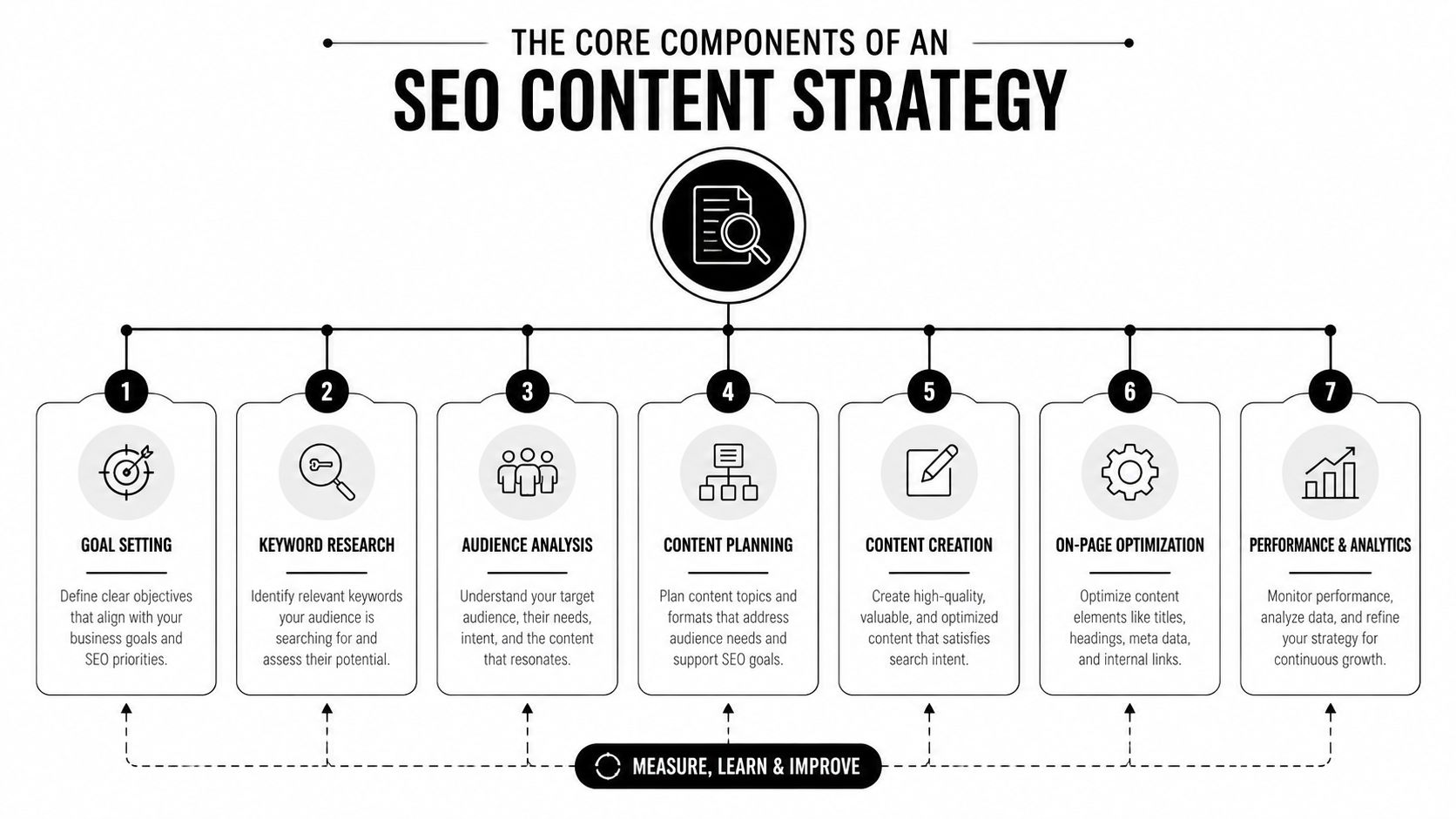
A practical strategy is easier to manage when you can see how the parts connect. Start with the business offer, map the language customers use, assign each meaningful query to a page, connect related pages, and review performance often enough to make decisions.
Start with intent, not a publishing target
Keyword research identifies how people describe a problem, service or product. It shouldn't be treated as a list to insert into copy. Group terms by what the searcher wants to do:
- Informational intent: The visitor wants an explanation, process or answer.
- Commercial intent: The visitor is comparing options, providers or products.
- Local intent: The visitor wants a nearby business, often with a town, county or “near me” modifier.
- Transactional intent: The visitor is ready to enquire, book or buy.
A Dorset web design agency might organise its site around three connected pillars. The first could cover core services such as WordPress websites and eCommerce builds. The second could answer practical questions about website copy, hosting and maintenance. The third could address local business needs, such as web design in Weymouth, Dorchester or across Dorset.
Build a structure that gives every page a role
A content pillar is a substantial page or theme that supports several related assets. A service page might link to a guide explaining the process, a relevant portfolio entry and a contact page. Supporting posts should then link back to the service page when that page is the best next destination.
The editorial calendar is the execution layer. Record the target query, intent, page type, responsible person, planned update, internal links and conversion action. That small amount of discipline prevents three people from writing similar posts while an important service page remains untouched.
Treat links and measurement as part of content
Internal links help visitors move through the site and help search engines understand which pages matter most. External links and local mentions can support authority, but chasing links before fixing weak page structure is usually the wrong order.
Measurement closes the loop. Search Console can show impressions, queries, clicks and average positions, while Analytics can show what visitors do after arriving. Enquiry forms, telephone clicks and tracked bookings matter more than publishing volume because they connect search visibility to the owner's actual priorities.
UK Keyword Research and SERP Feature Mapping
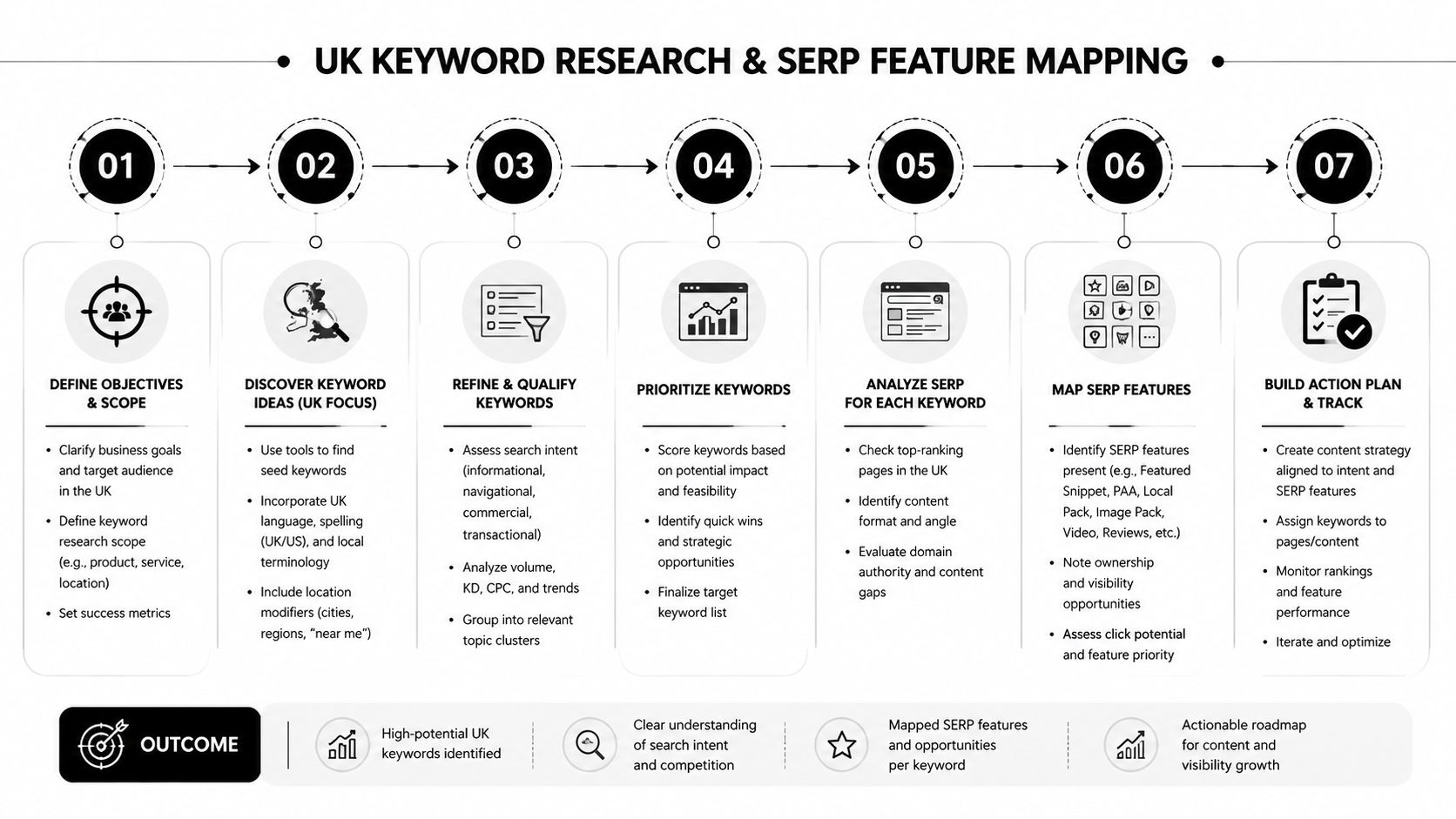
Keyword research for a Dorset business shouldn't begin with a global database and a large volume figure. Begin with the words customers use in Britain, then inspect the results that appear for those words on Google UK. A business selling “bespoke joinery” may need different language from one describing “custom carpentry”, even if both offers overlap.
A UK-focused approach recommends setting keyword tools to the United Kingdom, clustering terms by intent and checking live google.co.uk results for local packs, videos and People Also Ask features, as outlined in this UK SEO strategy guide. The search results tell you what Google believes will satisfy the query, so they should influence the format before writing begins.
Map the result before choosing the page
Suppose a Weymouth company offers a service nationally but also relies on local enquiries. “Web design Weymouth” is a local commercial query. It may need a focused location service page with clear examples, service details, contact information and local relevance. “How much does a WordPress website cost?” is informational or commercial, so a detailed guide with a transparent explanation and a route into the service page may fit better.
Look for patterns rather than copying competitors. If results show a local pack, your Google Business Profile and location signals matter. If People Also Ask boxes dominate, answer-led subheadings and concise explanations deserve space. If video results appear prominently, a supporting demonstration may be more useful than another long article. If comparison tables appear, a purely narrative page may force the visitor to work too hard.
Use British language and regional modifiers carefully
Create a working list of local modifiers such as Dorset, Weymouth, Portland, Dorchester and nearby areas you serve. Don't create thin pages for every place name. Each location page should offer distinct value, such as relevant project experience, delivery information, local customer concerns or a clear explanation of service coverage.
The live SERP also exposes the trade-off between national and local targeting. National terms can broaden reach but may attract visitors outside your service area. Local terms can be more commercially relevant, but they require authentic local proof rather than repeated town names. A page that says little beyond “we serve Weymouth” won't earn trust.
For a deeper practical treatment of location signals, page targeting and local visibility, see this guide to local SEO for businesses. Use it alongside your own Search Console data, customer language and sales conversations. Tools suggest opportunities, but your team knows which services produce profitable work.
Building Content Pillars and an Editorial Calendar
Most SME websites don't need a large publishing machine. They need a clear map of the pages they already have and a short list of improvements that support revenue. Start by exporting your URLs from WordPress, then label each page by purpose, topic, location, current performance and next action.
Choose a small set of pillars based on the services you want to sell, the questions customers repeatedly ask and the locations you genuinely cover. A design studio might use website design, branding, eCommerce and local business guidance. A building firm could organise content around core services, project types, preparation advice and local planning considerations.
Refresh the pages with the clearest opportunity
Review existing pages before commissioning new articles. A page that already receives impressions for relevant queries may need a sharper title, a better introduction, missing sections, stronger internal links or a clearer enquiry route. Updating that asset can be more sensible than publishing another article that starts with no history or links.
Use a simple priority score based on judgement rather than false precision:
- Business value: Does this page support a profitable service or important product?
- Search relevance: Are the current queries close to the page's actual intent?
- Existing opportunity: Does Search Console show impressions, clicks or queries that the page could satisfy better?
- Conversion readiness: Can a visitor easily enquire, call, book or purchase?
- Distinctiveness: Does the page offer something competitors' pages don't?
Make the calendar realistic
Plan in themes rather than isolated dates. A quarter might include a service-page refresh, one supporting guide, a case study and a review of internal links. That creates a useful sequence without forcing the business to publish for the sake of appearing active.
Your WordPress categories should reflect genuine topic groups, not every keyword variation. Tags rarely create value when they generate thin archive pages, so avoid allowing them to produce dozens of weak URLs. Link supporting posts to the relevant pillar, link the pillar to the enquiry page, and use descriptive anchor text that tells the reader what they'll find.
Useful copy should sound like the business and answer a real customer need. Guidance on how to write website copy can help owners turn specialist knowledge into clear, purposeful pages. Before publishing, check that the page has one primary intent, a defined audience and a next action.
On-Page Optimisation for WordPress Sites
WordPress makes content changes accessible, but that flexibility also creates avoidable problems. Site owners often leave the default permalink structure in place, duplicate page titles, publish several pages around the same service or let category and tag archives become indexable without checking their value.
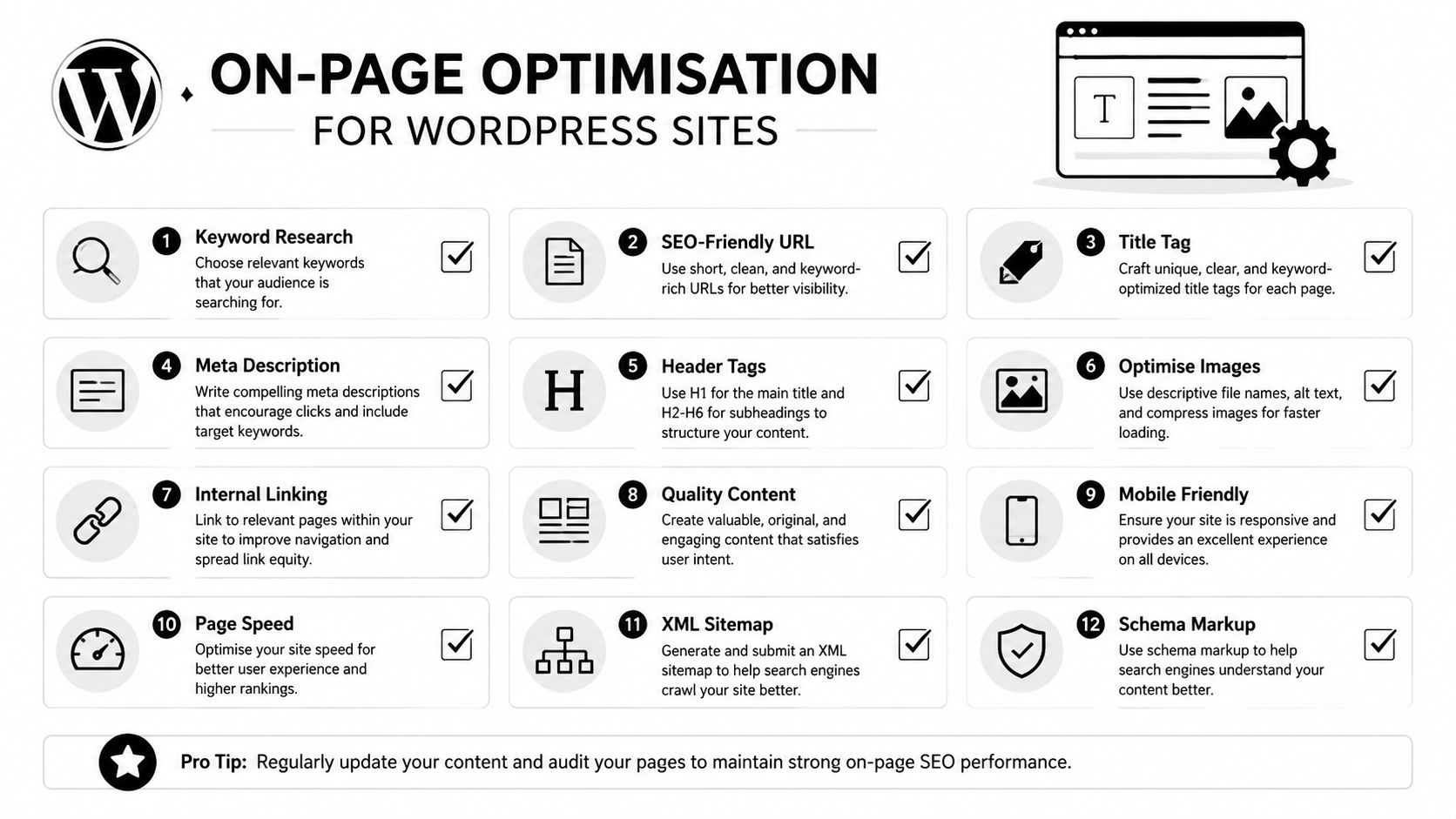
The first pass should focus on the page itself. Give each important URL a clear title tag, a useful meta description, one descriptive H1 and a logical H2 structure. Put the main answer near the top, then expand with evidence, process details, objections and next steps.
Improve the elements visitors and crawlers read
Plugins such as Yoast SEO and Rank Math can manage titles, descriptions, XML sitemaps and basic checks, but a green plugin indicator isn't a ranking strategy. Write the title for the searcher, not the plugin. Keep the URL readable, avoid unnecessary dates in evergreen content and use image alt text to describe the image's purpose rather than stuffing in keywords.
For a service page, put the service and meaningful location wording where it naturally clarifies the offer. Explain who the service suits, what the process involves, what the business delivers and how the visitor can start. For a blog post, answer the question directly before adding background or related detail.
On-page test: If you removed the keyword, would a visitor still understand the page's subject, audience and next step within a few seconds?
Consolidate relevance with internal links
Internal linking is where many existing WordPress sites lose focus. Five similar posts may each mention the same service, but none may clearly point to the main commercial URL. Choose one primary page, then use related content as supporting spokes.
For example, a WordPress service page might receive links from a maintenance guide, a platform comparison article, a project example and a page explaining the website process. The links should be contextually useful, not inserted into a footer block or repeated in every sentence. Review old posts for opportunities to redirect overlapping pages, merge weak content or link to the stronger destination.
Technical issues still matter. Check that important pages are indexable, mobile-friendly, usable and free from broken internal links. Structured data should match the visible content, and images should be compressed without making the page difficult to use.
This ChatGPT SEO guide is useful when you're exploring AI-assisted research and optimisation, but treat generated suggestions as drafts. A human still needs to verify accuracy, add first-hand detail and make sure the page reflects the business.
For WordPress owners who need help with the technical and structural work, WordPress SEO services are one route to consider.
Measuring What Actually Matters
A monthly SEO report shouldn't be a screenshot of rankings with no connection to the accounts, sales pipeline or phone calls. Separate leading indicators, which show whether visibility is developing, from business outcomes, which show whether the website is helping someone make contact or buy.
Search Console is the starting point for organic search behaviour. Review which queries produce impressions, which pages receive clicks, how average positions change and whether pages are appearing for the intent you selected. A page can gain impressions without being commercially useful, so interpret the query rather than celebrating movement alone.
Google Analytics 4 adds behavioural context. Mark important actions such as contact form submissions, telephone link clicks, quote requests, bookings and purchases as conversions. Use consistent campaign tagging for other marketing channels so organic performance isn't confused with email, social or paid visits.
Use a simple reporting view
A useful monthly review can fit on one page:
| Question | What to inspect | Decision |
|---|---|---|
| Are target pages becoming visible? | Search Console impressions and positions | Improve, consolidate or continue |
| Are searchers choosing the result? | Clicks and click-through rate | Rewrite the title or description |
| Are visitors taking action? | GA4 conversions and contact events | Improve the page journey |
| Which themes help the business? | Performance by pillar and landing page | Allocate the next effort |
| Is local visibility supported? | Relevant location queries and profile actions | Strengthen local evidence |
Don't judge an informational guide by direct leads alone. It may introduce the business, answer an early question and send visitors to a service page later. Use assisted journeys and landing-page paths where the data is available, then compare the pattern with actual enquiries from the sales team.
UK search is strongly position-sensitive. A UK clickstream study found that the first organic result captured 28.5% of clicks, while broader UK analysis reported that organic clicks represented 94% of SERP interactions, as reported by EngageWeb's UK search study. These figures support a practical focus on page-one and top-result visibility, but they don't remove the need to measure relevance and enquiries.
Answer boxes and AI overviews also complicate click measurement. Record impressions, query coverage and visible appearances where your tools allow it, then assess brand searches, direct enquiries and assisted conversions. A page that earns visibility without a click may still influence a buyer, but don't use that possibility to excuse weak conversion tracking.
For help connecting website activity with meaningful reports, see website analytics support. Keep the review consistent, document the change made and give each update enough time to produce interpretable evidence.
Common Mistakes and How to Avoid Them
The biggest mistake is treating publishing as progress. A new article won't fix a confusing service page, a weak local profile or several URLs competing for the same intent.
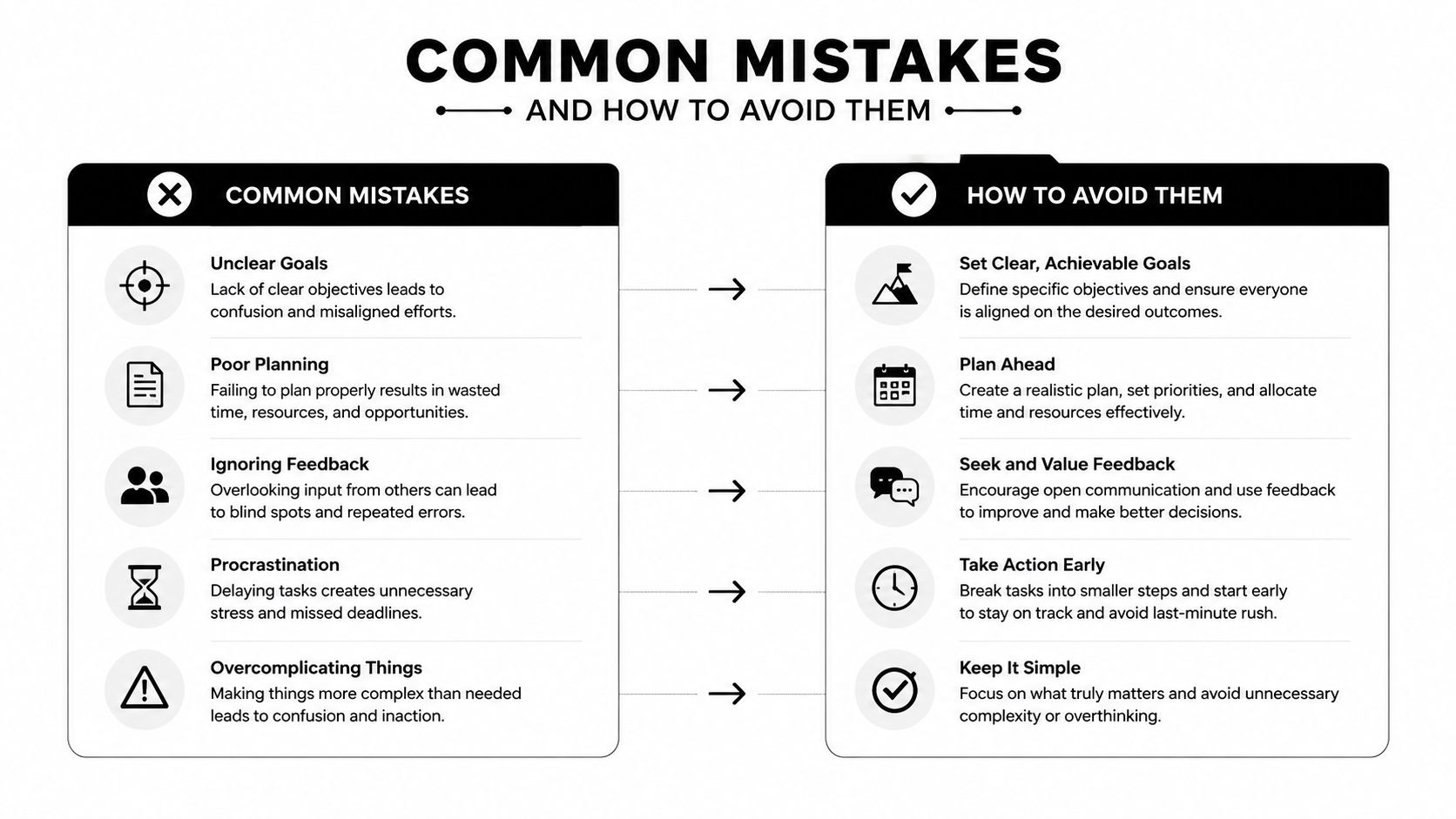
Avoid these traps:
- Chasing broad terms: A national keyword may look attractive but bring little value if the business serves a defined area.
- Ignoring existing pages: Refresh pages that already show relevant search activity before creating another similar post.
- Matching the wrong format: A comparison query needs comparable information, while a local service query needs proof, coverage and a clear route to contact.
- Using AI as the strategy: AI can help with outlines, clustering and editing, but it can't supply genuine experience, accurate local detail or accountable advice without human input.
- Leaving conversion until last: Make the next action clear while planning the page, not after traffic arrives.
For the next 30 days, select your most commercially important pages, inspect their Search Console queries, rewrite weak introductions and titles, improve internal links, and add specific local proof where it's genuine. Only then decide which new content fills a real gap.
DesignStack helps Dorset and UK SMEs plan and improve WordPress websites with SEO structure, content guidance, internal linking and conversion-focused page planning. Visit DesignStack to discuss which existing pages should be refreshed first and how your site can support more relevant local and national enquiries.



Leave a Reply