

How to Find a Creative Agency in UK: A Guide for SMEs
You're probably in one of two situations.
Your business has grown to the point where the old way of doing marketing no longer works. The website was built years ago, the logo feels tired, social posts happen when someone remembers, and every new brochure, landing page, or campaign becomes a scramble. Or you're launching something new and don't want to waste money on the wrong supplier.
That's usually the moment people start searching for a creative agency in the UK. Then they hit the same problem. Search results lean heavily towards London agencies, portfolios look polished but hard to judge, and pricing often feels vague until you're deep into a sales call. For a Dorset or regional SME, that can make a practical decision feel harder than it should be.
A good agency choice isn't about buying “creative”. It's about hiring a team that can help you present the business properly, build trust faster, and deliver work that supports sales rather than just looking nice.
Table of Contents
- Why Your Next Hire Should Be an Agency
- Define Your Brief Before You Search
- How to Find Agencies Beyond London
- How to Read a Portfolio and Spot Real Talent
- Decoding Agency Pricing Models
- Interview Questions and Final Checks
Why Your Next Hire Should Be an Agency
When an SME hits a growth ceiling, the first instinct is often to hire in-house. That sounds sensible until you list what is needed. Brand thinking, website design, copy support, development, campaign creative, print, social assets, and someone who can keep the whole thing moving on deadline. One hire rarely covers all of that well.
An agency gives you a wider mix of skills without committing to a full internal team. That matters when the workload comes in waves. A rebrand may need intense effort for a few months, then lighter support after launch. A new website may need strategy, design, WordPress development, content structure, and post-launch tidy-up. SMEs usually need flexible access to specialist work, not permanent overhead for every discipline.
The UK market supports that view. The UK advertising and marketing industry is the largest in Europe, and 3.5 million UK businesses relied on advertising services in 2024, while digital advertising is set to account for over 70% of total spend in 2025 according to IBISWorld's UK advertising agencies industry analysis. That doesn't mean every business needs a big agency relationship. It means using agencies is a normal commercial choice, not a sign that your team is falling short.
Agencies scale with the real shape of SME work
A strong agency relationship works because it matches how most businesses operate.
- Projects arrive in bursts: New service launch this month, exhibition stand next month, website changes after that.
- Specialist tasks matter: WordPress build quality, brand consistency, packaging artwork, and conversion-focused layouts all need different skills.
- Deadlines don't move: Print bookings, launch dates, and seasonal campaigns still arrive whether your team is stretched or not.
Practical rule: If your business needs senior creative judgement across several channels, but not enough every week to justify a full in-house department, agency support usually makes more sense.
There's also a management benefit. Good agencies don't just produce assets. They organise decisions, challenge weak briefs, and stop a project drifting. That's valuable for owners who already wear too many hats.
For firms that want web, branding, and digital support from one regional partner, DesignStack's branding and digital marketing services show the kind of combined offer many SMEs now look for. It's one example of the broader shift away from piecing projects together across separate freelancers.
The real comparison isn't agency versus employee
It's fragmented delivery versus joined-up delivery.
If you hire one person, you still may need outside developers, print support, photographers, SEO help, or ad creative. If you use multiple freelancers, someone inside your business has to manage the process. That “someone” is usually the owner, office manager, or marketing lead, and that hidden coordination cost is easy to ignore until projects start slipping.
A capable agency should reduce decision fatigue, not add to it. That's why the next part matters so much. The better your brief, the easier it is to tell who can help.
Define Your Brief Before You Search
Most bad agency searches start with a vague sentence. “We need a new website.” “We want a rebrand.” “Our marketing needs sorting.”
That isn't enough. Different agencies hear those phrases and picture completely different jobs. One sees a brochure site. Another sees a lead-generation rebuild. Another assumes brand strategy, copywriting, photography, and SEO. If your brief is fuzzy, the proposals will be fuzzy too.
Start with the business problem
Before you ask for design, name the commercial issue.
A stronger brief starts with what isn't working now. Maybe your site looks credible but doesn't generate enquiries. Maybe your printed materials are inconsistent across locations. Maybe customers understand what you sell once they speak to you, but not from the homepage. Those are useful starting points because they give the agency something concrete to solve.
This checklist helps pull that thinking into one place.
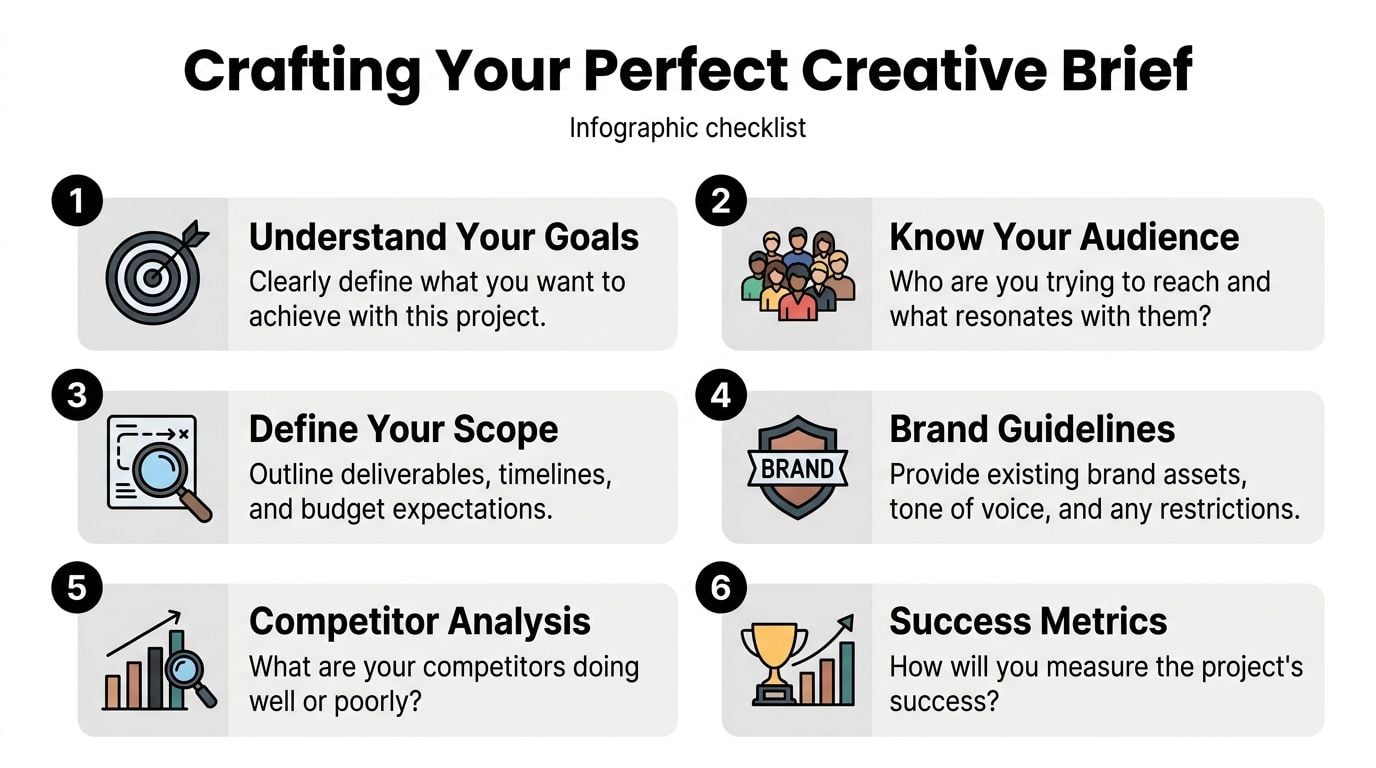
A weak brief sounds like this:
- Need: A modern website
- Audience: Everyone
- Timing: ASAP
- Budget: Not sure
A useful brief sounds more like this:
- Need: A WordPress website that helps service enquiries from local and regional customers
- Audience: Decision-makers comparing several providers
- Problem: Current site looks dated, is hard to update, and doesn't explain our offer clearly
- Timing: Launch before a planned sales push
- Budget: Clear range, so agencies can suggest the right scope
A brief doesn't need polished marketing language. It needs honest detail.
What a useful brief should include
The best briefs are practical. They give enough information for an agency to price properly and challenge assumptions early.
- Business context: What you sell, who buys it, and what makes you different.
- Current pain points: Low-quality leads, inconsistent branding, outdated site structure, hard-to-manage content, weak ecommerce presentation.
- Deliverables: Logo refresh, brand guidelines, brochure design, WordPress build, product photography coordination, landing pages, or campaign assets.
- Decision criteria: Are you choosing on sector experience, process, speed, senior access, local support, or budget certainty?
- Internal realities: Who signs off. Who supplies content. What absolutely must stay. What can change.
A common mistake is hiding the budget because owners worry they'll be overcharged. In practice, withholding it often wastes time. Agencies then price three different versions of the same job in their heads. You get a proposal that's either too thin or too expensive, and nobody benefits.
Write the brief so agencies can answer it
If you want useful proposals, ask useful questions inside the brief.
Consider including:
- What would you improve first and why?
- Which parts of this project need the most attention?
- What would you keep simple to protect budget?
- Who would handle strategy, design, and build day to day?
- What support is included after launch?
That last point matters more than many SMEs realise. Handover is often where a promising project turns frustrating. Small updates, content edits, redirects, testing, and launch checks still need doing.
If you want a practical template to work from, this guide to writing a design brief is the sort of resource worth reviewing before you approach agencies.
How to Find Agencies Beyond London
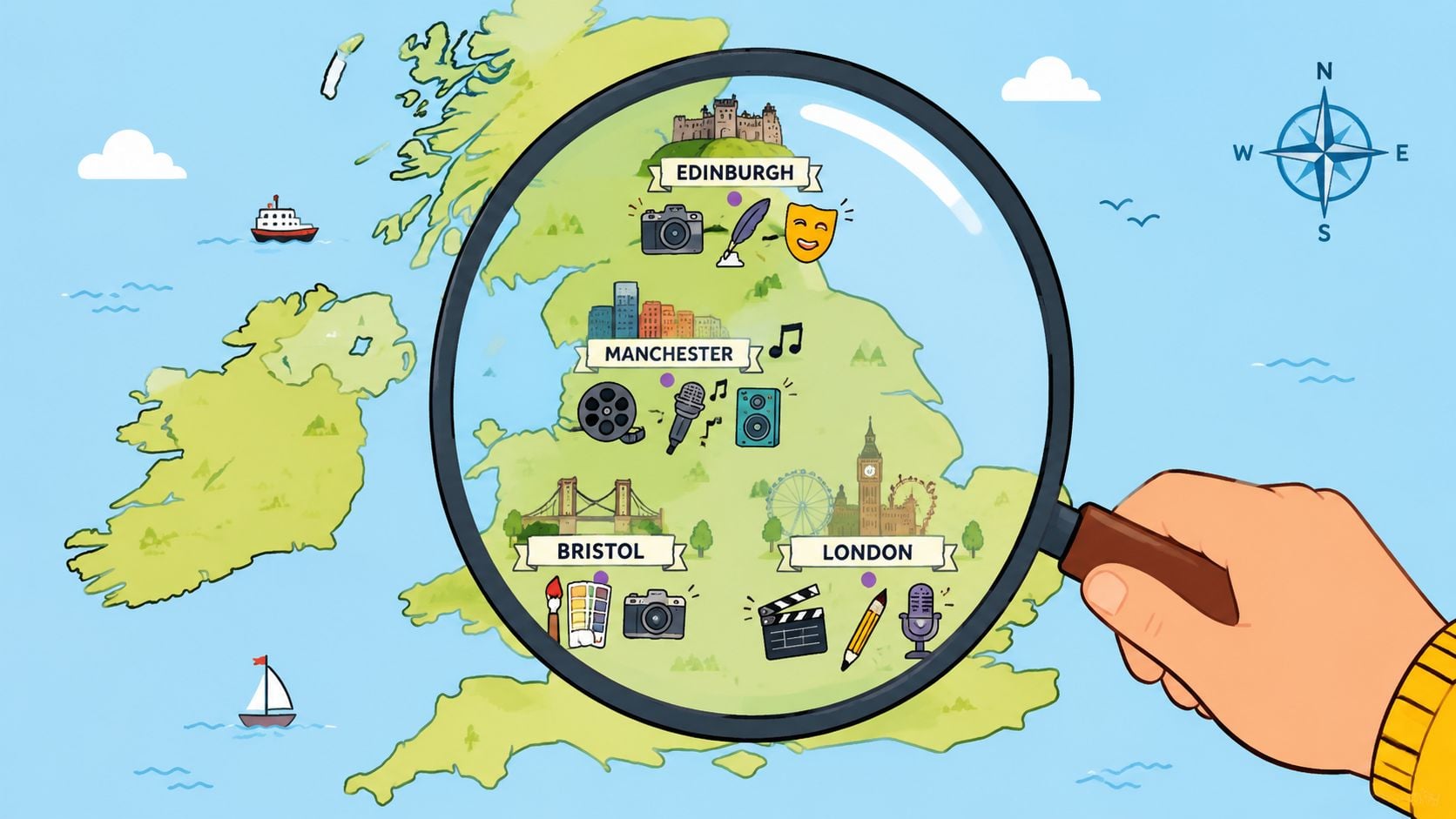
A lot of SME owners assume the safest route is to shortlist London agencies first and look elsewhere only if the fees feel too high. That's backwards.
The smarter approach is to search for the right fit first. Region comes after capability, process, and commercial sense. Sometimes that leads to London. Often it doesn't.
Why the London default is often a poor filter
The independent agency sector contributes £26.7 billion to the UK economy, yet 85% of search results for “creative agency in UK” are dominated by London-centric rankings, which leaves SMEs in places like Dorset with limited guidance on judging regional options, as noted in this analysis of independent agencies and London-biased search visibility.
That creates a false impression. It suggests prestige and proximity to London are better indicators than delivery. For many SMEs, they aren't.
Regional agencies often offer advantages that matter more in day-to-day work:
- Direct access to senior people: You're less likely to be sold by one team and handed to another.
- Stronger commercial realism: Regional firms usually understand budget pressure, internal bottlenecks, and the need to prioritise.
- Better fit for local trading patterns: Tourism businesses, local retail, professional services, and membership organisations often need grounded market knowledge.
- Easier working relationships: Faster calls, fewer layers, and clearer accountability.
A smart SME doesn't buy a postcode. It buys competence, responsiveness, and sound judgement.
Where regional agencies are easier to spot
Directories help, but they shouldn't be your only source. The agencies that rank best aren't always the agencies that manage projects best.
Try a broader search approach:
- Check local Chambers and business groups: Agencies that support local business networks often have visible, long-term relationships.
- Review regional portfolios carefully: Look for work with recognisable local and national clients, not just concept pieces.
- Ask nearby businesses who they used: Referrals from firms with similar budgets and deadlines are often more useful than online “top agency” lists.
- Search by service plus location need: Terms like branding, WordPress, packaging, or ecommerce often surface stronger specialists than generic agency searches.
If you specifically want a nearby partner, this regional agency search page reflects the sort of location-led route many Dorset businesses take when they want direct support rather than a distant account structure.
There's also a practical point on meetings. SMEs often say they don't mind remote working, and that's true up to a point. But when brand direction gets fuzzy, a launch date is near, or a key decision-maker is nervous, local access helps. Being able to sit down, review options properly, and make decisions quickly still has value.
What regional strength looks like in practice
The strongest regional agencies don't try to imitate London. They tend to be clearer, leaner, and more accountable.
That usually shows up in small but important ways. Cleaner proposals. Faster turnaround on questions. Realistic feedback about scope. Less jargon. More honesty about what should wait for phase two. For an SME, that's often worth more than a glossy credentials deck.
How to Read a Portfolio and Spot Real Talent
Most portfolios are designed to impress you quickly. That's fair enough. Visual impact matters.
The problem is that many business owners stop there. They look at whether the work seems modern, polished, or expensive, and they miss the more important question. Can this agency solve my kind of problem?
A portfolio page should give you clues about process, judgement, and consistency, not just taste.
Look for thinking, not just style
Start by ignoring whether the work matches your personal preference. That sounds odd, but it helps.
A strong agency may have produced very different outcomes for a restaurant, a local chamber, a trades business, and an ecommerce brand. That variation is usually a good sign. It suggests they respond to the brief rather than forcing one house style onto every client.
Look for these signals:
- Clear problem definition: Does the case study explain what had to change?
- Relevant constraints: Was there a tough timeline, an old site to replace, multiple stakeholders, or legacy branding issues?
- Decision logic: Can you tell why the agency made the choices it made?
- Evidence of rollout: Did the work carry through to signage, packaging, web pages, social assets, or printed materials?
If every project is just a few nice mock-ups on coloured backgrounds, be careful. That often means you're seeing presentation rather than delivery.
Questions that separate substance from decoration
Top-tier UK agencies consistently achieve a 15 to 30% improvement in conversion rates compared to previous creative approaches, which shows the value of iterative testing. That benchmark comes from Fathom's KPI guide for creative agencies. Ask agencies to prove that kind of lift where relevant to their work.
Not every portfolio project will include hard performance detail, especially in branding or print. But agencies should still be able to talk clearly about outcomes.
Ask questions like these in review calls:
- What was the client's problem before this project started?
- How did you decide what not to change?
- What part of the work had the biggest effect after launch?
- How did the project evolve once you saw early feedback?
- Can you show examples where revised creative performed better than the original direction?
What to listen for: Specific decisions, trade-offs, and lessons. Not just “the client loved it”.
There's also value in looking at sectors outside your own. If an agency can explain a plumbing business, a hospitality venue, and a membership organisation in different but equally clear ways, they probably know how to uncover what matters to buyers.
For businesses reviewing brand, print, and digital work together, this UK graphic design agency portfolio area is an example of the kind of broad visual evidence worth checking. The key is not whether every project looks like yours. It's whether the thinking behind the work looks disciplined.
Decoding Agency Pricing Models
Pricing is where many SME owners become cautious, and rightly so. A vague quote can hide all sorts of trouble. Missing rounds of revision. No post-launch support. Extra charges for basic project management. Cheap build now, expensive changes later.
Most creative agencies in the UK price work in one of three ways. Retainer, hourly, or fixed-cost project. None is universally right. The best choice depends on the shape of the work and how much budget certainty you need.
What each pricing model is really buying you
Here's the simplest way to compare them.
| Pricing Model | Best For | Pros | Cons |
|---|---|---|---|
| Retainer | Ongoing monthly creative, marketing, design support | Predictable access to a team, good for rolling needs, easier planning | Can feel wasteful if demand drops or scope is unclear |
| Hourly | Small edits, specialist tasks, short advisory work | Flexible, useful for narrow jobs, easy to start | Final cost can drift, difficult for SMEs to forecast |
| Fixed-cost project | Websites, rebrands, campaign builds, defined deliverables | Budget clarity, cleaner scope, easier internal approval | Less flexible if the brief changes significantly mid-project |
Retainers work well when you already know you need regular design and marketing support. They're less attractive when your needs are uneven. Hourly pricing can be fair for tightly defined technical fixes or consultation, but it often creates anxiety for owner-managed businesses because every extra request feels billable.
Fixed-cost work is usually the easiest model for SMEs to manage when the scope is properly defined. It gives both sides a clear boundary.
Why many SMEs prefer fixed costs
That preference isn't anecdotal. 70% of UK SMEs seeking digital partners require transparent, fixed-cost pricing, yet only 12% of UK creative agency listings openly disclose fixed pricing structures, according to Webtonic's review of agency listing patterns and SME pricing expectations.
That gap tells you something useful. Buyers want clarity, but much of the market still prefers ambiguity.
A fixed price doesn't mean “cheap”. It means the agency has done enough thinking upfront to define what's included. That usually leads to better conversations about trade-offs.
For example:
- If budget is tight, reduce page count before reducing build quality.
- Keep the core brand package focused, then add extended collateral later.
- Prioritise homepage, service pages, enquiry flow, and mobile performance before adding optional extras.
Good pricing makes scope visible. Bad pricing hides scope until it becomes a dispute.
One practical reference point is this guide on how much branding agencies charge, which reflects the type of pricing questions SMEs should ask before signing anything.
If an agency offers fixed-cost pricing with a defined number of revisions, planned check-ins, and post-launch support, that's usually a healthier sign than a low headline quote with several “to be confirmed” items sitting underneath it.
There's one more trade-off worth understanding. The cheapest proposal often assumes you will do more than you expect. Supply all copy. Manage all image selection. Handle redirects. Test everything yourself. Upload products. Approve instantly. That may be fine if you have internal capacity. Most SMEs don't.
Interview Questions and Final Checks
Shortlisting is the easy part. The final decision usually comes down to communication, clarity, and trust.
A good meeting shouldn't feel like a pitch theatre performance. It should feel like a working conversation. You want to know how the agency thinks when the brief is incomplete, when feedback is mixed, and when deadlines tighten.

Questions worth asking in the first meeting
Don't ask only about creativity. Ask how the work will run.
- Who will be my day-to-day contact? You need to know whether you'll deal with the person in the meeting or be passed elsewhere.
- What happens if we dislike the first direction? This reveals how they handle risk and feedback.
- What do you need from us to keep momentum? Strong agencies know where client-side delays usually appear.
- How do you handle revisions and approvals? The answer should be specific, not woolly.
- What support is included after launch? Many proposals grow vague on this point.
For SMEs, practical support matters. Things like three design revisions, one month of post-launch updates, and customized hosting are useful benchmarks because they show the agency has thought beyond handover. Those aren't glamorous details, but they often decide whether a project feels smooth or painful.
Red flags to take seriously
Some warning signs are easy to miss because they can sound impressive in the room.
Watch for these:
- Vague language: If they can't explain their process plainly, they may not control it well.
- Too much agreement: If every idea you have is “perfect”, you're not getting useful guidance.
- No challenge on the brief: Good agencies ask awkward questions early.
- Pressure to move fast before scope is clear: That usually benefits the seller, not the client.
- Portfolio pride without delivery detail: Attractive work alone doesn't prove reliable execution.
The right agency should make the project feel clearer after the first conversation, not more confusing.
A final check worth making is whether the chemistry matches the job. SMEs often need an agency that can be calm, organised, and easy to reach. Prestige matters less than consistency. If you're going to trust a team with your website, brand, or launch, you need confidence in how they communicate when things are ordinary, not just when they're selling.
If you want a regional partner for web design, branding, graphic design, and ongoing digital support, DesignStack is a Dorset-based option worth considering. The studio works with businesses that want fixed-cost pricing, clear communication, three design revisions as standard, and one month of post-launch updates, with support across WordPress websites, branding, hosting, and digital rollout.


Leave a Reply