

A Guide to the 10 Key Parts of a Horse Trailer in 2026
A horse trailer is more than just a box on wheels; it’s a complex system designed to keep your equine partner safe and comfortable on the road. Understanding the various parts of a horse trailer is not just for mechanics or seasoned hauliers, it's essential knowledge for any responsible owner. From the foundational frame to the critical ventilation systems, each component plays a vital role in structural integrity, road safety, and your horse's well-being.
This detailed guide provides a comprehensive breakdown of the key components that make up your trailer. We will move beyond the obvious exterior and delve into the functional anatomy that ensures every journey is secure. You will learn not just what each part is, but why it matters and how to maintain it. For each component, we will explore its function, common variations, and offer actionable maintenance tips.
Our goal is to give you the practical knowledge to:
- Confidently inspect a new or used trailer before buying.
- Perform regular, meaningful safety checks at home.
- Spot potential issues before they become dangerous or costly problems.
- Make informed decisions about repairs and upgrades.
Whether you're a first-time buyer overwhelmed by the options or a seasoned competitor looking to refine your maintenance routine, mastering this knowledge will empower you to keep your horse safe on the move. Let’s examine the essential anatomy of a modern horse trailer.
1. Trailer Frame and Chassis
The frame and chassis form the structural backbone of any horse trailer. This core component is the skeleton upon which every other part is built, from the flooring and walls to the axle and coupler. Its primary function is to support the entire load, including the weight of the trailer itself, your horses, and all your tack and equipment. More importantly, it must be engineered to withstand the dynamic forces generated by moving animals during transport, which create significant and unpredictable stresses.
Frame Materials and Construction
Most trailer frames are constructed from either steel or aluminium, each with distinct advantages.
- Steel Frames: Known for their strength, durability, and lower initial cost. Brands like Cheval Liberté often use robust, galvanised steel frames, which offer excellent rigidity and are favoured in many European markets. The main drawback is their weight and susceptibility to rust if not properly maintained.
- Aluminium Frames: Lighter than steel, aluminium frames offer superior corrosion resistance and can contribute to better fuel economy for your tow vehicle. This makes them a popular choice for those who travel frequently. For example, Ifor Williams Trailers are well-regarded for their welded aluminium chassis, trusted by equestrian professionals across the UK for its blend of strength and light weight.
Maintenance and Safety Checks
A compromised frame can lead to catastrophic failure, making regular inspections essential. A simple visual check is one of the most important parts of a horse trailer safety routine.
Key Takeaway: The frame's integrity is non-negotiable for safety. A seemingly minor crack or patch of rust can quickly develop into a major structural problem.
To keep your trailer's chassis in top condition, follow this checklist:
- Inspect Welds Annually: Carefully check all weld points and joints, especially around high-stress areas like the suspension and coupler mounts. Look for any signs of cracking, separation, or stress fractures.
- Prevent Corrosion: For steel frames, apply a quality rust-preventative coating every two to three years, paying close attention to the underside where it's exposed to road salt and moisture.
- Check for Bends or Twists: After any significant bump, kerb strike, or incident, have the frame's alignment professionally checked. A bent frame can cause poor handling, uneven tyre wear, and place undue stress on other components.
- Confirm Weight Rating: Always ensure your trailer's frame is rated to carry the combined weight of your horses and gear. Overloading is a primary cause of frame failure.
2. Flooring and Floor Covering
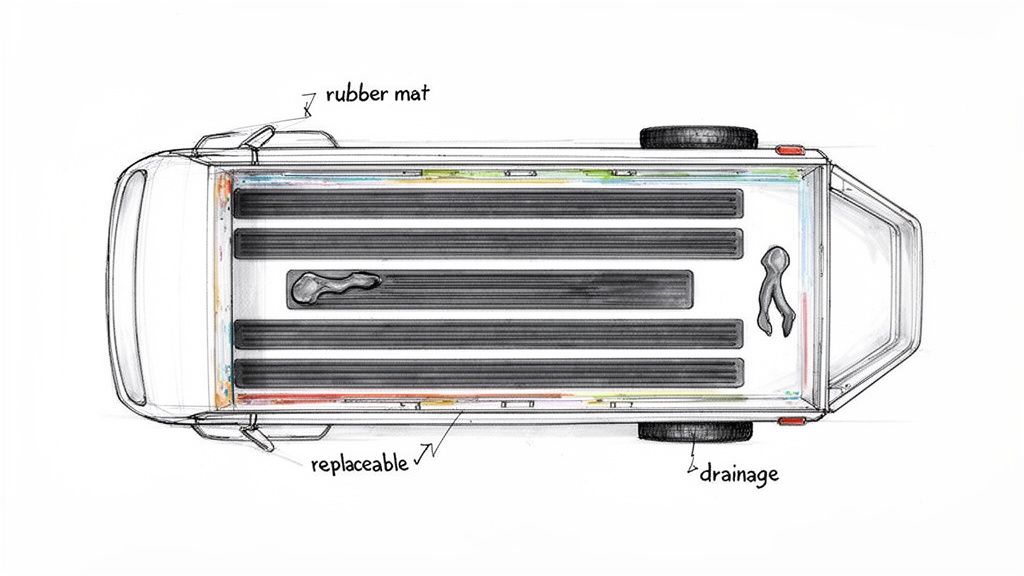
The floor of a horse trailer is a critical component for equine safety and comfort, providing the primary surface your horse stands on during transport. Its main job is to offer excellent traction, absorb shock from movement and road vibrations, and effectively manage moisture from urine and sweat. A high-quality floor must be durable enough to withstand the immense pressure and wear from shod hooves while offering reliable grip, regardless of weather conditions.
Floor Materials and Construction
The base floor structure is typically made of pressure-treated wood, aluminium planks, or composite materials, which are then covered with a protective and non-slip layer.
- Aluminium Plank Flooring: A popular modern choice, aluminium plank floors offer exceptional strength and are completely resistant to rot and moisture damage. They are often found in premium trailers and paired with a rubber mat overlay for grip and comfort.
- Rubber Matting: Almost universally used as a floor covering, heavy-duty rubber mats provide superior grip, shock absorption, and noise reduction. For example, Ifor Williams Trailers often fit their models with durable, one-piece rubber mat flooring that includes integrated drainage channels for easy cleaning.
- Composite Flooring: Some manufacturers, like Cheval Liberté, use advanced composite floors that combine the lightweight properties of modern materials with the strength needed for transport. These floors are rot-proof and often have a textured surface for added grip.
Maintenance and Safety Checks
The floor's condition directly impacts your horse's stability and health. Rotting wood or slick, worn-out rubber can lead to serious injury, making regular checks one of the most important parts of a horse trailer maintenance routine.
Key Takeaway: A floor's integrity is not just about structure; it’s about providing a safe, non-slip, and hygienic environment. Hidden damage beneath the mats can create a sudden and dangerous failure.
To keep your trailer's flooring in excellent condition, follow this checklist:
- Lift Mats After Every Use: Urine and moisture can become trapped underneath rubber mats, accelerating corrosion in aluminium floors or causing rot in wooden ones. Always lift, clean, and dry both the mat and the sub-floor.
- Inspect the Sub-Floor Monthly: With the mats removed, carefully check the underlying floor. Probe wooden floors with a screwdriver for soft spots, and inspect aluminium planks for corrosion or cracks, especially along seams.
- Check Drainage Points: Ensure any built-in drainage holes or channels are clear of debris. Blocked drainage can lead to pooling liquid, creating a slipping hazard and promoting floor degradation.
- Assess Mat Condition: Regularly look for tears, curling edges, or areas where the mat has become smooth and lost its texture. Replace worn mats immediately to prevent slipping accidents.
3. Ventilation and Air Circulation Systems
A well-designed ventilation system is one of the most critical parts of a horse trailer for ensuring animal welfare. Its core function is to maintain a constant flow of fresh air, regulate the internal temperature, and efficiently remove harmful ammonia vapours from urine and sweat. This process is absolutely essential for protecting a horse's respiratory health during transport, as poor air quality can quickly lead to respiratory distress, heat stress, and dangerously low oxygen levels.
Ventilation Types and Design
Effective ventilation relies on creating airflow, and this can be achieved through several methods, from simple passive systems to advanced mechanical ones.
- Passive Systems: The most common setup involves a combination of roof vents and side windows or slats. Brands like Ifor Williams Trailers are known for their strategically placed roof and side vents, which often include rain guards to prevent water ingress while allowing air to circulate. Similarly, Cheval Liberté trailers often feature multi-point ventilation systems optimised for changing European weather conditions.
- Mechanical Systems: Premium racing or long-distance transport trailers may be fitted with powered ventilation fans. These systems actively pull stale air out and draw fresh air in, providing consistent circulation even when the trailer is stationary. Some high-end models now even offer full climate control for ultimate comfort.
Maintenance and Safety Checks
Neglecting the ventilation system can have serious health consequences for your horse. Regular cleaning and inspection are simple but vital tasks.
Key Takeaway: Proper airflow is not a luxury; it's a necessity for your horse's health. Two ventilation points (an inlet and an outlet) are the minimum for creating effective cross-flow.
To ensure your trailer's air circulation remains optimal, follow this checklist:
- Clean Vents Monthly: Remove and clean all vent grilles and covers to prevent them from becoming blocked by dust, hay, and road debris. A clogged vent is an ineffective vent.
- Check Seals and Guards: Inspect the seals around windows and the integrity of rain guards on roof vents. Damaged components can let in water, creating a damp and unhealthy environment.
- Test Mechanical Fans: If your trailer has powered fans, test them before every long journey to ensure they are operational. Check the wiring for any signs of wear or damage.
- Adjust for Conditions: In summer, open all vents fully to maximise airflow. In colder weather, adjust them to provide necessary fresh air while preventing a direct, stressful draught on the horses.
4. Ramps, Loading Gates, Doors and Escape Systems
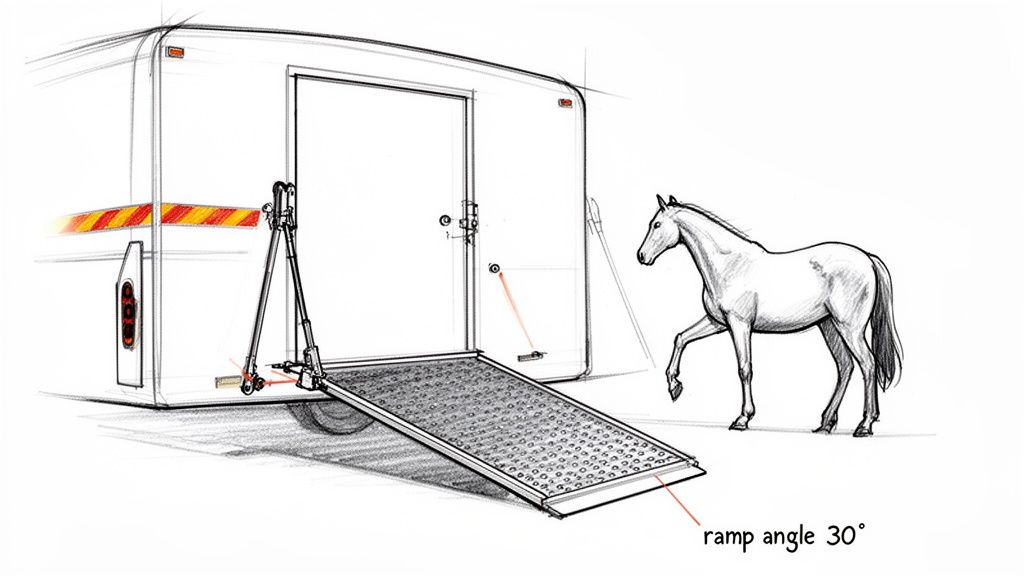
Ramps, gates, and doors provide safe, controlled entry and exit for horses and handlers. These critical parts of a horse trailer are not just about access; they are fundamental to horse confidence and handler safety. A well-designed system ensures that loading is a low-stress experience, while robust escape systems provide a vital safety net in an emergency. The design must balance secure containment during travel with the need for rapid access when it matters most.
Ramp and Door Designs
Different trailer designs incorporate various ramp and door systems to suit specific needs, from ease of use to emergency preparedness.
- Ramp Systems: Quality ramps are non-slip, properly angled (typically 25–35 degrees), and strong enough to support a horse's weight without flexing. For instance, Ifor Williams trailers are known for their lightweight aluminium ramps with excellent grip. Some premium models, like those from Cheval Liberté, may feature hydraulic or spring-assisted ramps, significantly reducing the effort needed to raise and lower them.
- Doors and Gates: These range from a full-width door to split "barn door" styles. The primary function is containment, but they also serve as emergency exits. Many trailers now feature a ramp/door combination, allowing you to use it as a traditional ramp or swing it open like a door, which is useful on uneven ground or for horses that are hesitant to use ramps.
Maintenance and Safety Checks
Neglecting ramps and doors can lead to accidents, trapping a horse, or causing injury to a handler. Regular, simple checks are vital.
Key Takeaway: The reliability of your ramps and doors is directly linked to safety. A sticking latch or a slippery ramp surface can turn a routine trip into a dangerous situation.
To ensure your trailer's access systems are always ready and safe, follow this checklist:
- Inspect Surfaces Weekly: Check the ramp's grip surface for excessive wear, damage, or loose matting. Clean it after each use to remove mud and moisture that can cause slipping or accelerate corrosion.
- Test Latches and Hinges: Before every journey, confirm all door and ramp latches engage securely and open smoothly. Lubricate all hinges and locking mechanisms monthly to prevent them from seizing.
- Check Structural Integrity: Examine the ramp for any signs of cracks, bends, or corrosion, particularly around the hinge points. Ensure all securing pins and bolts are present and in good condition.
- Practise Emergency Exits: Know how your escape doors work. Test the quick-release mechanisms monthly to ensure they are functional and not jammed. Make sure all handlers are familiar with their operation.
5. Partitions and Dividers
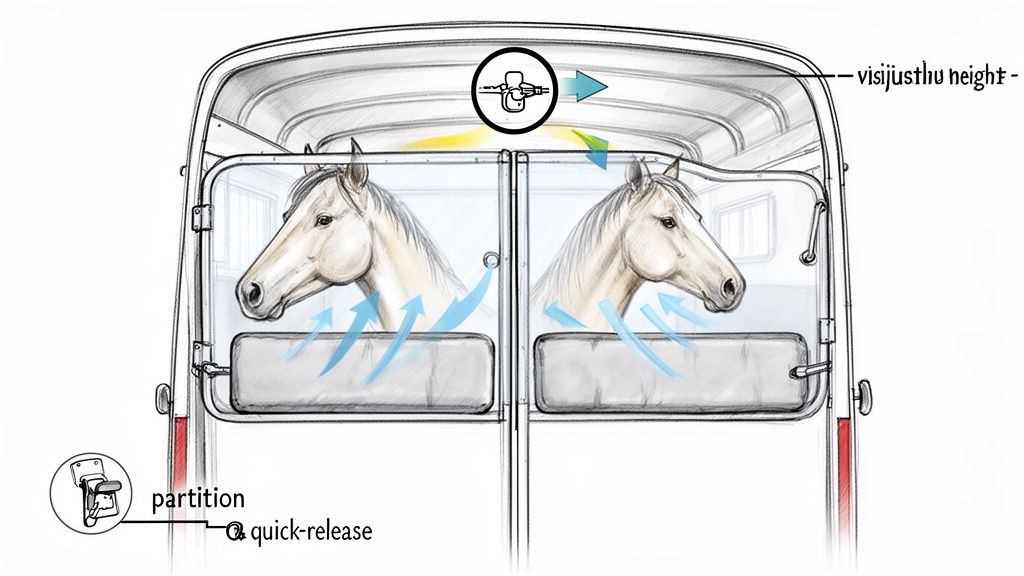
Partitions and dividers are crucial interior parts of a horse trailer, designed to create individual stalls. Their primary role is to keep horses safely separated during transport, preventing them from injuring one another through kicking or biting and minimising excessive movement. These components are fundamental to a stress-free journey, as they provide each horse with its own secure space, reducing anxiety and the risk of scrambles.
Partition Materials and Design
The design of partitions varies greatly to balance security, comfort, and visibility. The right choice depends on your horses' temperaments and your transport needs.
- Padded and Adjustable Partitions: Many modern trailers, such as those from Ifor Williams, feature heavily padded partitions to cushion the horse against bumps. Cheval Liberté trailers often include partitions that can be adjusted for height, making them suitable for transporting horses of different sizes, from ponies to larger breeds.
- Solid vs. Vented Designs: Solid partitions offer maximum separation, which is ideal for stallions or unfamiliar horses. However, partitions with bars or semi-transparent sections improve airflow and allow horses to see each other, which can have a calming effect and is favoured by many professional transport operators.
Maintenance and Safety Checks
Well-maintained partitions are essential for preventing in-transit injuries. A faulty latch or a sharp edge can create a dangerous situation for a nervous animal.
Key Takeaway: A reliable partition is more than just a divider; it's a critical safety feature that protects your horse. The quick-release mechanism, in particular, must be flawless for emergency situations.
Incorporate these checks into your pre-travel routine to ensure partition integrity:
- Test Release Mechanisms: Before every journey, operate all quick-release pins and latches to confirm they engage securely and release smoothly. These are vital for safely evacuating a horse in an emergency.
- Inspect Padding and Surfaces: Check for any tears in the padding or sharp, protruding edges on the partition frame. Damaged padding can expose hard metal, and sharp points can cause serious cuts.
- Confirm Secure Mounting: Pull and push on the partition to ensure its mounting points at the floor and ceiling (or breast bar) are tight and free from excessive play. Loose fittings can fail under the stress of a horse leaning on them.
- Clean Regularly: Wipe down partitions, especially the padded areas, to remove sweat, dirt, and moisture. This prevents the build-up of mould and bacteria and preserves the material.
6. Lighting and Electrical Systems
A fully functional lighting and electrical system is critical for visibility and road safety, making it one of the most important parts of a horse trailer. This system powers all external lights required by law, including brake lights, indicators, and running lights, ensuring other road users can see you. It also supports internal lights for safe loading in low-light conditions and can power auxiliary features like ventilation fans, hydraulic ramps, or monitoring cameras.
System Components and Variations
Modern horse trailer electrical systems are designed for reliability and weather resistance, but their complexity can vary.
- Standard Lighting: The legal minimum includes brake lights, indicators (turn signals), and tail lights. Many trailers, like those from Cheval Liberté, feature robust, well-sealed light clusters designed to withstand years of use and exposure to the elements.
- Advanced LED Systems: LEDs are now the standard on premium trailers. Manufacturers like Ifor Williams integrate full LED lighting, which is brighter, more energy-efficient, and has a much longer lifespan than traditional bulbs. This means less maintenance and greater visibility.
- Onboard Power and Monitoring: Higher-spec trailers may include their own battery systems to power interior lights, fans, or even GPS tracking and alarm systems without drawing from the tow vehicle. Professional transporters often use trailers with advanced monitoring for fleet management and horse welfare.
Maintenance and Safety Checks
Electrical faults are not only inconvenient but also a major safety hazard. Regular checks are vital to ensure compliance and prevent accidents.
Key Takeaway: Never assume your lights are working. A pre-journey check takes seconds and is your first line of defence against a roadside stop or, worse, a collision.
Follow this checklist to maintain your trailer's electrical system:
- Test Lights Before Every Trip: Connect the trailer to your vehicle and have someone help you check that all lights – brakes, indicators, and running lights – are functioning correctly.
- Inspect Connections Monthly: Check the main connector plug and all wiring for signs of corrosion, fraying, or damage. Pay special attention to connections near the ground that are exposed to road spray.
- Keep Spares Accessible: Carry a kit with spare fuses and bulbs (if not using LEDs) in your vehicle. Knowing how to replace them can prevent a cancelled trip.
- Ensure Weatherproofing: All connectors and junction boxes must be properly sealed to prevent water ingress, which is a primary cause of electrical shorts and system failure.
7. Suspension and Axle Systems
The suspension and axle systems are the critical components connecting your trailer's wheels to its frame. Their joint purpose is to support the full weight of the trailer and its precious cargo, while also absorbing shocks and vibrations from the road. A quality suspension system is one of the most important parts of a horse trailer for ensuring a comfortable and safe journey, as it minimises the jarring impacts that can cause stress, fatigue, and even injury to your horse's joints and tendons.
Suspension Types and Applications
Different suspension technologies offer varying levels of ride comfort and durability, making the choice dependent on your specific needs.
- Leaf Spring Systems: This is a traditional, robust, and reliable setup. Brands like Ifor Williams Trailers use proven leaf spring systems renowned for their durability and straightforward maintenance. They are excellent for all-around use and can handle heavy loads effectively.
- Air Suspension Systems: Offering a superior level of comfort, air suspension is often found on premium trailers or those used for professional, long-distance transport. By using adjustable airbags instead of steel springs, they provide a much smoother ride. Cheval Liberté offers trailers with this feature, which is highly recommended by equine vets to reduce transport stress.
- Independent Suspension: In these systems, each wheel moves independently, providing excellent stability and a smoother ride on uneven surfaces. This technology is often featured in high-end competition trailers where ensuring the horse arrives in peak condition is paramount.
Maintenance and Safety Checks
Neglecting the suspension can lead to a harsh ride for your horse and poor handling for you. Regular checks are vital for safety and performance.
Key Takeaway: The quality of the ride directly impacts your horse's well-being and willingness to load. A poor suspension can turn a calm traveller into a stressed one.
To maintain your suspension and axles, integrate these checks into your routine:
- Inspect Components Annually: Have a qualified technician inspect all suspension parts, including springs, hangers, and bushings, for signs of wear, cracking, or damage. For air systems, check for leaks and proper compressor function.
- Check for Unusual Noises: Listen for any squeaking, clunking, or banging sounds while towing. These often indicate worn-out bushings or other failing components that need immediate attention.
- Monitor Tyre Wear: Uneven or rapid tyre wear is a classic sign of axle misalignment or suspension problems. Addressing the root cause will save you money on tyres and prevent unsafe handling.
- Respect Axle Weight Ratings: Never exceed the Gross Axle Weight Rating (GAWR). Overloading places immense strain on both the axles and the suspension, leading to premature failure.
8. Water and Hay Systems
Integrated water and hay systems allow horses to drink and feed during transport, reducing stress and maintaining hydration. These built-in features are crucial for long-distance travel, ensuring your horse's welfare by providing continuous access to nourishment. Modern designs range from simple fixed hay racks to advanced, self-filling water bowls, all engineered to function safely while the trailer is in motion. The goal is to minimise spillage, prevent contamination, and eliminate any risk of injury to the horse.
System Types and Features
Water and hay provisions are increasingly standard on premium trailers, reflecting a greater focus on equine comfort during transit.
- Integrated Hay Racks: Often built into the front of the trailer or above the horse's head, these racks keep hay contained and off the floor. This prevents it from being trampled or soiled. High-end trailers may feature slow-feeder designs to make the hay last longer and keep the horse occupied.
- Water Systems: These can range from a simple bracket for a water carrier to fully integrated tanks with pipes leading to to self-filling bowls. For example, some premium Cheval Liberté trailers offer built-in water systems. For winter transport, heated water options are available to prevent freezing, a feature often seen in trailers used by professional racing yards.
Maintenance and Best Practices
A poorly maintained feeding or watering system can pose a health risk through contamination or fail when you need it most. Regular checks are a vital part of your pre-journey routine.
Key Takeaway: Consistent access to clean water and forage is not a luxury, it's a necessity for reducing transport stress and preventing issues like dehydration and colic.
Follow this checklist to keep your horse's onboard catering in perfect working order:
- Cleanliness is Crucial: Empty and scrub water containers and bowls after every trip to prevent algae and bacteria growth. Hay racks should be cleared of old, damp hay.
- Check Water Flow: Before a long journey, test the system. If you have automatic bowls, ensure the float mechanism isn't stuck and that water flows freely.
- Secure All Components: Verify that hay racks are firmly attached and that water tanks are securely strapped in. Loose parts can become dangerous projectiles during transit.
- Consider Temperature: In cold weather, use a heated water system or insulated covers to stop water from freezing. Fill the tank just before you leave to give it less time to cool.
9. Towing and Coupling Systems
The towing and coupling system is the vital link between your horse trailer and your tow vehicle, responsible for ensuring a secure and stable connection for safe transport. This assembly includes the coupler on the trailer, the towball on the vehicle, and associated safety components like breakaway cables and chains. Its function is to allow the trailer to pivot smoothly while securely handling the immense forces of towing, braking, and turning.
Coupler Types and Safety Components
Coupling systems must be correctly rated for the trailer’s maximum authorised mass (MAM) and are engineered for reliability. Different designs offer varying features.
- Standard Ball Couplers: The most common type, these fit over a standard 50mm towball. Quality brands like Ifor Williams Trailers equip their units with robust, lockable coupling heads that are specifically rated to match the trailer's gross weight, ensuring a secure and legal connection.
- Advanced Coupling Systems: Some manufacturers, such as Cheval Liberté, offer systems with integrated stabilisers. These designs help to dampen trailer sway caused by crosswinds or uneven roads, providing a smoother and more controlled towing experience for both the driver and the horses.
- Safety Components: Every towing system includes non-negotiable safety features. The breakaway cable is designed to apply the trailer's brakes if it ever detaches from the tow vehicle, and safety chains or secondary coupling cables provide a backup connection.
Maintenance and Safety Checks
A faulty coupling is one of the most dangerous failures a trailer can experience. Regular checks are a fundamental part of a horse trailer safety routine. Proper towing techniques are also essential for safe transport, and you can find many useful travel trailer towing tips that apply equally to horse trailers.
Key Takeaway: The integrity of your coupling system directly impacts road safety. Never tow with a damaged, improperly matched, or unlubricated coupler.
Follow this checklist to ensure your towing system is always road-ready:
- Confirm Towing Capacity: Always verify that your tow vehicle is legally rated to pull the trailer’s maximum weight. This information is found on the vehicle's VIN plate.
- Grease the Towball: Regularly apply a light coat of grease to the towball to reduce friction and wear on the coupling head, preventing it from seizing.
- Inspect the Breakaway Cable: Check the cable for any fraying, kinks, or corrosion. Ensure it is attached correctly to a dedicated point on the vehicle's towbar, not just looped over the towball.
- Check Electrical Connections: Before every journey, test that the electrical connection is clean and fully functional by checking all trailer lights (indicators, brake lights, and running lights) with a helper.
10. Insulation and Climate Control
Effective insulation and climate control systems are vital parts of a horse trailer, designed to maintain a safe and stable internal environment during transport. They protect horses from the stress and health risks of extreme temperatures, both hot and cold. Insulation works by reducing thermal transfer through the trailer's walls and roof, while active climate control systems like fans, vents, and optional heaters manage airflow and temperature directly. For professional transporters and those undertaking long-distance journeys, these features are essential for equine welfare.
Insulation Materials and Climate Systems
The quality of climate management varies significantly, from basic ventilation to advanced, fully insulated systems.
- Insulated Panels: Premium trailers, such as certain Cheval Liberté models, often use composite or honeycomb fibreglass panels that have inherent insulating properties. These materials create a buffer against external temperatures, keeping the interior cooler in summer and warmer in winter.
- Active Climate Control: High-end trailers, including some Ifor Williams models, may offer optional heating systems for cold weather transport. More commonly, powered roof vents and fans are installed to actively draw stale, hot air out and encourage fresh air circulation, which is critical for preventing heat stress. Racehorse and competition trailers frequently feature these more advanced setups.
Maintenance and Safety Checks
Maintaining your trailer's climate control features ensures they perform correctly when needed most. A stuffy, hot trailer can be as dangerous as a structural fault.
Key Takeaway: Proper climate control is not a luxury; it's a critical safety feature that protects your horse's health. Neglecting insulation or ventilation can lead to dehydration, heatstroke, or respiratory issues.
To keep your trailer's interior environment safe and comfortable, follow this checklist:
- Inspect Insulation Annually: Check insulated wall and roof panels for any signs of water ingress, degradation, or damage. Moisture trapped within insulation can lead to mould and reduce its thermal effectiveness.
- Test Vents and Fans: Regularly operate all roof vents, windows, and electric fans to ensure they open, close, and function correctly. Clean fan blades and vent screens to maintain maximum airflow.
- Service Heaters: If your trailer has a heating system, have it professionally serviced annually before the winter season to check for safe and correct operation.
- Monitor Temperatures: When travelling, use a simple thermometer inside the horse area to monitor conditions. This allows you to adjust vents or take breaks as needed to keep your horse comfortable. Consider adding a reflective coating to the roof to further reduce solar heat absorption.
Horse Trailer Parts: 10-Point Comparison
| Component | Implementation Complexity 🔄 | Resource Requirements ⚡ | Expected Outcomes 📊 | Effectiveness/Quality ⭐ | Ideal Use Cases & Tips 💡 |
|---|---|---|---|---|---|
| Trailer Frame and Chassis | High — precision welding, alignment and corrosion protection required | Heavy materials (steel/aluminum), skilled fabrication, coatings; higher upfront cost | Long-term structural integrity, safe towing stability | ⭐⭐⭐⭐⭐ | Frequent towing/heavy loads; inspect welds annually, consider aluminum for fuel savings |
| Flooring and Floor Covering | Medium — correct fitment and drainage detailing | Rubber/composite/aluminum mats, drainage channels; moderate cost and periodic replacements | Improved traction, hygiene, impact absorption | ⭐⭐⭐⭐ | Wet climates/regular use; clean after each trip, inspect monthly |
| Ventilation and Air Circulation Systems | Medium — passive vents simple, mechanical fans add electrical complexity | Vents, louvers, fans, wiring and filters; variable cost | Reduced respiratory issues, temperature and moisture control | ⭐⭐⭐⭐ | Long journeys/hot climates; ensure inlet+outlet, clean grilles monthly |
| Ramps, Loading Gates, Doors & Escape Systems | Medium–High — mechanical linkages and optional hydraulics need precise installation | Non-slip surfaces, hinges, hydraulics, latches; maintenance-intensive | Safer loading/unloading, faster emergency access, reduced injuries | ⭐⭐⭐⭐ | Frequent loading/competition use; inspect surfaces weekly, test emergency latches |
| Partitions and Dividers | Low–Medium — modular fit and padding considerations | Padded panels, quick-release mechanisms; low to moderate cost | Safer multi-horse separation, reduced kicking and stress | ⭐⭐⭐ | Multi-horse transport; pad well, test quick-release monthly |
| Lighting and Electrical Systems | Medium — weatherproof wiring and reliable connectors required | LEDs, wiring, fuses, monitoring units; moderate cost and technical maintenance | Safe night operations, power for accessories, monitoring capability | ⭐⭐⭐⭐ | Night travel or powered accessories; test lights pre-departure, seal connectors |
| Suspension and Axle Systems | High — alignment, load-rating and optional air systems add complexity | Leaf/air/independent suspension, rated axles, brakes; higher cost and specialist servicing | Improved ride comfort, reduced transport stress and better handling | ⭐⭐⭐⭐ | Long-distance/high-value horses; check tire pressure monthly, service annually |
| Water and Hay Systems | Low–Medium — simple racks to automated watering vary in complexity | Tanks, bowls, float valves, heated options; moderate cost and upkeep | Maintains hydration and reduces stress/stop frequency | ⭐⭐⭐ | Endurance/long-haul transport; clean daily, test float mechanisms before trips |
| Towing and Coupling Systems | Medium — correct matching and installation critical for safety | Couplers, chains, stabilizers, brake/electrical connections; moderate cost | Secure connection, balanced towing, reduced sway risks | ⭐⭐⭐⭐ | All towing scenarios; verify ratings, inspect chains and connections monthly |
| Insulation and Climate Control | Medium–High — insulation, vapor barriers and HVAC require integrated design | Insulation materials, heaters/cooling fans, electrical supply; higher cost and weight | Stable interior temperatures, reduced shipping-related illness | ⭐⭐⭐⭐ | Extreme climates/valuable horses; balance ventilation with insulation, service seasonally |
Your Actionable Checklist for a Safer Trailer
Transitioning from simply knowing the various parts of a horse trailer to actively managing them is the cornerstone of responsible ownership. The detailed exploration of components-from the foundational trailer frame to the critical towing systems-provides you with the essential knowledge. Now, it's time to put that knowledge into practice. A horse trailer is more than just a collection of metal, rubber, and wood; it is a complex system where each part's integrity directly affects the safety and comfort of your equine partner. Understanding how the suspension, flooring, and ventilation work in concert is what transforms a good journey into a great one.
The real value of this guide lies not in memorising a list, but in building a proactive maintenance and inspection habit. Your horse trusts you completely, and that trust extends to the environment you place them in for travel. By internalising the function and potential failure points of each component, you develop an expert's eye, capable of spotting minor issues before they escalate into serious problems. This diligence is what ensures peace of mind on the road, knowing you have done everything possible to create a secure and comfortable sanctuary for your horse.
Building Your Pre-Trip Inspection Routine
To make this process methodical and foolproof, we have organised the key checks from the article into a tiered, actionable checklist. This structured approach ensures you never miss a critical inspection point, whether you're heading to a local show or embarking on a long-distance journey.
Before Every Single Trip (The 5-Minute Walk-Around):
This is your non-negotiable, pre-departure scan. It should become as automatic as putting on your seatbelt.
- Coupling & Safety: Physically check that the coupler is securely latched onto the tow ball. Ensure safety chains are crossed and properly attached, and that the breakaway cable is connected to the tow vehicle, not the hitch itself.
- Lights & Brakes: With a helper, test all lights: brake lights, indicators (left and right), and running lights. Apply the manual brake controller to confirm the trailer brakes are engaging.
- Tyres & Doors: Visually inspect all tyres for obvious signs of damage or low pressure. Confirm every ramp, door, and window is securely latched and locked.
- Interior Check: Give the interior a quick once-over to ensure no equipment has shifted and that partitions are securely pinned.
Monthly Deep Dive (The 30-Minute Check-Up):
This more thorough inspection helps you catch gradual wear and tear.
- Flooring Integrity: Lift the rubber mats and thoroughly inspect the floorboards (whether aluminium or wood) for any signs of corrosion, soft spots, or cracks.
- Ventilation & Partitions: Test the quick-release mechanisms on all partitions to ensure they function smoothly. Clean any debris from vent grilles and window tracks to guarantee proper air circulation.
- Ramp & Hinge Health: Examine the hinges and springs on your ramp for signs of rust or fatigue. Lubricate them as needed to ensure smooth operation.
- Loading Safety: Inspect your ancillary safety equipment. For ensuring maximum safety during loading and unloading, incorporating essential safety gear like tire chocks for trailers into your routine is vital. Check them for cracks or damage.
Annual Professional Service (The Expert Review):
Certain parts of a horse trailer demand professional attention. Book this service well in advance of your busy season.
- Brakes & Suspension: Have a qualified mechanic inspect the entire braking system, including pads and magnets. They should also examine the axles, leaf springs or torsion arms, and all suspension bushings for wear.
- Structural Frame & Chassis: Ask the service centre to inspect the main frame, welds, and cross-members for stress fractures or corrosion, especially in older steel trailers.
- Electrical System: A technician can test the full wiring loom for continuity and check for any frayed or damaged wires that could cause a short.
By adopting this systematic approach, you elevate your role from a simple driver to a diligent guardian of your horse's well-being. Each check, no matter how small, is a deposit into an account of safety and trust, ensuring every journey you take together is a safe and positive experience.
Just as every part of your trailer requires attention to detail, so does your business's online presence. If you're a local Dorset business looking to build a brand or website that truly performs, the team at DesignStack can help. We craft conversion-focused WordPress sites and brand identities that connect with your ideal customers. See how we can support your business at DesignStack.



Leave a Reply