

How to Choose a Branding Agency for Startups
Your brand is so much more than a logo. It’s the story you tell, the feeling you create, and the promise you make to your customers. A specialised branding agency for startups is the team that helps you get that story straight from day one, building an identity that attracts customers, convinces investors, and lays the groundwork for real growth.
Why Finding the Right Agency Is Your Startup's First Big Win
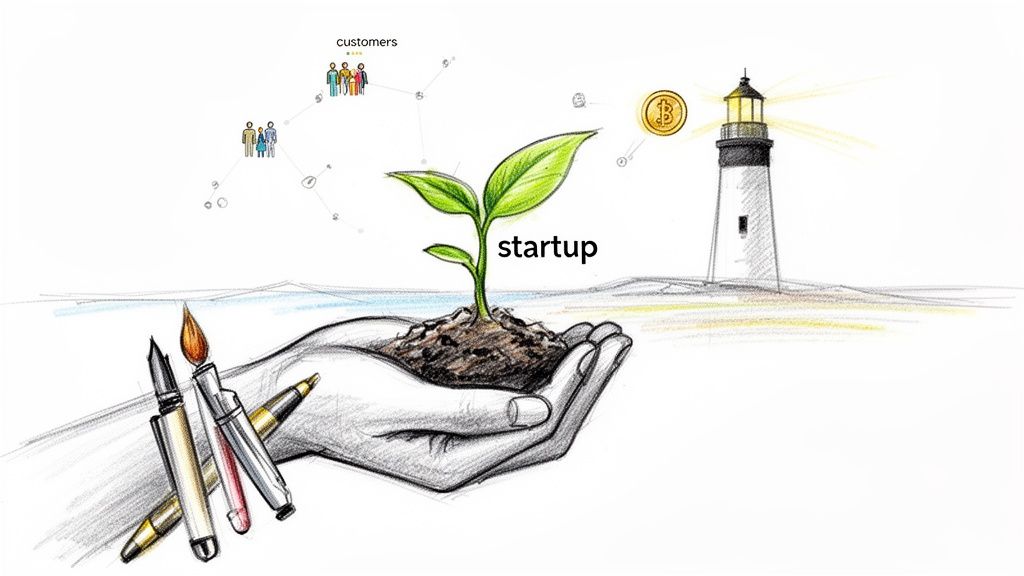
In a crowded market, professional branding isn't a "nice-to-have"—it's a survival tool. Getting the right agency on board is one of the smartest investments you can make early on. It’s how you turn a brilliant idea into a brand people actually remember and choose to buy from.
Think about it: 81% of consumers say they need to trust a brand before they’ll even consider a purchase. For a startup with no track record, building that trust is everything. It's what convinces someone to take a chance on you over a more established name.
The Power of a Strategic Partner
A good branding agency brings a crucial outside perspective. Your internal team lives and breathes your product, which is great, but it can also create blind spots. An agency’s job is to challenge your assumptions, dig deep to find what makes you truly different, and translate your vision into something your customers will connect with.
And you've got plenty of options. The UK's creative sector is booming, with 3,971 branding firms operating within a wider agency market now valued at an incredible £46.4 billion. This vibrant ecosystem means there's a wealth of talent out there for founders ready to build something meaningful. You can dive deeper into these figures by exploring the latest digital agency statistics.
This strategic thinking directly impacts your startup’s future. A clear, professionally developed brand gives you a serious edge.
A strong brand helps startups attract customers, investors, and talent while creating consistency and credibility from the start. It’s the framework that supports everything else you do.
What You Really Get from an Agency Partnership
Working with an agency isn't just about outsourcing design; it’s about fast-tracking your journey to market with an identity that works. Here’s an actionable look at the value they bring:
- Acquire Instant Expertise: You gain a full team of specialists—strategists, writers, and designers—who understand the startup landscape. This allows you to sidestep common branding pitfalls from day one.
- Carve Out a Market Niche: Leverage their market research skills to pinpoint your unique position. They will define what makes you special and craft a message that cuts through the noise.
- Boost Your Investor Appeal: Present a polished, professional brand that signals to investors you have a clear vision and a solid plan, making your pitch significantly more compelling.
- Establish a Blueprint for Growth: Receive a complete brand toolkit—including strategy, messaging, and visual guides—to empower your team to maintain brand consistency as you scale.
Ultimately, picking the right partner, whether it’s a big national name or a local Dorset-based expert, is about finding a catalyst. They’re the ones who can help you shape your raw idea into a brand that’s built to last.
Get Your Own House in Order Before Inviting an Agency In
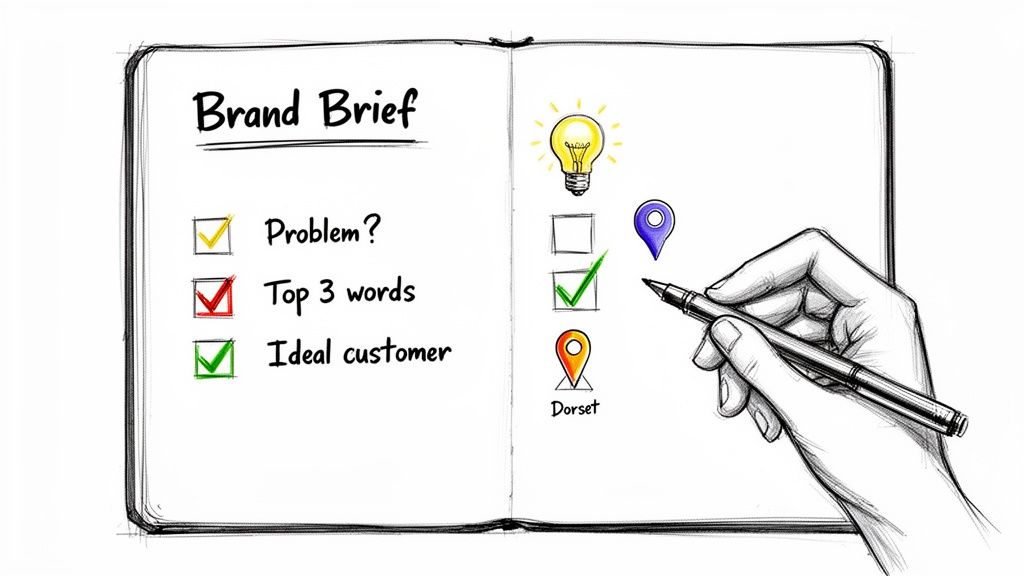
Before you even think about shortlisting a branding agency for startups, the most crucial work has to happen within your own four walls. Walking into a meeting with an agency armed only with a budget is like asking an architect to build your dream home without a blueprint. You’ll get a structure, sure, but it almost certainly won’t be the one you had in your head.
Clarity is everything at this stage. You need to get all those brilliant, abstract ideas out of your head and onto paper, creating a solid brief an agency can actually sink their teeth into. Getting this right from the start ensures you find a partner who gets your vision, not just one who fits your price tag. If you're unsure where to begin, understanding how to start a brand from scratch is a fantastic starting point for solidifying your core identity.
Your Pre-Agency Brand Definition Checklist
Let's imagine you're a fresh tech startup right here in Dorset. Before you send that first introductory email, get your founding team in a room and thrash out the answers to these questions. This single exercise will completely change the quality of your conversations with potential agencies.
Work through this checklist to build your internal brief:
- Vision & Mission: What's the big-picture change you want to make? Why do you exist beyond turning a profit?
- Target Audience: Get specific. Who are you actually for? A simple persona helps massively. Are you targeting a time-poor hotel owner in Poole who needs a simpler booking system, or a young professional in Bournemouth looking for sustainable local goods?
- The Problem You Solve: What's the one nagging pain point your product or service makes disappear? Don't be vague. "Saving time" is weak. "Slashing restaurant food waste by 20%" is a powerful hook.
- Brand Personality: If your brand were a person, what three words would describe them? Are you innovative, reliable, and friendly? Or perhaps bold, exclusive, and sophisticated?
- Competitor Landscape: Name your top three competitors. What are they great at? And, more importantly, where are the gaps they’ve left for you to fill?
- Your Budget Range: You don't need a final, locked-in number just yet, but you absolutely need a realistic range. It shows an agency you’re serious and helps them figure out what's possible within your financial reality.
When you’ve done this homework, you’re no longer just a potential client; you’re a prepared partner. You can judge an agency not on their glossy sales pitch, but on how well they genuinely grasp your vision and articulate a plan to make it real.
This soul-searching does more than just prepare you for an agency meeting; it hardens your own business strategy. Once you have these answers, you’re not just shopping for a designer anymore. You’re looking for a strategic partner who can build on the strong foundation you’ve already poured.
To see how these core ideas translate into tangible assets, take a look at our breakdown of effective graphic design services for businesses.
Looking Beyond the Pretty Pictures: Vetting an Agency's Work and Process
Once you have a clear idea of what you need, it’s time to start looking at what agencies have actually done. When you review a portfolio, you need to look past the gallery of slick logos. Think of it as digging for evidence. You're trying to figure out if an agency just makes things look good, or if they build brands that actually work.
A truly great portfolio is built on case studies, not just images. Don't just browse the final designs; get stuck into the story behind them. A solid case study will walk you through the client's initial problem, the agency's strategic thinking, and—most importantly—the measurable business results they delivered. That’s how you know they get that branding is a tool for growth, not just decoration.
Choosing a strategic partner is a big deal, and it's a move more and more UK startups are making. The creative sector is healthy, and the best agencies are thriving because they deliver real value. In fact, agency gross incomes have recently climbed 3.5% year-on-year, from an average of £5.70 million to £5.93 million. This shows that businesses are willing to invest in firms that genuinely specialise in brand strategy. If you're interested in the wider industry trends, especially with the UK's Trade Mark Registry about to hit its 150th anniversary, you can get more detail by reading the full report on agency growth.
Can They Do More Than One Trick?
As you're looking through their past work, ask yourself a critical question: does it all feel a bit… samey? If an agency has a distinct "house style" that they apply to every client, that’s a potential red flag. It could mean they’re more focused on building their own signature look than on creating a unique identity that fits your business like a glove.
What you want to see is versatility. A great branding agency for startups should have a portfolio that shows they can adapt to different industries, target audiences, and brand personalities. Their work should feel different from one project to the next. You need to see proof that they can grasp the specific challenges of your market, whether you’re a local Dorset business or a tech startup with national ambitions. To see what that kind of variety looks like, you can explore our diverse portfolio of branding projects.
How Do They Actually Work?
The final portfolio pieces are important, but the journey to get there is arguably even more so. A clear, transparent, and well-communicated process is the hallmark of a professional team. It’s what prevents nasty surprises, manages expectations, and keeps your project on time and on budget.
An agency’s process is a direct reflection of its experience. A well-defined workflow with clear milestones for strategy, design revisions, and feedback shows they respect your time and budget.
Before you even think about signing a contract, ask them to walk you through their typical project stages. A seasoned agency will have a battle-tested process. It should look something like this:
- Discovery & Strategy: This is where they should be obsessively curious. They’ll dig into your business, your competitors, and your customers. In this phase, they should be asking you far more questions than you're asking them.
- Concept Development: Based on the strategy, they should come back with a few distinct creative concepts. Critically, each one should be tied to a clear rationale explaining why it solves the strategic challenge.
- Refinement & Revisions: A good partner builds in structured rounds of feedback. They’ll be upfront about how many revisions are included and have a plan for what to do if the first-round concepts don't quite hit the mark.
- Final Delivery & Toolkit: The project doesn’t end with a logo file. It ends with the delivery of a comprehensive brand toolkit, complete with guidelines, colour codes, font files, and everything else you need to use your new brand consistently.
If their process sounds vague, disorganised, or they seem to be making it up on the spot, walk away. You're looking for a confident guide, not someone who's just winging it.
Critical Questions to Ask a Potential Agency
You’ve reviewed their portfolio, and you like what you see. Now it’s time for the real test. The initial meetings with a potential agency are your chance to see beyond the polished case studies and understand how they actually think and operate.
Think of it less as a sales pitch and more as an interview. You’re not just buying a logo; you’re looking for a strategic partner who can navigate challenges and truly get behind your vision. To do that, you need to ask questions that cut through the fluff. These aren't about catching them out, but about opening up a real conversation.
Going Beyond Cost and Timelines
Of course, you need to know the price and the schedule. But the most telling conversations revolve around their process, how they handle pressure, and the people you'll be working with day-to-day. The goal is to understand the value you're getting, not just the cost.
Here are a few essential questions to get you started. Listen carefully to how they answer, not just what they say. Confidence, honesty, and a focus on your business goals are what you're looking for.
-
“How will you measure the success of this project once it’s live?”
What you’re listening for is a connection to real-world business metrics. A great agency will immediately start talking about things like brand recall, the quality of leads generated, conversion rates on the new website, or even tracking shifts in customer perception. They should be itching to prove their work makes a tangible difference.
A major red flag is an answer that focuses only on the deliverables. If they say things like, "You'll have a fantastic new logo" or "Your brand will look so much more modern," they’re missing the entire point. You're not just after a new look; you're after results.
-
“Tell me about a time a project went off the rails. What happened, and how did you fix it?”
Honesty is everything here. No agency has a perfect track record, and anyone who claims they do is either inexperienced or not being truthful.
A confident partner will share a genuine story, own their part in what went wrong, and then clearly walk you through the steps they took to get things back on track. This question isn't about their failure; it's about their problem-solving skills, their communication under pressure, and their commitment to making things right. A vague, "That's never really happened to us," is a signal to walk away.
-
“Who, specifically, will be working on our project, and what’s their experience?”
This is a crucial one. You need to know who you’ll actually be collaborating with. A strong agency will be keen to introduce you to the core team—the strategist, lead designer, and project manager—and discuss their direct experience with startups or your specific industry.
Be wary of vague references to "our talented designers" or "the creative team." The classic bait-and-switch, where you're impressed by the senior partners in the pitch meeting only to have your project passed to a junior team, is a real risk. You have every right to know who you'll be trusting with your brand.
Don’t be afraid to ask direct, challenging questions. A great agency will welcome it. They’ll see it as a sign that you’re a serious client who values a true partnership built on trust and clarity.
Ultimately, you’re not just hiring a supplier to complete a task. You’re choosing a partner to join you on a critical part of your startup’s journey. Their answers to these questions will tell you far more about their suitability than any glossy portfolio ever could.
Decoding Deliverables, Timelines, and Pricing
Alright, so you’ve quizzed a potential branding agency for startups on their process and met the team. Now it’s time to get down to brass tacks: what do you actually get, when do you get it, and what’s the damage?
Vagueness here is a huge red flag. A great agency partnership is built on clarity, and nailing down these practical details from the start is the best way to avoid nasty surprises later on. You need to know exactly where your investment is going.
A proper branding project is more than just getting a new logo designed. It's a carefully structured journey that takes you from big-picture strategy all the way to a set of concrete, usable assets. Getting your head around this process helps you set realistic expectations.
What to Expect in Your Brand Toolkit
When you work with a professional agency, you're not just buying a few design files. You're investing in a complete system that will guide your brand for years to come. While the specifics can vary, any decent branding package for a startup should include a core set of deliverables.
Think of it this way: the final handover should be a toolkit so clear and comprehensive that you can give it to a new hire, a freelancer, or a partner, and they'll know exactly how to represent your brand consistently.
Here are the non-negotiables you should see in a proposal:
- Brand Strategy & Messaging Guide: This is your foundation, the North Star for your brand. It should clearly document your purpose, personality, ideal customer, and your unique place in the market. Crucially, it also needs to define your key messages, tone of voice, and the brand story that will shape all your communications.
- Logo Suite: This is so much more than a single JPG. A professional suite includes your primary logo, secondary versions (like stacked or horizontal layouts), and a standalone brand mark or icon. Expect these in every file format you’ll ever need—vector files like .svg for scalability and raster files like .png for digital use.
- Comprehensive Brand Guidelines: This is your brand's instruction manual. It’s a detailed document explaining how to use your new identity correctly. It covers everything from logo do's and don'ts to your exact colour palettes (with CMYK, RGB, and Hex codes) to rules for typography and photography style.
Before you even get to this stage, you need to be sure the agency's process is solid. You need to be asking the right questions from the get-go.
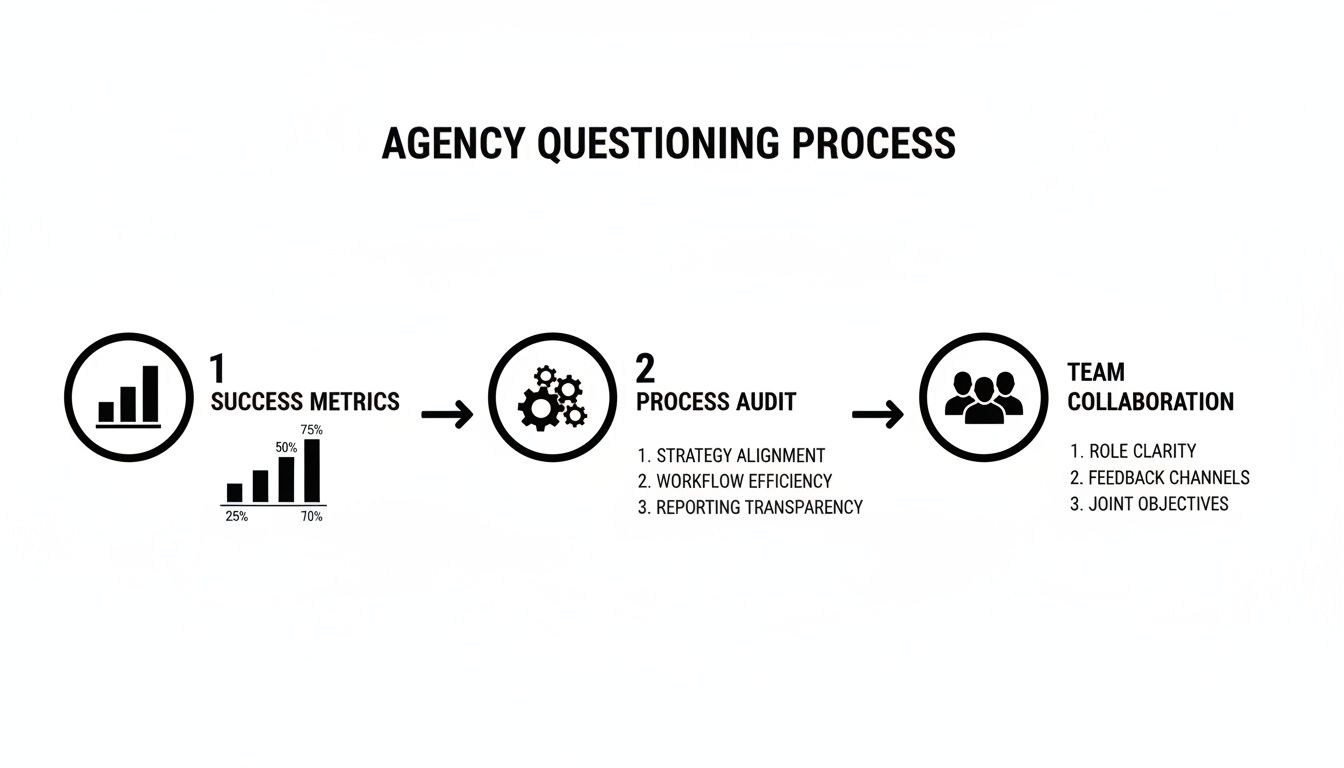
This really boils down to three things: digging into how they measure success, auditing their workflow, and understanding how your teams will collaborate. Get clear answers on these, and you're in a much better position.
Understanding Pricing Models
For any startup, every pound counts, so there’s no room for financial surprises. Branding agencies tend to use one of two pricing models: monthly retainers or fixed-cost projects. While retainers have their place for ongoing marketing, for a foundational branding project, a fixed-cost proposal is almost always the better, safer choice.
A fixed-cost project gives you a clear, predictable budget from the outset. It forces the agency to define the scope meticulously, which protects you from unexpected costs and ensures everyone is aligned on the final deliverables and timeline.
When you're comparing quotes, resist the urge to just jump at the lowest number. We’ve all seen how the hidden costs of cheap website design can end up costing far more in the long run. A slightly higher upfront investment in quality and clarity is often the smartest financial move you can make.
Always insist on a detailed proposal that breaks down each phase and deliverable. That’s how you know exactly what your money is buying.
Your Next Steps to Building a Memorable Brand
You’ve done the homework. You've figured out what you need, vetted potential partners, and you know the right questions to ask. Now it’s time to take that shortlist and make one of the most important decisions for your startup's future.
This isn't just about picking a design firm; it's about finding a genuine partner. You're looking for a branding agency for startups that gets the hustle, combines real creative talent with a solid grasp of your business goals, and feels like a true extension of your own team.
Making the Final Call
With all your research done, the final steps are about turning your preparation into a confident decision. This is where you lock things in and get ready to launch the project.
Here’s a practical checklist to make sure nothing gets missed before you sign on the dotted line:
- Revisit Your Brief: Take one last look at your internal brand brief. Are the goals you defined still crystal clear? Is everyone on your team still aligned? A quick check now prevents headaches later.
- Do a Final 'Chemistry Check': Before committing, have one last, informal chat with the actual people who will be working on your project—the project manager and the lead designer. Does the rapport still feel right? Trust your gut on this one.
- Read the Contract, Properly: Get the statement of work or contract and go through it with a fine-tooth comb. Make sure it explicitly details every deliverable, the timeline, the payment schedule, and how many rounds of revisions are included. No surprises.
- Get Your Assets Ready: Start pulling together everything you already have—old logos, market research, customer profiles, competitor analysis. Having this organised from day one means your new agency can hit the ground running.
This final stage is less about discovery and more about commitment. Choosing your agency partner is the starting gun for building your brand’s future.
As you get ready to kick things off, remember that a powerful brand is the foundation for everything you do online. It's the core of how to build an online presence that actually works.
If you’re a startup in the UK, especially here in Dorset, and you're looking for a team that lives and breathes this stuff, we should talk. We blend strategic branding with powerful web design and a focus on growth.
Take a look at our work, and when you’re ready, book a no-obligation chat. We’d love to hear what you’re building.
Your Big Questions, Answered
Let's tackle some of the big questions we hear all the time from startups trying to find the right branding partner. It’s a significant investment, so it’s natural to have a few things on your mind.
How Much Should a Startup Budget for a Branding Agency?
This is the big one, isn't it? In the UK, a proper, comprehensive branding package typically starts around £3,000 and can go up to £15,000+. It all depends on the scope. A simpler project, like just a logo suite without the deep strategic work, will naturally sit at the lower end of that scale.
For most startups, a fixed-cost project is the way to go. It gives you total clarity on your financial commitment and stops costs from creeping up unexpectedly. Always insist on a detailed proposal that breaks down every stage and what you’ll get, so you know exactly where your money is going.
What’s the Single Most Important Trait in an Agency?
A stunning portfolio is a great start, but it's not the most important thing. The one trait that truly matters is strategic depth. The right branding agency for startups won't just be focused on pretty designs; they’ll be obsessed with understanding your business goals, your customers, and your competition.
A great agency should ask more questions about your business than you ask about their design process. Their main job is to figure out how your brand can solve a real business problem and drive growth, not just to make things look good.
Should I Choose a Local Agency or a Large National One?
This often comes down to what kind of relationship you want. For many new businesses, especially those based outside of the major city hubs, a local agency can make a world of difference. A partner right here in Dorset, for instance, will have a genuine feel for the regional market.
Local agencies tend to offer a more personal, hands-on service and often provide better value. While big national firms have their place, that close, collaborative partnership you get with a local team is invaluable when you're just starting to build your brand from the ground up.
Ready to build a brand that stands out in Dorset and beyond? DesignStack combines strategic branding with expert web design to help startups grow with confidence. Start the conversation with us today.
Leave a Reply