

Choosing the Right WordPress Website Development Company
For any small or medium-sized business today, a professional website isn't just a nice-to-have; it's the core of your online identity. When it comes to building that presence, deciding to work with a specialised WordPress website development company is one of the smartest investments you can make for your long-term growth and stability.
Why Partnering With a Pro WordPress Agency Is a Smart Move
Think of it this way: by 2026, your website will almost certainly be the first handshake between your brand and a potential customer. A good agency is far more than just a supplier; they act as a strategic partner, focused on making that first impression brilliant. They'll help you turn a simple online brochure into a hard-working tool for generating leads and sales.
Of course, the temptation to go the DIY route is strong. It seems like a great way to save money, but I’ve seen it backfire countless times. Poor security, slow performance, and a site that can’t grow with your business can quickly turn that initial saving into a very expensive problem. There's a lot to be said about the hidden costs of cheap website design.
A professional agency, however, starts you off on the right foot with a solid foundation built on genuine expertise.
The Power of Specialised Expertise
When you hire a dedicated WordPress agency, you're not just getting one person’s skills. You're getting a whole team of specialists—designers, developers, SEO experts, and project managers—all working on your project. This teamwork ensures every part of your site, from how it looks to how it runs, is handled by a pro.
This is a world away from the DIY approach, where you’re suddenly expected to be an expert in everything. An agency’s focused knowledge means your site gets built faster, more securely, and with a clear plan tied directly to your business goals.
They live and breathe WordPress. This specialisation is vital, especially when you consider how dominant the platform is. As of March 2026, WordPress powers 42.6% of all websites globally, holding a massive 59.9% of the entire CMS market share. That's not a trend; it's the standard.
An experienced agency doesn’t just build a website; they build a business asset. They focus on creating a secure, high-performing, and scalable platform that delivers a measurable return on investment and grows with your company.
What You Actually Get from a Professional Partnership
To really see the value, you need to look past the idea of just "building a website." A true professional partnership provides a complete framework for online success.
Here’s a quick rundown of what that really means:
- Strategic Planning and Discovery: It all starts with them getting to know your business, your customers, and your goals. This ensures the website they build actually serves a purpose.
- Custom Design and User Experience (UX): You get a unique, professional design that reflects your brand and is built to guide visitors toward taking action—not a generic template anyone can buy.
- Robust Security Measures: From day one, they implement best practices to protect your site and your customers' data from threats. This isn't an afterthought; it's fundamental.
- Performance Optimisation: Your site is built for speed. A fast-loading experience is crucial for keeping users engaged and for ranking well in search engines.
- Ongoing Support and Maintenance: A good partner doesn't disappear after launch. They're there to handle updates, backups, and security monitoring, leaving you free to run your business.
A professional agency knows how to get the most out of WordPress. Understanding the key advantages and the 7 reasons WordPress is the best platform for your business website will give you even more confidence in this approach. Ultimately, choosing an agency is an investment in quality, security, and the long-term health of your business.
Defining Your Project Vision and Budget
Before you even think about shortlisting a WordPress website development company, you need to get your own house in order. Approaching an agency with a vague idea like "I need a new website" is a recipe for mismatched quotes and a project that misses the mark.
To find a partner who truly gets your business—and to get proposals you can actually compare—you first need a clear project vision and a realistic budget. This isn't just paperwork; it's the strategic foundation for your entire project, ensuring you and your chosen agency are aligned from day one.
Translating Your Ideas into an Actionable Brief
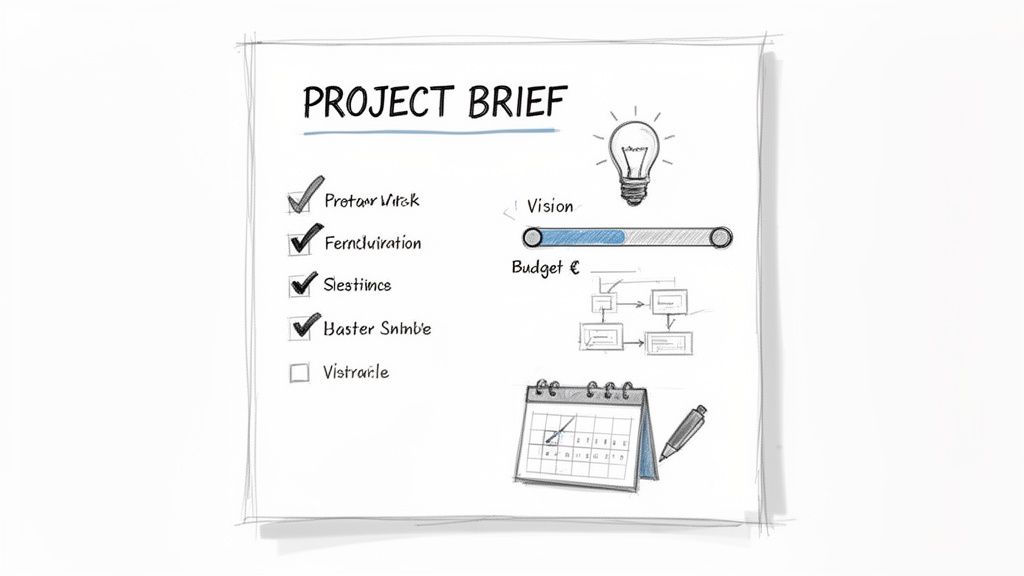
Don't let the term "project brief" intimidate you. It’s simply a document that answers the key questions any good developer will ask. Think of it as the single source of truth that prevents crossed wires and scope creep down the line. To get started, work through this actionable list:
- Define Your Primary Goal: What is the number one thing this website must achieve? Is it generating qualified leads, selling products, or establishing your brand as an industry authority? Write a single sentence that captures this objective.
- Describe Your Ideal Customer: Who are you trying to reach? Detail their demographics, pain points, and what they need from your website. Creating a simple user persona can be incredibly helpful. Genuinely understanding your users is a huge part of finding a website designer who understands your vision.
- List Must-Have Functionality: Move from ideas to concrete functions. Do you need e-commerce with a payment gateway? A booking system? A members-only area? List every critical feature.
- Map Out Essential Pages: Outline the core site structure. At a minimum, this usually includes Home, About, Services/Products, Blog, and Contact. Think about whether you need a portfolio, case studies, or testimonials section.
- Identify Key Integrations: Does the site need to connect with other software you use, like a CRM, accounting system, or an email platform like Mailchimp? List all of them.
- Gather Design Inspiration: Find three to five websites you like. Crucially, write down what you like about each one—the clean layout, the colour scheme, the user experience. This gives an agency a feel for your aesthetic.
Completing this list isn’t about you doing the designer's job. It’s about communicating your needs so you get a proposal that accurately reflects the work involved.
Demystifying Your Website Budget
Talking about money can feel awkward, but setting a budget is non-negotiable. It helps an agency propose a realistic solution and lets you evaluate their quotes on a level playing field. Without a number in mind, you'll get quotes that are all over the map.
Below is a rough guide to help you frame your budget. These are 2026 estimates for the UK market and can vary based on an agency's location, experience, and the precise project scope.
WordPress Project Budgeting Guide (UK 2026 Estimates)
| Project Type | Description | Estimated Cost Range (£) | Typical Timeline |
|---|---|---|---|
| Brochure Website | A simple, professional site (5-10 pages) with standard features like a contact form, blog, and mobile optimisation. Ideal for service businesses. | £3,000 – £7,000 | 4-6 Weeks |
| E-commerce Store | A site with full sales functionality, product management, payment gateways, and customer accounts. Complexity drives the cost. | £5,000 – £15,000+ | 8-12 Weeks |
| Bespoke Development | A highly customised website with unique features, third-party API integrations, or specific performance and security requirements. | £12,000 – £30,000+ | 12-20+ Weeks |
This table should give you a starting point. A simple brochure site for a local tradesperson will naturally be at the lower end, while a national e-commerce brand with custom integrations will sit at the higher end.
Think of your budget as a strategic investment, not just a cost. A higher budget doesn't just buy more features; it buys more expertise, better security, superior performance, and more dedicated support—all factors that contribute to a greater return on your investment over time.
Be honest with yourself—and potential agencies—about your budget. This transparency doesn't give them a licence to max it out; it builds trust and starts a productive conversation about what's achievable.
How to Find and Shortlist the Best Agencies
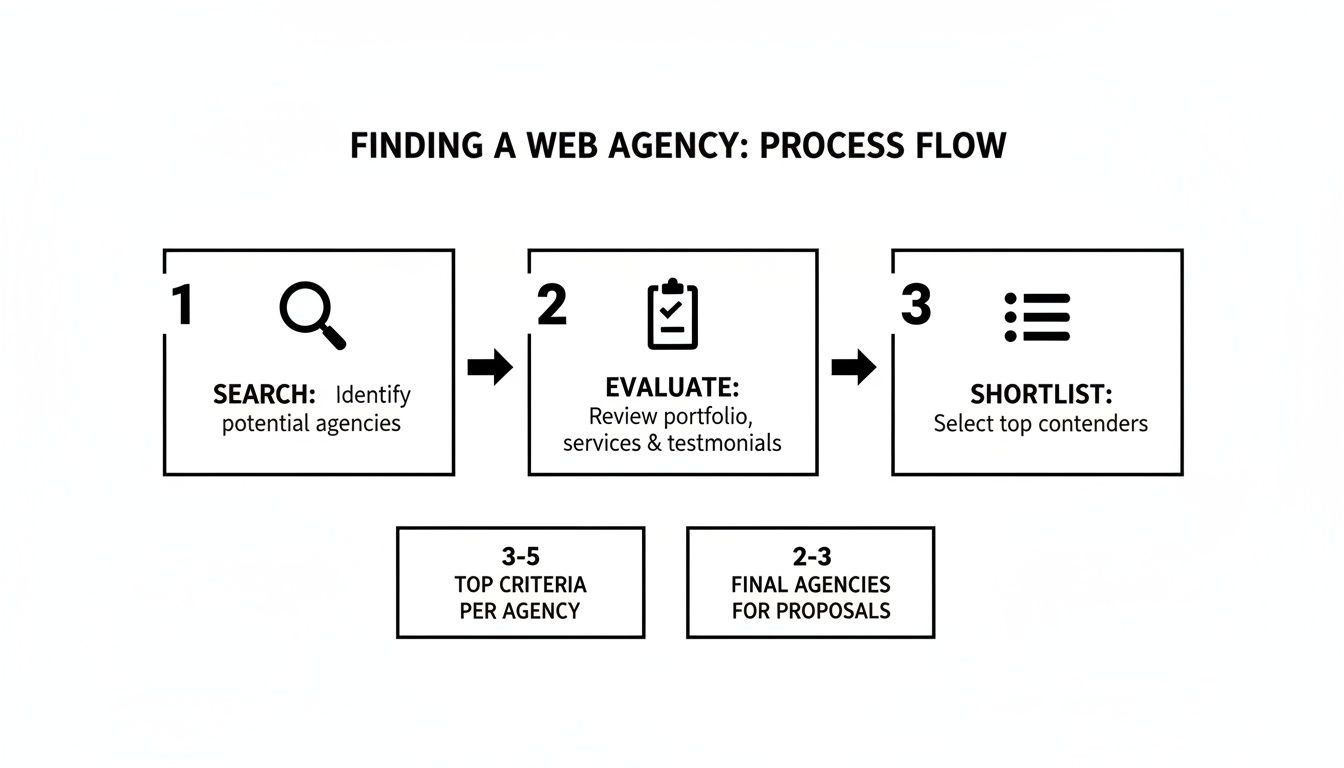
With your project brief and budget sorted, you’re ready for the important work of finding a partner to bring it all to life. The aim isn't to find every single WordPress website development company on the planet. Instead, your goal is to build a well-researched shortlist of three to five strong contenders that feel like a genuinely good fit.
So, where do you start looking?
The search often begins online, but it’s more than just a quick Google search. A great first step is to think local. Searching for phrases like "web design Dorset" or "WordPress agency Weymouth" can connect you with experts right in your area who understand the local business scene. There's a real advantage to being able to meet face-to-face with a local partner.
Once you've looked locally, it's time to cast a wider net to find top-tier talent, wherever they might be based. Here are some of the best places to see quality work being showcased:
- Industry Award Sites: Platforms like Awwwards and the CSS Design Awards are brilliant for spotting agencies at the top of their game. These sites feature websites celebrated for exceptional design, creativity, and user experience.
- Creative Portfolios: Networks such as Behance and Dribbble are where designers and agencies show off their best projects. You can filter by tags like "WordPress website" to zero in on specialists.
- Professional Directories: Sites like Clutch and The Manifest are invaluable. They offer verified client reviews, portfolio examples, and detailed service descriptions, which makes comparing different agencies much easier.
As you start finding potential agencies, don't just bookmark their homepage and move on. Now the real homework begins—a deep dive into their own online presence. After all, if they can't build a great website for themselves, how can you trust them with yours?
Putting Their Website Under the Microscope
Treat every agency's website as the first test. A slick design is one thing, but you need to look for evidence of genuine expertise and professionalism. Here’s what to focus on to tell the great agencies from the merely good-looking ones.
First, Scrutinise Their Portfolio
Don't just skim through the pretty pictures. Click through to the live websites they've built. Do they load quickly? Is the navigation intuitive on your computer and your phone? Look for a variety of projects. An agency that shows a diverse portfolio with a consistently high level of quality has true range and experience.
Then, Dig Into Their Case Studies
Case studies are where an agency should be proving its value. A great one doesn't just list what they did; it explains why they did it and what the results were. Be on the lookout for measurable outcomes: "increased online sales by 40%," "boosted lead generation by 150%," or "improved site speed, reducing bounce rate by 30%." If you can't find any results-driven case studies, that's a major red flag.
Next, Check Their Reviews and Reputation
Testimonials on an agency’s site are a starting point, but you need an unbiased perspective. Head over to their Google Business Profile, their Clutch profile, or other independent review platforms. Look for patterns in what clients are saying. Do people consistently praise their communication, project management, and ability to stick to deadlines?
Finally, Read Their Blog and Insights
A true expert is generous with their knowledge. Does the agency’s blog have genuinely useful articles about web design, SEO, or WordPress development? This shows they’re not just builders; they're strategic thinkers who stay on top of their industry. It’s a powerful sign of their passion and expertise.
A truly experienced WordPress website development company won’t just show you what they built; they’ll tell you the story behind it. They focus on the client's problem, their strategic solution, and the tangible business results they delivered.
Working through these checks will help you filter out the agencies that look good on the surface but lack the substance you need in a partner. It takes a bit of time, but this effort is crucial.
By the end of this process, you should have a solid, well-vetted shortlist of three to five agencies. These are the companies you’ll reach out to, confident that each one is a strong potential fit for your project.
Alright, you've done your homework and narrowed your search down to a handful of promising WordPress agencies. Now for the most important part: seeing who really knows their stuff.
This is where you move past the slick portfolios and get a feel for how a WordPress website development company actually works. It's less of a formal interview and more of a two-way chat. You're trying to figure out if they’re the right fit for you, and they’re doing the same. So be ready to talk openly about your goals, your vision, and your budget.
This whole process is about filtering for quality. You start with a wide search, narrow it down based on their work and reputation, and now you’re at the pointy end of the funnel—making sure the team you choose is the real deal.
Key Questions to Ask in Your First Meeting
To get a real sense of an agency, you need to ask direct questions that go beyond the surface. Generic questions get you generic, rehearsed answers. Here are a few essentials I always recommend asking to cut through the sales pitch.
Your Essential Question Checklist:
- Process: "Can you walk me through your entire process, from our first chat to launch day and beyond?"
- Team: "Who would be my main point of contact? Will I be able to speak directly with the designers or developers working on my site?"
- Technology: "How do you approach themes and plugins? Do you use pre-built templates, or do you build custom themes? What’s your philosophy on this?"
- Communication: "What tools do you use to keep clients in the loop (like Asana, Slack, or something else)? And how often should I expect to get updates from you?"
- Support: "What happens after the site goes live? Is there a warranty period for fixing any bugs, and what are my options for ongoing support and maintenance?"
Listen carefully to their responses. A professional agency won't hesitate; they'll have clear, well-practised answers because these processes are the foundation of their business. If they stumble or try to blind you with jargon, it might be a sign they’re making it up as they go. A solid process should include distinct stages like discovery, wireframing, design, development, and testing, with clear points for your feedback at each step.
Warning Signs to Watch Out For
Just as crucial as what you ask is what you look out for. Over the years, I've seen a few red flags pop up that are almost always a sign of trouble ahead. If your gut is telling you something’s not right, it’s worth paying attention.
Here are a few common warning signs:
- The "Yes to Everything" Attitude: A good partner will be a strategic one. If an agency agrees to every idea without question or fails to suggest better alternatives, they might not have the experience to guide your project to success. They should be confident enough to push back and offer expert advice.
- Vague or Evasive Answers: Ask who, specifically, will be building your site. If you get a fuzzy answer like "our team of experts" instead of learning whether they use in-house staff or outsource work, be wary. Transparency is key.
- A Portfolio Mismatch: Does their portfolio show incredible, high-end work, but the person you're speaking with can't clearly explain how they achieved it? The team that built those impressive sites might not even work there anymore. You can see the consistency in our work with Dorset businesses right here in our portfolio.
- Immediate Pressure to Sign: Any agency that pressures you with "limited-time offers" or rushes you to sign a contract is a major red flag. A true professional will respect your need to make a considered decision. They’re interested in a long-term relationship, not just a quick sale.
Honestly, these principles apply to finding any professional partner. As this guide on how to choose the best agency for your business points out, focusing on clear processes and proven results is always the best strategy.
With the demand for skilled WordPress developers climbing—projections show it will be a major priority for businesses in 2026—taking the time to vet your partner properly is more important than ever. It’s the only way to ensure you secure a genuinely top-tier team.
Decoding Proposals and Making Your Final Choice
You’ve held the meetings, asked the important questions, and now a handful of proposals have landed in your inbox. This is where it gets real. You’re shifting from simply vetting potential agencies to picking the one you’ll trust to build your new online home. It’s a big decision, but it doesn’t have to be overwhelming.
The temptation is to scan for the lowest price and call it a day. That’s almost always a mistake. A bargain-basement quote often signals hidden costs, missing features, or non-existent support down the line. What you're really looking for is the best value – the proposal that shows the clearest understanding of your business goals and presents a solid plan to achieve them. A good proposal isn't just a price list; it's a blueprint for success.
What a Strong Proposal Looks Like
Believe me, not all proposals are created equal. A professional agency will send over a detailed document that leaves nothing to chance. It should tell you exactly what you’re getting, when you’re getting it, and how much it will all cost. Anything less is a red flag.
To make a fair, apples-to-apples comparison, make sure each proposal includes these essentials:
- A Detailed Scope of Work: This is the heart of the document. It needs to list precisely what the agency will build, referencing your brief and confirming page counts, specific features like e-commerce or booking systems, and any third-party software integrations.
- Project Phases and a Timeline: A pro will break the project into clear stages—think discovery, design, development, testing, and launch—with estimated dates for each. This proves they have a process and gives you a clear roadmap of what to expect.
- A Transparent Pricing Breakdown: The costs should be itemised and easy to follow. A proposal should specify what’s included and, just as importantly, what isn't. Be wary of a single, unexplained lump sum.
- Clear Terms and Conditions: Look for the nitty-gritty on payment schedules, who owns the final website (it should be you!), and how any extra work outside the original scope will be handled.
A detailed proposal is your safety net. It protects both you and the agency by setting firm expectations from the very beginning and preventing costly misunderstandings later on.
A great proposal doesn’t just repeat your brief back to you; it shows the agency was truly listening. It should reflect your goals in their own words, proving they understand the 'why' behind the project, not just the 'what'.
A Practical Checklist for Your Final Review
With the proposals in front of you, it’s time to dig in. Don’t get distracted by slick presentation or a tempting headline price. Use this checklist to methodically compare the real value each WordPress website development company is offering.
Your Final Decision Checklist:
- Does the scope match your needs? Does the proposal cover everything you asked for? If they’ve suggested something different, have they explained their reasoning? A good partner will sometimes challenge your assumptions for a better outcome.
- How many design revisions are included? We typically include three rounds of revisions at DesignStack, which is plenty of time to get things right. Some agencies offer only one or two, which can force you to settle for a design you don’t love.
- What happens after launch? Look for a clear support or "warranty" period. A decent agency will include at least one month of post-launch support to fix any bugs or make small adjustments at no extra charge.
- Are there any valuable "extras"? Does the cost include foundational on-page SEO, migrating content from your old site, or a training session to show you how to use your new WordPress dashboard? These things can save you a surprising amount of time and money.
- What's the plan for hosting and maintenance? Even if it’s a separate cost, their approach to ongoing care shows their commitment. Are they thinking about a long-term partnership or just a one-and-done project?
- Are the payment terms fair? A common and reasonable structure is a 30-50% deposit to kick things off, with the remaining payments tied to completing major milestones like the design approval and the final launch.
By walking through these points for each proposal, you’ll get past the price tags. You'll start to see which agency is truly invested in your long-term success, which one is offering a genuine partnership, and which one represents the smartest investment for your business.
Common Questions About Hiring a WordPress Agency
So, you’ve waded through proposals and you’re this close to picking an agency. It’s completely normal to have a few nagging questions still bouncing around in your head. Choosing a digital partner is a big deal, and you want to be 100% clear on everything before you commit.
Let’s tackle some of the most common questions we hear from businesses at this exact stage. Our aim is to give you straightforward, honest answers so you can move forward with confidence.
What Costs Should I Expect After the Website is Built?
This is the big one, isn't it? Everyone wants to know what happens to their budget after the initial build is paid for. It’s a smart question to ask.
A website isn't a one-off purchase; it's a living part of your business that needs ongoing care to stay secure, fast, and effective. Beyond the main development cost, here’s a realistic breakdown of what you should plan for:
- Domain Name Renewal: This is the small annual fee you pay to keep your website address (like yourbusiness.co.uk). It’s usually minor, around £10-£20 per year.
- Website Hosting: Think of this as the rent for your website's space on the internet. Quality hosting is vital for speed and security. Costs can range from £10-£50+ per month, depending on the power you need and the traffic you get.
- Premium Plugin Licences: If your site has special features powered by premium plugins (think advanced booking forms or e-commerce tools), they often need an annual licence renewal. This ensures they keep getting security updates. Budget for £50-£300+ a year, depending on the complexity of your site.
- Maintenance & Support Plan: This is your peace of mind. A monthly plan with your WordPress website development company is like an insurance policy for your site. It covers the essentials: software updates, security checks, backups, and having an expert on hand for small fixes. Expect this to run from £150-£500+ per month.
Factoring these into your annual budget from day one means no nasty surprises down the line. It's just part of keeping your digital storefront in top condition.
Will I Actually Own My Website?
The answer to this should be a simple, resounding yes, absolutely. Any professional WordPress agency will ensure you have complete ownership of everything once the final invoice is settled.
This means you get all the files, the database, and any custom graphics or code created for you. It should be written clearly in your contract. You should also be given full administrator access to WordPress and your hosting account.
Be very wary of any company that wants to hold onto ownership or lock you into their own closed-off system. This is a massive red flag. True ownership means you have the freedom to move your site to a new host or work with another developer in the future if you ever wanted to.
How Much Input Will I Have During the Project?
Your input isn’t just welcome—it’s crucial. The best projects are a partnership. You’re the expert on your business and your customers; the agency is the expert in turning that knowledge into a great website.
A good agency will have a process built around your feedback. You should be a key voice at several milestones:
- Discovery and Strategy: The project always kicks off with deep-dive conversations to pin down your goals.
- Wireframe and Layouts: You’ll get to review and approve the website's blueprint and user journey before any design starts.
- Visual Design: You’ll sign off on the mock-ups, agreeing on the colours, fonts, and overall feel of the site.
You should never feel like the project is disappearing into a "black box." Constant communication and clear feedback stages are the sign of a team that values your expertise.
What Happens if I Need Changes in the Future?
Businesses change, and your website needs to be able to change too. A good agency relationship doesn't just stop the day your site goes live.
For smaller, everyday updates—like adding a new blog post, updating team photos, or tweaking some text—a monthly support and maintenance plan is perfect. You simply send the request, and they get it done.
For bigger jobs, like adding a full e-commerce shop or building a custom client portal, the agency will treat it as a new mini-project. They’ll work with you to scope it out, provide a separate quote and timeline, and schedule the work. It's always a good idea to ask how they handle future work before you sign. It ensures you have a partner ready to help you grow.
At DesignStack, we believe in building partnerships, not just websites. If you're looking for a Dorset-based WordPress website development company that prioritises clear communication and long-term success, we'd love to chat. Get in touch with us today to discuss your project.
Leave a Reply