

10 Essential Branding Tips to Grow Your SMB in 2026
Is Your Brand Working as Hard as You Are?
For many small business owners, the frustrating part isn't the quality of the work. It's the gap between how good your business is and how clearly that comes across to everyone else. You might deliver a great service, care a great deal about customers, and show up consistently, yet still look interchangeable with competitors who are less capable.
That usually isn't a hard work problem. It's a branding problem.
A strong brand helps people understand who you are, what you do, why you're different, and why they should trust you. It works when you're not in the room. It shapes first impressions on your website, in a Google search, on social media, in a proposal, and even in the way your invoices and emails feel. Good branding doesn't just make a business look polished. It makes buying easier.
For UK small and medium-sized businesses, especially in places like Dorset where reputation, word of mouth, and local visibility all matter, the best branding tips are the practical ones. The ones you can apply this month, not vague theory that sounds clever and changes nothing.
This guide gives you 10 clear branding tips that cover strategy, visuals, messaging, website execution, local visibility, and the systems that keep everything consistent as your business grows. If you're also trying to connect branding with wider marketing decisions, Adwave's marketing strategy guide is a useful companion read.
Table of Contents
- 1. Define Your Brand Purpose and Values
- 2. Create a Distinctive Visual Identity System
- 3. Develop a Consistent Brand Voice and Messaging
- 4. Build a Strong Online Presence Through Strategic Website Design
- 5. Leverage Social Proof and Customer Testimonials
- 6. Establish Consistent Brand Communication Across All Channels
- 7. Differentiate Through Authentic Brand Storytelling
- 8. Optimise for Local Search and Community Connection
- 9. Create Scalable Brand Systems for Growth and Consistency
- 10. Measure Brand Performance and Build Long-Term Customer Loyalty
- 10-Point Branding Comparison
- Your Brand's Journey Starts Now
1. Define Your Brand Purpose and Values
A lot of small businesses start with services, products, and pricing before they ever define what the brand stands for. That's understandable, but it creates problems later. If you can't explain why your business exists and what principles guide decisions, your messaging ends up vague, reactive, and easy to copy.
Your brand purpose doesn't need to sound grand. It needs to be true.
A Dorset gym like Crossfit Durnovaria might centre its brand around personal transformation and community. The Lobster Pot can lean into heritage, quality, and responsible sourcing. The Weymouth & Portland Chamber of Commerce naturally sits around supporting local business growth and connection. Different sectors, same principle. The strongest brands know what they stand for before they worry about slogans.
Write the sentence first
Start with one sentence:
Why does this business exist, beyond making money?
If the answer is fluffy, keep rewriting. Good purpose statements are plain English. They sound like something a customer or staff member would believe.
Use these prompts to shape it:
- Who do you help: Be specific about the people or businesses you serve.
- What change do you create: Focus on the outcome, not just the service.
- What values guide delivery: Think reliability, care, clarity, craftsmanship, sustainability, or speed.
Once that's clear, your homepage gets easier to write. Your social captions become more focused. Your design choices start making sense together. If you're building an online retail brand, this is also a useful foundation before you develop your ecommerce brand strategy.
What works and what doesn't
What works is choosing values you can prove in day-to-day delivery. If you say you're personal, your emails, calls, onboarding, and service experience need to feel personal. If you say you're premium, every touchpoint has to support that claim.
What doesn't work is borrowing fashionable brand language from bigger companies. “Dynamic”, “passionate”, and “customer-centric” don't tell anyone much on their own.
Practical rule: If a competitor could copy your values word for word and still sound believable, they're too generic.
For small businesses, purpose is a filter. It helps you decide what to publish, how to present yourself, who to hire, and even which enquiries to turn down.
2. Create a Distinctive Visual Identity System
Many businesses think branding means getting a logo designed and picking two colours. That's only the start. A usable brand identity is a system. It should tell people how the business looks across a website, social graphics, printed flyers, proposals, packaging, and signage.
Without that system, even good design starts drifting.
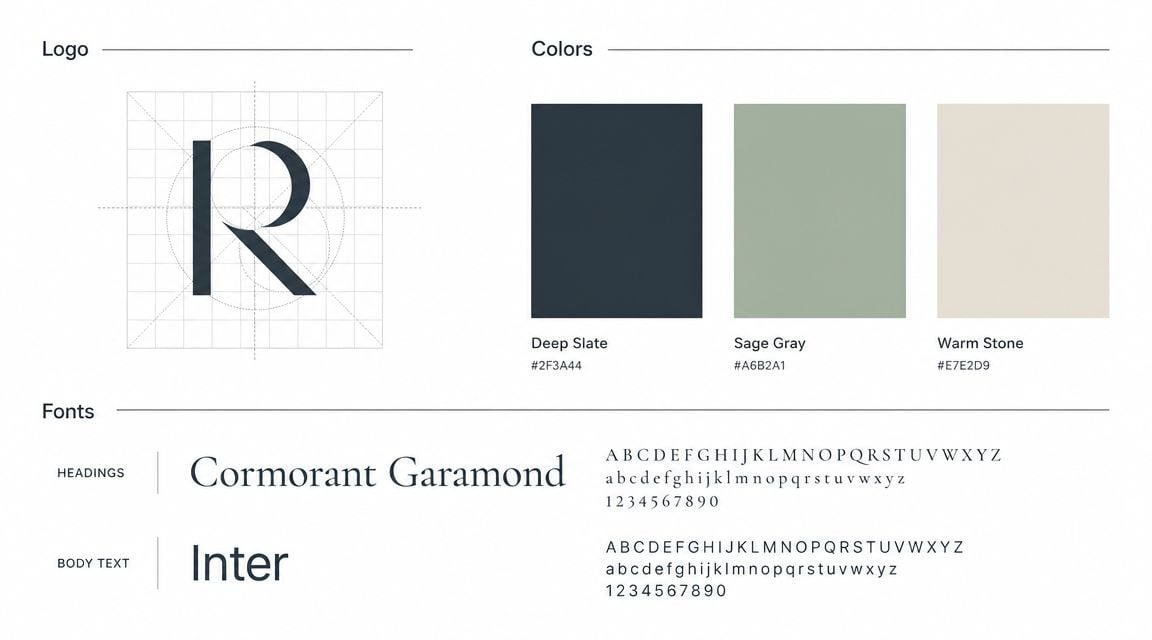
For UK businesses, consistency matters because presenting a brand consistently can lift revenue by up to 23% according to this branding research summary. The same summary also notes that customers often need 5 to 7 impressions before they begin recognising a brand, and that colour can account for as much as 80% of brand recognition. That's why visual identity needs to be treated as a repeatable framework, not a one-off artwork file.
Build the kit, not just the logo
A practical visual identity system usually includes:
- Logo rules: Main logo, stacked version, icon version, spacing, and minimum size.
- Colour palette: Primary, secondary, and neutral colours, with guidance on when each should be used.
- Typography: Headings, body text, button styles, and fallback fonts.
- Image style: Photography direction, illustration style, and graphic treatments.
- Layout cues: How pages, posts, adverts, and print pieces should feel.
A common misstep for many small businesses occurs when they invest in a logo, then use random Canva templates, mismatched fonts, and stock images that don't fit. The result looks patched together.
If you want your colour choices to support positioning rather than just personal taste, DesignStack's guide to colour psychology in branding is a good practical reference.
A Dorset reality check
A local retailer in Dorset doesn't need to look like Apple or Coca-Cola. But it does need to look recognisable and coherent. If your Instagram feels modern, your website feels dated, and your printed leaflet looks like a different business, people notice the disconnect.
The better approach is simpler. Pick a direction. Document it. Use it everywhere.
3. Develop a Consistent Brand Voice and Messaging
If your visuals are polished but your words change personality from page to page, the brand still feels unstable. Voice is what makes a business sound like itself. It shows up in your homepage copy, service pages, emails, captions, brochures, proposals, and even your automatic replies.
This matters most in crowded markets where many businesses offer similar services.
Mailchimp built recognition through a tone that feels playful and accessible. Patagonia sounds values-led and direct. Buffer leans conversational and transparent. Smaller UK businesses can do the same in their own way. A local retailer might sound warm and community-focused. A professional services firm might sound calm, expert, and reassuring.
Choose a voice your team can actually use
The easiest way to define brand voice is to choose a small set of personality words. Not ten. Usually three to five is enough.
For example:
- approachable
- expert
- reliable
- clear
- grounded
Then add contrast. If you say the brand is approachable, explain what that means in practice. It might mean plain English, short sentences, and no jargon. It might also mean you don't write like a corporate brochure.
Your voice should feel consistent across channels, but it shouldn't sound copied and pasted. A LinkedIn post, a proposal, and a customer service email can share the same personality while still fitting the situation.
A mini messaging template
When I help small businesses tighten messaging, I usually start with these building blocks:
- Who we help: Name the audience clearly.
- What we help them do: State the outcome.
- Why we're different: Show your angle, method, or standard.
- What we believe: Add the principle underneath the offer.
That gives you a structure for homepage intros, social bios, and service page openings.
What works is writing the way you'd speak to a good-fit customer in real life. What doesn't work is switching tone depending on whoever last edited the page. If one staff member sounds friendly, another sounds overly formal, and AI-generated copy sounds generic, the brand starts to blur.
A short voice guide solves that. It doesn't need to be complicated. Just enough examples to help everyone write in the same direction.
4. Build a Strong Online Presence Through Strategic Website Design
Your website is often the first serious interaction someone has with your brand. Not your logo. Not your Instagram grid. The website.
If it looks dated, loads poorly, feels confusing, or doesn't explain what you do quickly, people leave with the wrong impression. Strong website branding isn't about decoration. It's about structure, clarity, trust, and ease of use.
Here's a good example of the kind of polished, responsive presentation customers now expect:
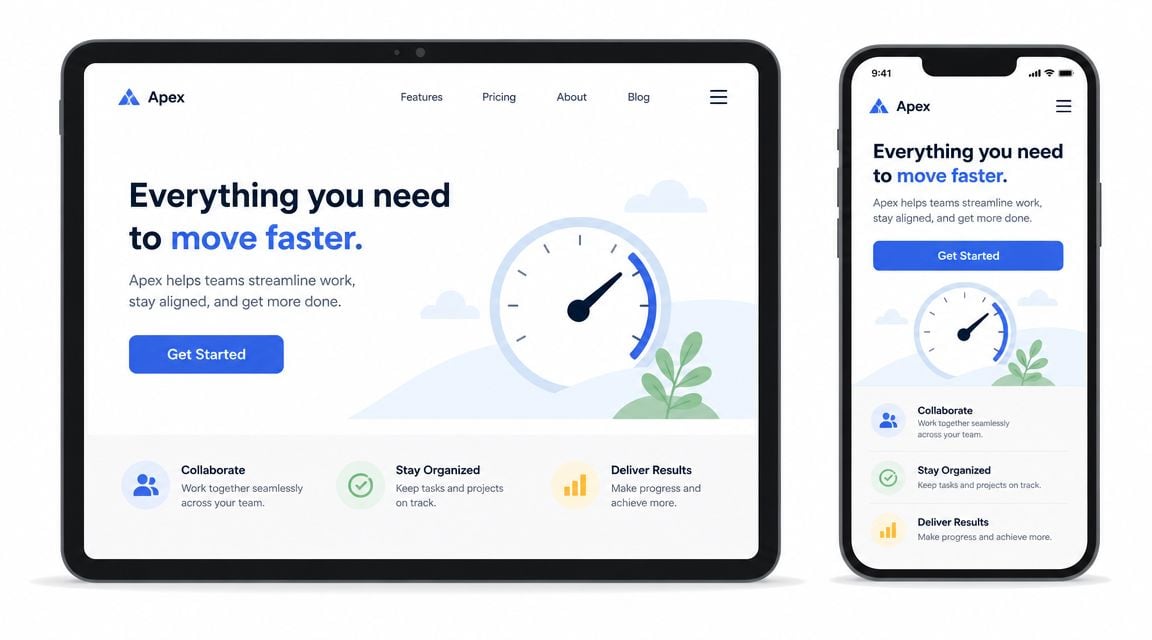
HubSpot's marketing data says website, blog, and SEO remains the top ROI-generating channel for marketers, and the same dataset notes that 94% plan to use AI in content creation while 40% already use image or design editors with AI features, which makes a strong branded website even more important as the central place where everything aligns and converts. You can review those figures in HubSpot's marketing statistics roundup.
Your website should answer three questions fast
Within the first screen or two, visitors should understand:
- What you do
- Who it's for
- What to do next
That sounds obvious, but many small business websites still lead with vague taglines, oversized banners, and generic stock imagery. A Dorset trades business, independent retailer, gym, or consultancy doesn't need a clever homepage. It needs one that works.
A strong site for Crossfit Durnovaria, for example, would make classes, membership options, and the next step easy to find. A food business like The Lobster Pot needs product clarity, ordering confidence, and rich imagery. A membership organisation like the Weymouth & Portland Chamber of Commerce needs structure, events, and member value upfront.
If you're reviewing options, DesignStack's page on small business web design in the UK gives a good picture of what that process can include.
Design for action, not applause
Good branding on a website looks professional, but it also removes friction. Clear buttons. Readable headings. Consistent spacing. Proof near the point of decision. Simple navigation. Mobile layouts that still feel intentional.
That means making room for practical content:
- Service detail: Tell people what's included and who it's suitable for.
- Trust signals: Add reviews, recognisable clients, accreditations, or examples of work.
- Conversion paths: Use obvious calls to action on every key page.
A useful walkthrough on visual and structural choices can help here:
A website should look like your brand and behave like your best salesperson. If it only does one of those things, it isn't doing enough.
5. Leverage Social Proof and Customer Testimonials
People trust what other customers say more than what your own homepage says about you. That's why social proof is one of the most effective branding tools available to a small business.
It reduces uncertainty. It gives potential customers language they can borrow to describe your value. It turns your claims into something more believable.
For local service businesses, this can be the difference between a prospect making contact or clicking back to search results. A gym can show member experiences. A restaurant or food brand can highlight reviews tied to service and quality. A web design agency can use client feedback to reassure visitors who are comparing several suppliers at once.
Ask for the right kind of testimonial
The weakest testimonials are short and vague. “Great service” doesn't help much. Better testimonials describe the situation, the experience, and the outcome in plain terms.
Ask prompts like:
- What problem were you trying to solve
- Why did you choose us
- What was the experience like
- What would you say to someone considering us
That gives you material you can use on service pages, proposals, landing pages, and social content.
If you want to see how testimonial-led trust can be presented on a design-focused site, browse these web designer testimonials.
Placement matters
A lot of businesses collect testimonials and then hide them on one page nobody visits. That wastes them.
Use them where decisions happen:
- Homepage sections: Add short quotes near your main offer.
- Service pages: Match testimonials to the service being discussed.
- Proposal documents: Include relevant proof near pricing or scope.
- Google Business Profile and social content: Repurpose customer feedback in formats people already browse.
Use this test: If someone landed on one key service page without knowing your business, would they see enough proof to feel reassured?
What works is steady collection and smart placement. What doesn't work is waiting until the website is redesigned to think about reviews.
6. Establish Consistent Brand Communication Across All Channels
A customer doesn't experience your brand in neat departments. They don't separate your website from your emails, your Instagram posts, your printed material, or the way someone answers the phone. They experience all of it as one brand.
That's why consistency is more operational than creative. It has to survive everyday use.
A lot of branding tips stop at logos and colours. The harder part is making sure the same business still shows up clearly when different staff members, freelancers, agencies, and software tools are all producing content. That challenge is becoming more important as teams work across more channels and more AI-assisted workflows.
Make brand rules usable
Most small businesses don't need a huge brand manual. They need a practical one. The best version is short enough to use and specific enough to stop drift.
Include guidance for:
- Visual standards: Logo use, colours, typography, spacing, and imagery.
- Messaging rules: Tagline, service descriptions, tone of voice, and words to avoid.
- Templates: Social posts, proposal covers, presentation slides, email signatures, and document headers.
- Approvals: Who signs off key content before it goes live.
HubSpot's content gap guidance also points to a wider issue. Gaps in modern content aren't just about missing keywords. They increasingly include intent, semantic coverage, format, and value, which makes brand governance more important when multiple people create content in different formats. You can explore that thinking in HubSpot's article on content gap analysis.
A practical SME scenario
Think about a growing Dorset business with one owner, two staff members, an external designer, and AI tools helping with captions and page drafts. Without clear rules, the website sounds one way, social posts look another, and sales documents feel like they came from a third company.
That inconsistency confuses buyers. It also makes the business look less established than it really is.
Keep a shared folder with approved logos, fonts, colour codes, brand copy snippets, and template files. If people have to guess, they will.
What works is making consistency easy. What doesn't work is relying on memory.
7. Differentiate Through Authentic Brand Storytelling
Features are easy to copy. Story isn't.
That doesn't mean inventing a dramatic founder tale or forcing emotion into every page. It means showing people the authentic context behind the business. Why it started, what it cares about, what it has learned, and why customers respond to it.
For smaller businesses, story often creates the difference that scale can't. TOMS and Patagonia are obvious examples at a global level, but the same principle applies locally. Crossfit Durnovaria can tell stories about progress, confidence, and belonging. The Lobster Pot can talk about heritage, quality, and the thinking behind what it offers. Those details make a business feel human and specific.
Tell the story customers actually care about
The mistake many businesses make is writing an “About” page that only tells internal history. Dates, milestones, and job titles aren't enough on their own.
The stronger version connects your story to the customer's reason for choosing you.
Use this shape:
- Where it began: What gap, frustration, or opportunity started the business.
- What mattered then: The standard or belief that shaped the early decisions.
- What still matters now: The principle customers still feel in the experience today.
If you want a deeper look at how narrative supports positioning, DesignStack has a clear introduction to what brand storytelling is.
Show it in more than one place
Storytelling shouldn't be trapped on an About page. Use it across touchpoints:
- Homepage copy: A short statement of belief or approach.
- Project pages: Show how you work and what you care about.
- Email marketing: Share background, process, and behind-the-scenes thinking.
- Social content: Introduce the people, standards, and moments behind the service.
What works is specificity. Real founder motivation. Real customer moments. Real decisions. What doesn't work is trying to sound inspirational without saying anything memorable.
8. Optimise for Local Search and Community Connection
For many UK small businesses, branding isn't only about broad visibility. It's about being known in the right place by the right people.
If you serve Weymouth, Portland, Dorchester, or the wider Dorset area, local relevance needs to show up in both your digital presence and your real-world reputation. Branding and local search should support each other. One builds recognition. The other helps people find you when they're ready.
Be locally recognisable online
A strong local brand usually gets the basics right first. Your business name, contact details, service descriptions, photos, and category information should be consistent wherever customers encounter them.
That includes:
- Google Business Profile: Keep it complete and up to date.
- Location pages: Give each service area useful, specific content.
- Local imagery and references: Show the area, team, and work authentically.
- Review platforms: Respond well and keep business information aligned.
A Dorset accountant, café, retailer, or fitness brand shouldn't sound like it serves “everywhere”. It should sound grounded and relevant to the communities it works with.
If local visibility is part of your growth plan, this guide to local SEO for businesses covers the practical side well.
Community presence strengthens the brand
The local brands people remember usually show up beyond search results. They sponsor events, support community groups, join business networks, or collaborate with neighbouring organisations.
The Weymouth & Portland Chamber of Commerce is a good example of how visibility and local connection reinforce each other. A business doesn't need to do everything. It just needs to be present in ways that feel genuine.
A local brand becomes stronger when people recognise the name before they need the service.
What works is joining digital visibility with real community signals. What doesn't work is treating local branding as just adding town names to page titles.
9. Create Scalable Brand Systems for Growth and Consistency
A brand that works when one person controls everything can start breaking down as soon as the business grows. New staff write in their own voice. Freelancers use whatever file they can find. A sales deck gets made in a hurry. A new landing page goes live with different colours, spacing, and messaging.
That's the point where branding stops being a design task and becomes a systems task.
Build simple assets that save time later
Scalable brand systems help small businesses stay consistent without slowing everyone down. Big companies use examples like Google Material Design or Shopify Polaris, but the same logic applies at SME level.
You don't need an enterprise design system. You need reusable pieces that remove guesswork.
Useful starting points include:
- Core brand guide: Logo files, colours, typography, voice, imagery direction.
- Content templates: Social posts, proposals, case studies, service pages, newsletters.
- Website components: Reusable layouts, buttons, testimonial blocks, calls to action.
- Approval flow: A basic process for reviewing customer-facing content.
Think about AI before it creates a mess
As teams use AI tools more often for writing and design support, these systems matter even more. AI can speed up production, but it also increases the risk of off-brand outputs if no one has defined the rules clearly.
The best approach is to pair flexibility with guardrails. Give your team approved prompts, sample wording, visual references, and examples of what good looks like. That way AI helps scale output instead of creating more editing work.
What works is documenting not just what to use, but why it exists. What doesn't work is relying on “we all know the brand” once the business starts adding more people, channels, and content types.
10. Measure Brand Performance and Build Long-Term Customer Loyalty
Branding isn't finished when the logo is approved or the website launches. You need to see how the brand performs in practice, then keep improving the customer experience around it.
That means looking at both signals. What people do, and how they feel.
Watch behaviour, not just appearances
Some branding decisions are easy to admire internally but weak in practice. A homepage might look polished but fail to guide action. A social feed might feel consistent but attract the wrong audience. A premium visual identity might clash with a clumsy enquiry process.
Useful measures often include:
- Website behaviour: Which pages people visit, where they drop off, and which calls to action they use.
- Lead quality: Whether the enquiries coming in are a better fit.
- Customer feedback: What people say about trust, clarity, professionalism, and ease.
- Repeat business: Whether customers come back, refer others, or stay engaged.
The smartest small businesses look at branding and customer experience together. If the promise feels premium but the follow-up is slow, the brand weakens. If the site says friendly and straightforward but the contact process is awkward, the brand weakens there too.
Loyalty comes from alignment
A strong brand keeps its promises. That's what builds loyalty over time.
For a business like Crossfit Durnovaria, loyalty comes from community and lived experience. For The Lobster Pot, it comes from consistency and trust in quality. For Amazon Prime or Zappos, it's built through ongoing convenience and service expectations. Different models, same underlying principle. The experience has to match the message.
Branding works best when operations support it. If your customer journey is clunky, no amount of visual polish will fix the memory people keep.
Review what customers see before sale, during delivery, and after the transaction. That's where long-term brand value is built.
10-Point Branding Comparison
| Initiative | Complexity 🔄 | Resource Needs ⚡ | Expected Outcomes ⭐ | Ideal Use Cases 📊 | Key Advantages 💡 |
|---|---|---|---|---|---|
| Define Your Brand Purpose and Values | 🔄🔄🔄 (moderate introspection) | ⚡⚡ (time, stakeholder input) | ⭐⭐⭐⭐ (clear direction, loyalty) | 📊 New/repositioning SMBs, community brands | 💡 Guides decisions; builds trust and differentiation |
| Create a Distinctive Visual Identity System | 🔄🔄🔄🔄 (professional design work) | ⚡⚡⚡ (design resources, assets) | ⭐⭐⭐⭐⭐ (high recognition, conversion) | 📊 eCommerce, retail, omnichannel brands | 💡 Boosts recall; reusable assets reduce long-term costs |
| Develop a Consistent Brand Voice and Messaging | 🔄🔄🔄 (content strategy & training) | ⚡⚡ (copywriters, guidelines) | ⭐⭐⭐⭐ (improved engagement, SEO) | 📊 Professional services, content-led sites | 💡 Speeds content creation; builds authority and clarity |
| Build a Strong Online Presence Through Strategic Website Design | 🔄🔄🔄🔄 (UX, development, SEO) | ⚡⚡⚡ (dev, hosting, content, SEO) | ⭐⭐⭐⭐⭐ (leads, conversions, SEO gains) | 📊 eCommerce, service providers seeking customers online | 💡 Serves as acquisition hub; improves credibility & conversions |
| Leverage Social Proof and Customer Testimonials | 🔄🔄 (low to medium effort) | ⚡⚡ (collection & curation effort) | ⭐⭐⭐⭐ (higher conversions, trust) | 📊 Local businesses, service industries | 💡 Low-cost credibility builder; reduces purchase anxiety |
| Establish Consistent Brand Communication Across All Channels | 🔄🔄🔄🔄 (coordination & governance) | ⚡⚡⚡ (tools, templates, training) | ⭐⭐⭐⭐ (stronger recognition, ROI) | 📊 Multi-channel marketers, growing SMBs | 💡 Reinforces identity; simplifies marketing execution |
| Differentiate Through Authentic Brand Storytelling | 🔄🔄🔄 (narrative development) | ⚡⚡ (content creation, media) | ⭐⭐⭐⭐ (emotional connection, engagement) | 📊 Mission-driven, lifestyle, local brands | 💡 Creates memorable, shareable content; deepens loyalty |
| Optimise for Local Search and Community Connection | 🔄🔄🔄 (local SEO and community work) | ⚡⚡ (listings, local content, outreach) | ⭐⭐⭐⭐ (improved local visibility, footfall) | 📊 Local retail, trades, professional services | 💡 Captures high-intent local customers; lowers acquisition cost |
| Create Scalable Brand Systems for Growth and Consistency | 🔄🔄🔄🔄🔄 (extensive system design) | ⚡⚡⚡⚡ (documentation, tooling, training) | ⭐⭐⭐⭐⭐ (consistent growth, efficiency) | 📊 Scaling SMBs, multi-product/platform businesses | 💡 Reduces rework; enables rapid, consistent expansion |
| Measure Brand Performance and Build Long-Term Customer Loyalty | 🔄🔄🔄🔄 (analytics + CX programs) | ⚡⚡⚡ (tools, analyst expertise) | ⭐⭐⭐⭐ (data-driven optimisation, retention) | 📊 Brands prioritising ROI and optimisation | 💡 Proves ROI; guides investment and improves retention |
Your Brand's Journey Starts Now
Strong branding rarely comes from one big breakthrough. It usually comes from making better decisions consistently, then repeating them until the market starts to recognise what makes your business different.
That's good news for small and medium-sized businesses. You don't need a massive budget or a giant internal team to build a better brand. You need clarity, consistency, and a practical approach. Define what you stand for. Turn that into a visual identity people can recognise. Use a voice that sounds like your business. Make sure your website does its job. Collect proof. Stay consistent across channels. Tell a story that sounds human. Show up locally. Build systems that scale. Keep measuring what people respond to.
If that list feels like a lot, don't try to fix everything at once.
Pick the part that's causing the most friction right now. If people don't understand what you do, start with messaging. If you look inconsistent across channels, focus on brand guidelines and templates. If the website feels dated or underperforms, prioritise structure, clarity, and trust. If you're growing and more people are creating content, put governance in place before inconsistency spreads further.
That step-by-step approach is usually what works best for SMBs. It gives you momentum without forcing a full rebrand before you're ready. It also makes the brand more durable, because each improvement is tied to how the business operates.
For Dorset-based businesses especially, branding has a practical local role as well as a visual one. It helps you earn trust faster, become more recognisable in your area, and present yourself more confidently against better-known competitors. Whether you're a retailer, a professional service firm, a membership organisation, or a growing ecommerce brand, the basics still matter. Clear positioning. Cohesive design. Consistent communication. A strong website. Reliable follow-through.
If you want support putting those pieces together, DesignStack is one relevant option for businesses that need branding, web design, and supporting digital assets under one roof. The agency works with Dorset and UK businesses on brand identity, WordPress websites, graphic design, and related digital delivery.
The main thing is to start. A brand improves when you make it easier for people to recognise you, understand you, and trust you. Done well, it doesn't just make the business look better. It helps the business grow with less friction.
If you're ready to sharpen your brand, improve your website, or bring more consistency to your marketing, DesignStack can help you plan the next step with a practical, design-led approach.
Leave a Reply