

Grove Pilates Earlsfield: Reformer & Mat Classes
If you're reading this, there's a good chance your body is asking for something gentler and smarter than another noisy gym class. Maybe your back feels tight after hours at a desk. Maybe you've been meaning to try Pilates for ages but keep putting it off because the machines look confusing, or you worry everyone else will know what they're doing.
That hesitation is normal.
A studio like grove pilates earlsfield tends to appeal to people who want movement without the chaos. You want to feel stronger, move better, and leave class more settled than when you walked in. You probably also want someone to notice if your shoulders are creeping up to your ears or if your lower back is taking over.
That local, more personal feel is what makes this kind of space easier to step into. Instead of trying to decode Pilates from a distance, you can start with the basics, ask questions, and build confidence as you go. If you're completely new, that's fine. If you're returning after injury or a long break, that's fine too.
Pilates can sound technical at first. In practice, it often comes down to a few simple things. Better posture. Smoother movement. Stronger support through your middle. Less gripping in places that are overworking.
Welcome to Your Local Pilates Sanctuary in Earlsfield
A lot of people arrive at Pilates frustrated.
They don't necessarily want a dramatic fitness overhaul. They want to stand up from their chair without feeling stiff. They want to carry shopping, sit on the train, or sleep without that familiar ache in the back or hips. They want exercise that helps rather than punishes.
That first visit to a small studio can feel surprisingly different from joining a large gym. You walk in and the pace changes. There's room to ask, "I've never used one of these before," without feeling silly. There isn't the same pressure to perform.
I think that's part of the appeal of Grove Pilates in Earlsfield. It feels suited to real life in South West London. Busy schedules, long commutes, desk-heavy jobs, old niggles, and the very ordinary wish to feel more at home in your own body.
Why beginners often feel more comfortable here
Pilates gets misunderstood as something only for already-flexible people. It isn't.
For many newcomers, the relief comes from discovering that Pilates is less about dramatic poses and more about control, support, breathing, and alignment. You don't need to arrive "fit enough". You just need to arrive willing to learn.
You don't have to look like a Pilates person to benefit from Pilates.
The other reassuring part is the atmosphere a smaller studio can create. A boutique space often makes it easier to remember names, settle into a routine, and notice your own progress. That progress might be subtle at first. Better balance when you're putting shoes on. Less tension in your neck. A sense that your body is working together instead of in separate, complaining pieces.
If you're curious but slightly nervous, that's probably the best time to start. Pilates works well when you approach it with questions, patience, and a bit of trust in the process.
What Makes Grove Pilates a Unique Earlsfield Studio
Not every Pilates studio offers the same experience. Some are built around fast-moving fitness classes. Others focus on highly individual teaching. Grove Pilates sits firmly in the second camp.
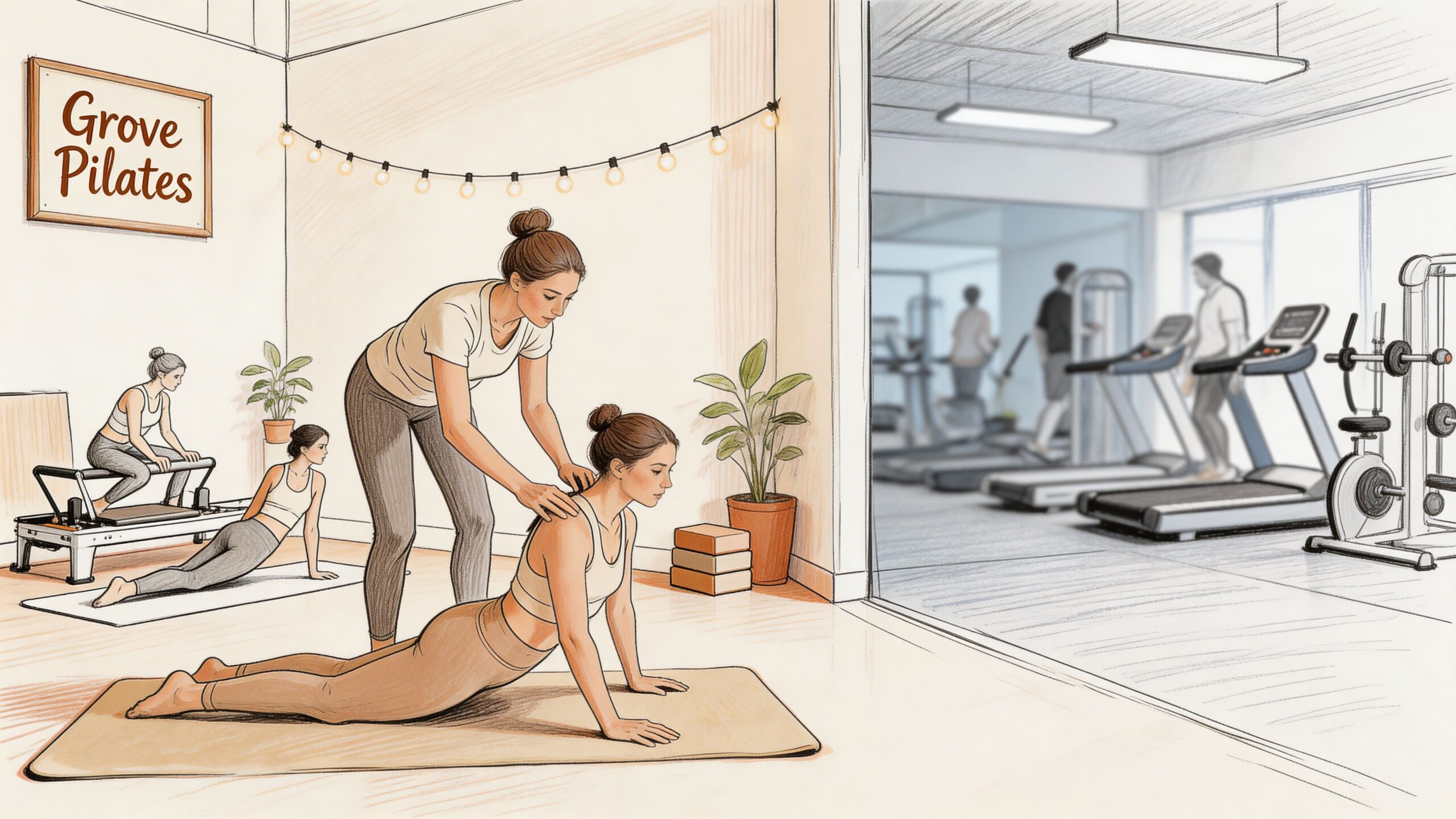
According to its Companies House listing, Grove Pilates Ltd is led by Ms Beverley Marie Densham and registered at 15 Smiths Yard, London, SW18 4HR, with a setup that includes just 4 reformers and a separate matwork space. That small scale supports its emphasis on individual attention, injury rehabilitation, and back pain relief (Companies House listing for Grove Pilates Ltd).
Why a small setup matters
Four reformers might sound limited if you're used to larger boutique chains. In practice, it can be a real advantage.
With fewer people on equipment, an instructor has a better chance of spotting the details that matter. They can see if you're locking your knees, rushing the movement, or losing connection through your centre. Those are the things that often get missed in bigger rooms.
For someone dealing with stiffness, recovering confidence after pain, or learning the basics, that attention matters more than trendy branding or loud playlists.
A smaller studio can also feel less intimidating. You're not one of many beds in a row. You're part of a class where being seen is built into the format.
The dual-studio approach
Grove Pilates also has separate spaces for equipment work and matwork. That matters because Reformer Pilates and Mat Pilates each teach the body in different ways.
The reformer offers resistance and feedback. It helps you feel where the movement starts and whether you're staying controlled. Matwork strips things back. It asks you to create stability using your own body, without the machine helping you.
That combination gives teachers more flexibility in how they support clients. Some people benefit from learning patterns on the reformer first. Others love the simplicity and transferability of mat classes.
If you're interested in how well-run studios organise their operations behind the scenes, this guide on how to streamline your Pilates studio is a useful read. It gives context for why scheduling, class flow, and client management can shape the member experience just as much as the teaching itself.
Why rehabilitation focus changes the feel
A studio that talks openly about injury rehabilitation and back pain relief usually teaches differently from one built only around intensity. The pace may be more deliberate. The cueing may be more precise. The aim is often quality of movement first, challenge second.
That's good news for beginners.
It means you don't have to force your way through exercises that don't suit you. It also means modifications are likely to be treated as normal, not as a sign that you're behind.
For a sense of how fitness brands present specialist services online, this project example from https://designstack.co.uk/portfolio/twc-fitness/ is a useful contrast in digital positioning and audience clarity.
A short overview can also help if you're trying to visualise the style of movement involved before booking.
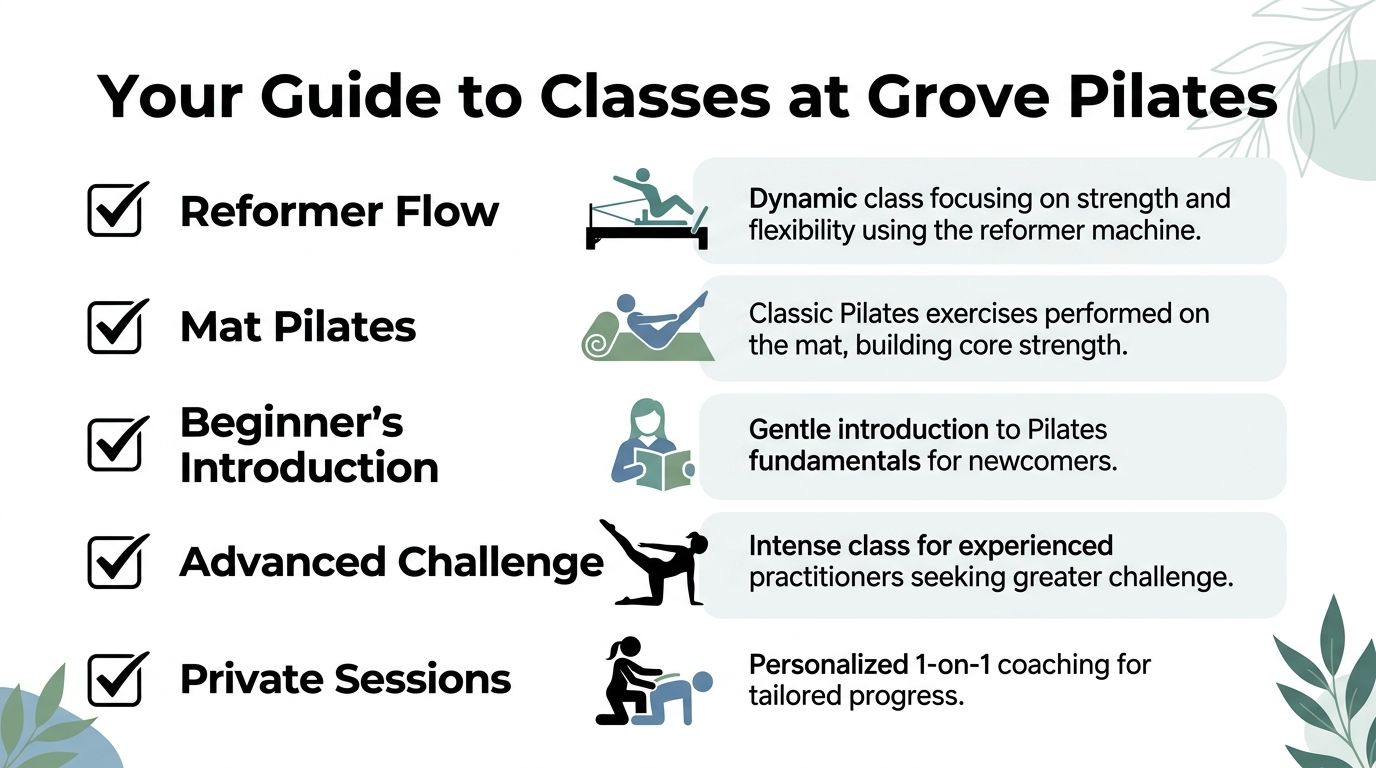
Your Guide to Classes at Grove Pilates
When people say, "I want to try Pilates," they often mean several different things at once. They may want to ease back pain, improve posture, get stronger, or find a class they won't dread attending.
The easiest way to choose is to stop asking which class is "best" and start asking which class fits your body and your goal right now.
Reformer classes
If the reformer looks a bit like a sliding bed with springs, straps and a footbar, that's because it is. The machine adds resistance and support, which helps many beginners understand movements more clearly.
Choose reformer if:
- You want guidance from the equipment itself. The springs and carriage give feedback, which can make body position easier to feel.
- You like structure. Reformer sessions often feel organised and progressive.
- You want low-impact strength work. The challenge comes from control, not from pounding joints.
What to expect:
- A teacher will usually explain setup before class starts.
- You'll move slowly enough to learn the machine.
- Small adjustments can make an exercise feel completely different.
Key benefit: The reformer helps many newcomers find muscles they haven't been using well.
Mat classes
Mat Pilates is often the simplest entry point conceptually. There's less equipment to think about, and the focus stays on breathing, alignment, control, and core support.
Choose mat if:
- You want to learn the foundations clearly.
- You prefer a less technical-looking setup.
- You'd like skills you can practise at home as well.
What to expect:
- Exercises may look simple from the outside.
- You'll often work on pelvic position, rib alignment, and steady breathing.
- Smaller movements can be harder than they appear.
Key benefit: Mat classes teach body awareness you can carry into daily life.
Practical rule: If you feel intimidated by machines, mat can be a gentle starting point. If you struggle to feel where your body should be, the reformer can sometimes make things click faster.
Private 1 to 1 sessions
Private sessions are the most individualized option. They're useful if you want close supervision, have a specific concern, or prefer to learn away from the group setting.
Choose a private session if:
- You're returning after injury or a long gap.
- You feel anxious in group classes.
- You want a plan built around your movement habits.
What to expect:
- More time for questions.
- Exercises chosen for your needs, not the room's average ability.
- Close cueing and hands-on refinement where appropriate.
Key benefit: You get an individual starting point instead of trying to adapt on the fly.
Which Grove Pilates class is right for you
| Class Type | Best For | Key Benefit |
|---|---|---|
| Reformer Pilates | Beginners who want support and feedback from equipment | Helps you understand alignment and controlled strength |
| Mat Pilates | People who want to learn foundations in a simple format | Builds core awareness and movement confidence |
| Private 1:1 Sessions | Clients wanting individualized support | Allows personalised teaching and pace |
A simple way to decide
If you're still torn, use this checklist:
- Start with reformer if you want close guidance and enjoy learning through equipment.
- Start with mat if you want straightforward foundations and a less technical feel.
- Start with private sessions if your confidence is low, your needs are specific, or you'd prefer one-to-one attention.
The right first class isn't the one that looks most impressive. It's the one that makes you likely to come back next week.
A Step-by-Step Guide to Your First Visit
The hardest part of Pilates is often the bit before Pilates. Booking it. Turning up. Walking through the door without talking yourself out of it.
Most first-visit nerves come from uncertainty, not from the class itself.

Before you book
Start by being honest about what you need.
If you're brand new, don't choose based on pride. Choose based on clarity and comfort. A beginner-friendly class or a private session usually gives you a better first experience than jumping into something more advanced and hoping for the best.
If you're comparing how different fitness brands present first-timer journeys online, https://designstack.co.uk/portfolio/gojo-fitness/ offers a helpful example of clear digital communication in the fitness space.
What to wear and bring
You don't need a dramatic activewear overhaul.
A close-fitting top and comfortable leggings or shorts usually work well because the teacher can see your alignment more easily. Socks may be useful, especially if you prefer more grip. Bring water if you like, but keep things simple.
A quick checklist helps:
- Wear movement-friendly clothing. Avoid anything so loose that it bunches or hides your posture.
- Skip complicated layers. Pilates is easier when you're not adjusting your clothes every few minutes.
- Leave bulky items at home. You don't need much beyond essentials.
- Arrive a little early. Extra minutes buy you calm.
Your first ten minutes
The opening moments matter because they set the tone.
You'll usually introduce yourself, mention whether you've done Pilates before, and flag any injuries, pain, or concerns. This is the time to say, "I'm new," "My back gets tight," or "I sit all day and my hips are stiff." A good instructor can do much more with that information than many beginners realise.
Then you'll get oriented. On the reformer, that may mean learning a few names for parts of the machine and how to get on and off safely. In mat class, it may mean simple setup cues and breathing patterns.
Tell the instructor what you're worried about before class starts. That's often the fastest route to feeling comfortable.
During class
Expect to hear a lot of cues that sound small but matter. Things like softening the ribs, keeping the neck long, or moving with control instead of speed.
You might not feel "worked out" in the same way you do after a frantic circuit session. That's normal. Pilates often leaves people feeling more switched on than wiped out.
If something doesn't make sense, pause and ask. Beginners sometimes think they should stay silent and copy. In a smaller studio, it's usually better to speak up and learn properly.
Membership and Pricing Options Explained
Pricing is often where people stall. Not because they don't want to start, but because they aren't sure what level of commitment makes sense.
The simplest approach is to match the option to your real schedule, not your idealised one.
If you're testing the waters
An introductory offer is usually the easiest way in because it lets you experience the studio before making a bigger commitment. That's often the best fit if you're still deciding whether you like reformer, mat, or a more individualized format.
A single class can also work well if your diary changes week to week. You're paying for flexibility rather than routine.
This route suits people who:
- Travel often and can't promise a fixed rhythm.
- Want to compare formats first before settling in.
- Prefer a low-pressure start.
If you know you'll come regularly
Class packs and memberships usually make more sense once Pilates becomes part of your week. They encourage consistency, and consistency is where Pilates really starts to feel different in your body.
You don't need a heroic schedule. You need one you can keep.
A simple comparison makes the choice easier:
| Option | Best For | Trade-off |
|---|---|---|
| Introductory offer | First-timers | Short-term only |
| Single class drop-in | Irregular schedules | Less routine |
| Class pack | People building consistency | Needs planning |
| Monthly membership | Committed regulars | Best when used steadily |
How to choose without overthinking it
Use this rule of thumb:
- Pick a drop-in if your life is currently unpredictable.
- Pick a class pack if you're ready to attend regularly but don't want a monthly commitment yet.
- Pick a membership if Pilates has already become a habit you want to protect.
What matters most isn't getting the "smartest" package. It's choosing the one you will use.
For a look at how another fitness business presents services and memberships online, https://designstack.co.uk/portfolio/crossfit-durnovaria/ shows how clear structure can reduce decision friction for prospective members.
Finding and Contacting Grove Pilates in Earlsfield
Local convenience matters more than people admit. A studio can be brilliant, but if getting there feels awkward, it's much harder to make classes part of your week.
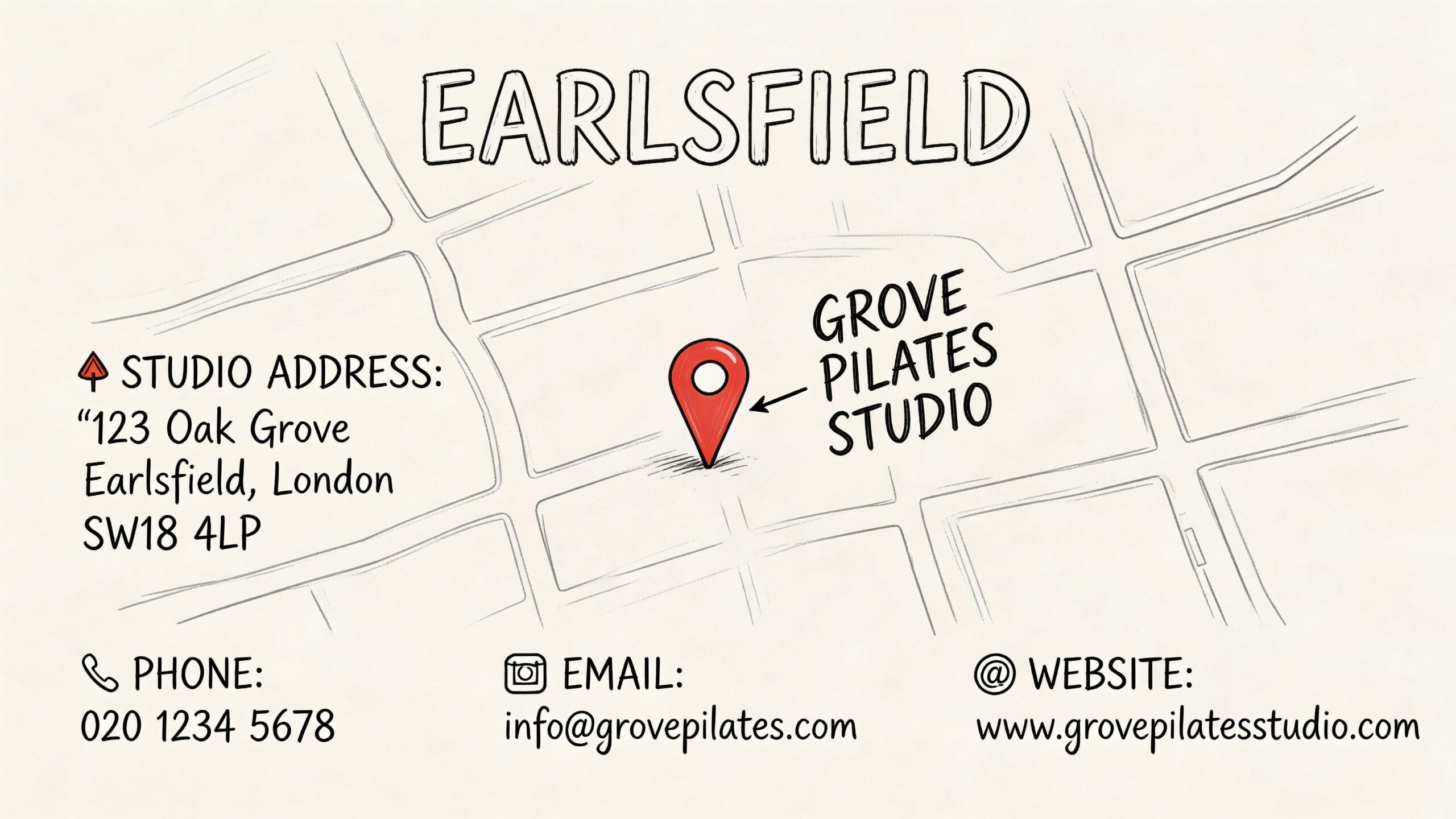
Grove Pilates is registered at 15 Smiths Yard, London, SW18 4HR. One of its practical advantages is location.
Getting there
A local forum reference notes that the studio is just 2 minutes from Earlsfield station, which is a helpful detail if you're fitting Pilates around work or a school run. The same source also highlights an important gap. Detailed information on step-free access from the station or into the studio isn't widely published. It adds wider context too, noting that 25% of disabled adults in London face accessibility barriers (NappyValleyNet discussion referencing accessibility and proximity).
That means the best approach is practical:
- If you're arriving by train, allow a little extra time on your first visit so you can find the entrance comfortably.
- If you're driving, check local parking options in advance rather than assuming you'll find a quick space nearby.
- If you have mobility concerns, contact the studio directly before travelling to ask about access, entry, and any on-site adjustments.
Accessibility details can make or break a first visit. If the published information is limited, a direct call is often the quickest way to avoid stress.
What to ask before you go
A short message or call can clear up most practical concerns. Ask about:
- Booking guidance if you're unsure which class suits you
- Arrival instructions if Smiths Yard is unfamiliar
- Accessibility support if you need step-free details or extra help
- What to bring so nothing feels uncertain on the day
If you're interested in the wider challenge of positioning a movement-based business online, this article on marketing a yoga studio is worth a look. It isn't about Grove specifically, but it does show how local studios can communicate trust, clarity, and community more effectively.
What Members Say About Their Experience
There isn't enough verified published data to quote detailed member statistics or long testimonial sets for Grove Pilates Earlsfield, so it's better to stay honest about that.
What does come through clearly from the studio's own positioning is the kind of experience it prioritises. The emphasis is on personalised support, careful teaching, and individual progress rather than a one-size-fits-all class culture. In a small studio, those qualities tend to shape what members notice first.
People new to Pilates often value the same things:
- Feeling welcomed rather than judged
- Having exercises adjusted to suit their body
- Getting help with posture, back discomfort, or movement confidence
- Enjoying a calmer, more human atmosphere than a big gym offers
That combination matters because progress in Pilates is often personal before it's visible. A member may not talk about dramatic transformation. They may talk about standing taller, moving more comfortably, or feeling more confident in class after a few visits.
That's often the stronger recommendation anyway.
In a boutique setting, the best feedback usually sounds like this in spirit: the teaching felt attentive, the room felt manageable, and the person left feeling better than when they arrived.
Your Questions Answered
Do I need to be flexible to start
No. Flexibility isn't the entry requirement. It's something that may improve over time as you move with better control and less tension.
Is Pilates only for people with back pain
No. Some people come for support with discomfort. Others come for strength, posture, balance, coordination, or a more mindful form of exercise.
Is it suitable if I want a personalised approach
Yes, and that's one of the clearest themes in how Grove presents itself. The studio explains that it focuses on individual progress over broad standardised outcome data, using bespoke adjustments and individualized programs in its dual-studio space rather than publishing generalised success rates (Grove Pilates website).
What if I'm nervous about my first class
That's common. Tell the instructor you're new, arrive a little early, and choose the format that feels most manageable rather than most ambitious.
Is the cancellation policy easy to find
Check the studio's current booking terms directly before you book. Policies can change, and it's always best to rely on the latest information shown by the studio itself.
If you're a studio owner, wellness brand, or local business thinking about how your website shapes first impressions, DesignStack can help you build a clearer, more confident online presence with thoughtful web design, branding, and digital support.



Leave a Reply