
Guide to best ecommerce platform small business in the UK 2026
For any small business in the UK, from a boutique in Dorset to a nationwide craft supplier, selecting the right online storefront is a pivotal decision. It’s more than just a website; it’s your digital headquarters, your 24/7 salesperson, and the engine driving your growth. But with a bewildering array of options, each promising seamless sales and happy customers, how do you find the best ecommerce platform for your small business? This guide cuts through the noise.
We provide an in-depth, practical comparison of 12 leading platforms, moving beyond marketing jargon to focus on what truly matters for a UK-based business. We will dissect the features, pricing, and scalability of each contender, from giants like Shopify and WooCommerce to UK-specific options such as EKM and ShopWired.
This resource is designed to be an actionable tool. To make a confident decision, follow this checklist to define your needs before you start comparing platforms:
- Define Your Budget: Calculate your total monthly budget, including the platform subscription, potential transaction fees, and essential apps for marketing or accounting.
- Assess Your Tech Skills: Be honest about your technical confidence. Are you comfortable managing updates and security (suggesting WooCommerce), or do you need a fully hosted, supported solution (like Shopify or EKM)?
- List Your “Must-Have” Features: Do you need subscription capabilities, B2B wholesale pricing, or booking/appointment tools? List your non-negotiables to quickly filter out unsuitable options.
- Consider Your Growth Plan: Where do you see your business in two years? Choose a platform that can accommodate more products, traffic, and potential international sales without requiring a costly migration.
- Evaluate Integrations: Make a list of the other tools you rely on (e.g., Xero for accounting, Royal Mail for shipping, Mailchimp for marketing). Check if your top platform choices integrate seamlessly with them.
A platform’s ability to integrate powerful tools is critical. For instance, as your business grows, you’ll find that optimised ecommerce and customer service become inseparable from your success, and your chosen platform must support this. Each review in this listicle includes direct links and real-world screenshots, offering a clear view of what to expect before you commit. Let’s find the right digital till for your business.
1. Shopify
Shopify stands as a titan in the ecommerce world, offering an all-in-one, hosted solution that’s incredibly popular with UK businesses, from startups in Dorset to established national brands. It’s widely considered one of the best ecommerce platforms for a small business wanting a straightforward, scalable, and powerful system without needing deep technical knowledge. Its main draw is simplicity combined with a vast ecosystem, allowing you to launch quickly and then expand functionality as you grow.

The platform handles all the technical heavy lifting, from web hosting with excellent uptime to security and PCI compliance. This managed environment lets you focus on what matters: your products and customers. Its UK-specific features, including integrated payment gateways like Shopify Payments (which removes transaction fees) and support for local shipping carriers, make it a practical choice for British retailers.
Key Considerations for UK Retailers
- Pricing: Plans start from around £19/month for the ‘Basic’ plan, scaling up to ‘Shopify’ (£49/month) and ‘Advanced’ (£259/month). A key cost consideration is transaction fees: using a third-party payment gateway incurs an additional fee on top of what the gateway itself charges.
- App Ecosystem: The Shopify App Store is its greatest strength, offering thousands of integrations for marketing, accounting (like Xero), and shipping. However, many of the best apps come with their own monthly subscription fees, which can increase your total cost of ownership. For email marketing automation, UK-based stores have increasingly turned to tools like Sender.net — a Mailchimp alternative with a generous free plan built specifically for e-commerce email and SMS flows.
- Scalability: As your business grows, managing daily operations, inventory, and customer service can become demanding. At this point, many merchants find value in hiring a virtual personal assistant for Shopify sellers to handle administrative tasks efficiently.
- Best For: Retailers who want a reliable, secure, and fast-loading online shop with minimal technical fuss. It’s ideal for those with physical stores thanks to its excellent Point of Sale (POS) system that unifies online and in-person sales. For tips on getting the most out of the platform, you can explore strategies for maximising your ecommerce potential.
Website: https://www.shopify.com/uk
2. WooCommerce
For UK small businesses that already have or prefer the WordPress ecosystem, WooCommerce is a powerful and flexible open-source solution. It’s not a standalone platform but a plugin that transforms a WordPress site into a fully functional online shop. This makes it an outstanding choice for Dorset-based businesses wanting total ownership of their data and complete creative control over their store’s design and functionality, blending content and commerce seamlessly.
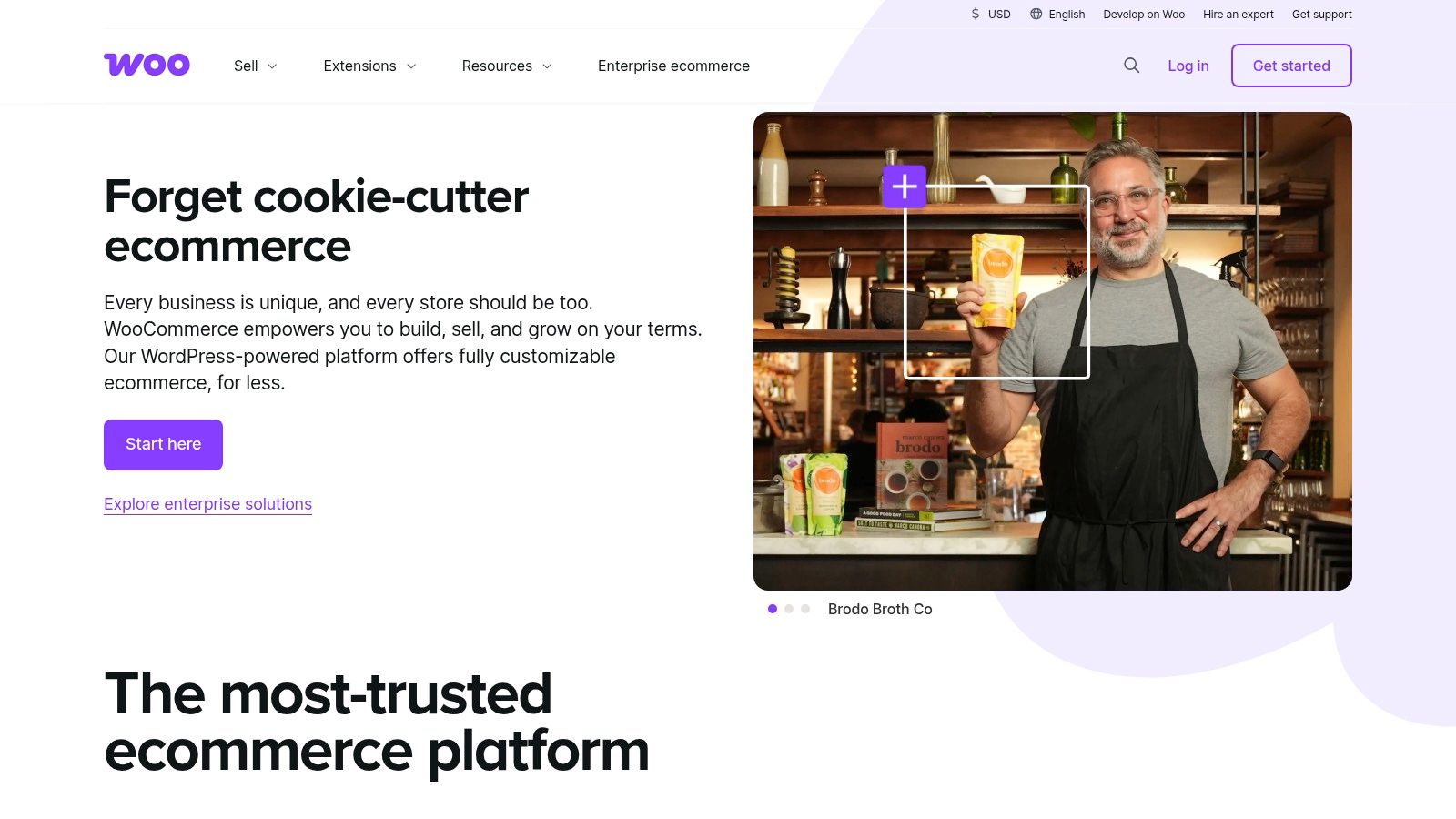
Unlike hosted solutions, WooCommerce is self-hosted, meaning you choose your own web hosting provider. This gives you unparalleled flexibility but also puts responsibility for security, updates, and maintenance squarely on your shoulders. Its core plugin is free, and its strength lies in its vast customisation potential through themes and a huge library of extensions, making it a truly scalable and adaptable choice for any retailer.
Key Considerations for UK Retailers
- Pricing: The core WooCommerce plugin is free, but costs accumulate. You must budget for web hosting, a domain name, an SSL certificate, and potentially premium themes or extensions. There are no platform transaction fees, only those charged by your chosen payment gateway (e.g., Stripe, PayPal).
- Technical Management: Being self-hosted requires a more hands-on approach. You are responsible for software updates, security measures, and site backups. While this offers control, it can be a steep learning curve for non-technical business owners.
- Customisation & SEO: Its integration with WordPress gives it a significant advantage for content marketing and SEO. The ability to add almost any feature via plugins is a major draw; you can explore some of the top WordPress plugins to revolutionise your website to see the possibilities.
- Best For: Businesses with existing WordPress sites or those who prioritise content and SEO. It’s the best ecommerce platform for a small business that wants ultimate control and doesn’t mind managing the technical side or has a development partner to handle it.
Website: https://woocommerce.com
3. Wix eCommerce
Wix has evolved from a popular website builder into a formidable ecommerce platform, particularly for small businesses and entrepreneurs who prioritise speed and design flexibility. Its drag-and-drop editor is one of the most intuitive on the market, allowing you to build a visually appealing online shop without touching a line of code. For UK startups, its all-in-one approach provides hosting, security, and a custom domain, simplifying the launch process significantly.
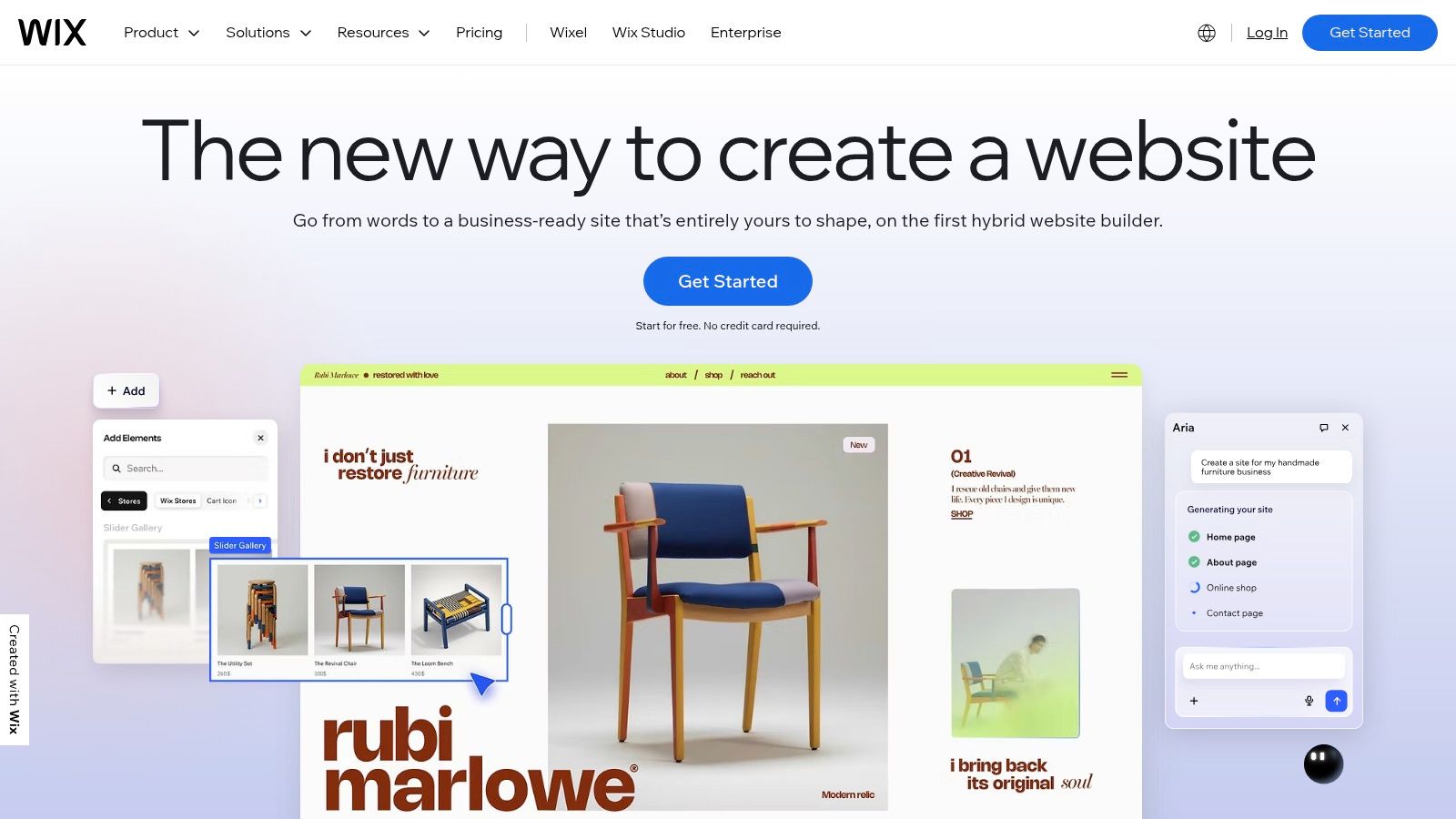
The platform is a fully hosted solution, meaning Wix manages all the technical infrastructure. It provides built-in marketing and SEO tools, and its AI-assisted site creation can generate a functional website in minutes. This makes it a strong contender for the best ecommerce platform for a small business that needs to get online quickly with a limited budget and minimal technical expertise.
Key Considerations for UK Retailers
- Pricing: Wix offers several ‘Business and eCommerce’ plans, starting from around £17/month. These plans are required to accept online payments and come with features like abandoned cart recovery, multicurrency support, and options for subscriptions and bookings.
- Ease of Use: Wix’s main strength is its user-friendly interface. You can choose from hundreds of templates or use its Artificial Design Intelligence (ADI) to get started. However, once you choose a template, you cannot switch to another one without rebuilding your site.
- Customisation and Apps: While the editor offers great design freedom, deep functional customisation is more limited compared to platforms like WooCommerce. The Wix App Market provides integrations for added features, but be mindful that premium apps can increase your monthly costs.
- Best For: Creative entrepreneurs, artists, and service-based businesses (like consultants or fitness instructors) who need a beautiful storefront with integrated booking or subscription capabilities. It’s also excellent for retailers with small product catalogues who want maximum design control. For more insight into how different platforms operate, you can explore our comprehensive review of website content management systems.
Website: https://www.wix.com
4. Squarespace Commerce
Squarespace Commerce is a design-forward, all-in-one platform celebrated for its stunning, modern templates and intuitive drag-and-drop interface. It’s an exceptional choice for brand-led businesses, creators, and service providers in the UK who prioritise aesthetics and simplicity. The platform integrates ecommerce seamlessly into its core website builder, making it easy to sell physical goods, digital products, memberships, or even schedule appointments without needing third-party tools.

Unlike more complex systems, Squarespace offers a unified experience where marketing tools like email campaigns and SEO features are built-in. This reduces the need to manage multiple subscriptions and ensures a consistent brand experience from your homepage to your checkout. For businesses where visual storytelling is key to selling products, Squarespace provides the perfect canvas, making it one of the best ecommerce platform small business options for the aesthetically minded entrepreneur.
Key Considerations for UK Retailers
- Pricing: Commerce plans start from £23/month (‘Business’) which has a 3% transaction fee, up to the ‘Commerce Advanced’ plan at £43/month which removes this fee. All plans bundle hosting, security, and access to their award-winning templates.
- Integrated Tools: Squarespace excels at providing a cohesive toolset. You can manage email marketing, customer appointments, and subscriptions directly from your dashboard, which simplifies daily operations for a small team. However, its app and integration ecosystem is smaller than competitors like Shopify.
- Design Focus: The platform’s greatest strength is its design quality. Even without any coding knowledge, you can create a highly professional and polished online store that looks like it was custom-built. The trade-off is slightly less customisation for complex inventory or fulfilment needs.
- Best For: Creative businesses, artisans, consultants, and brands in sectors like wellness, design, or hospitality. It is ideal for those with a curated product catalogue who want a beautiful, easy-to-manage website that handles both content and commerce elegantly.
Website: https://www.squarespace.com
5. BigCommerce
BigCommerce is a powerful SaaS ecommerce platform that positions itself as a strong contender for growing small businesses and those with B2B aspirations. It offers a robust set of built-in features, aiming to provide more out-of-the-box functionality than some competitors. This makes it an excellent choice for UK merchants who anticipate scaling their operations and require a platform that can grow with them without forcing an early migration.
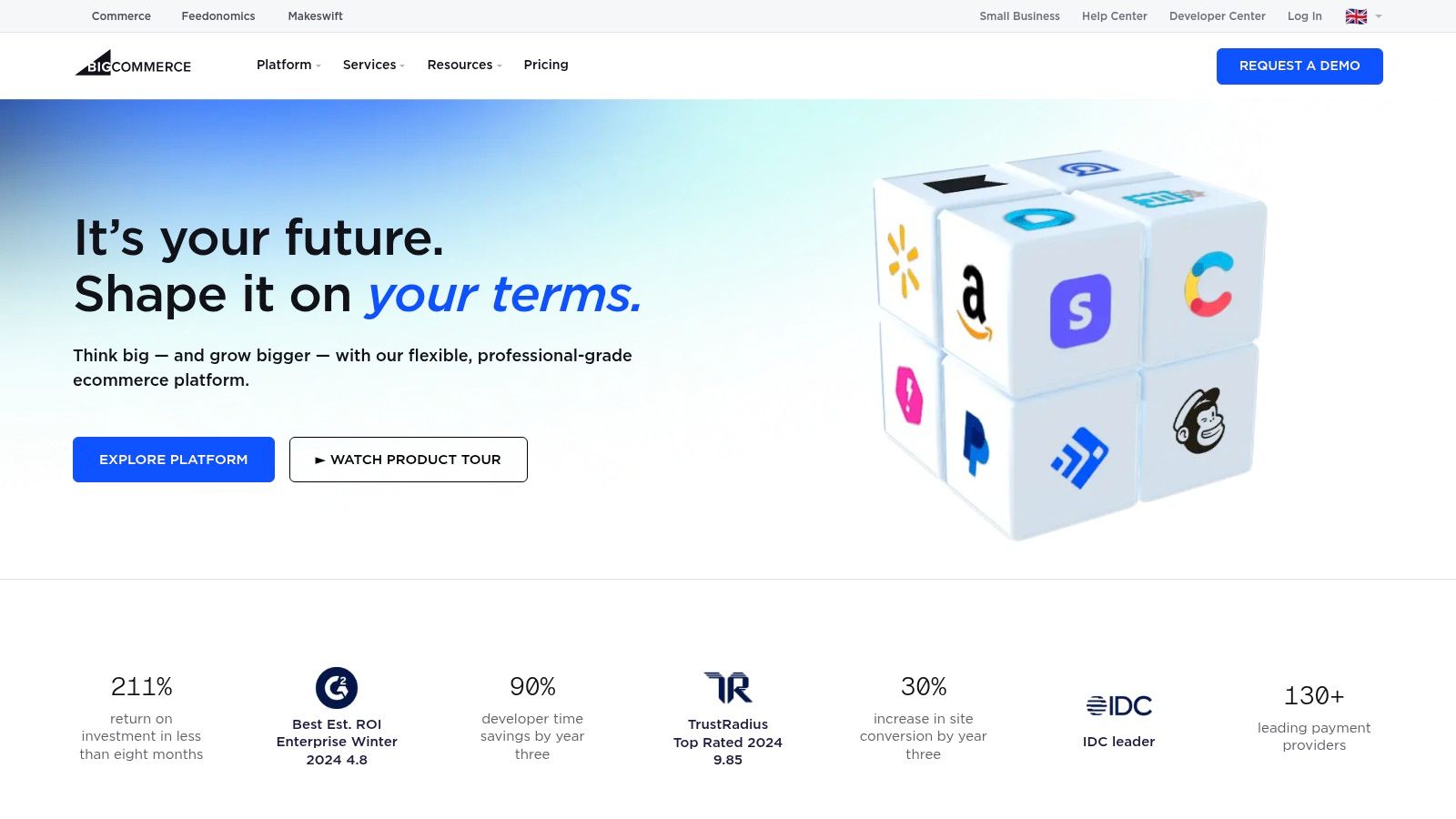
One of BigCommerce’s main selling points is its policy of zero platform transaction fees on all plans, regardless of the payment gateway you use. This can lead to significant cost savings, especially for businesses with high sales volume. The platform supports over 55 payment providers, including popular UK options like Stripe, PayPal, and Worldpay, giving merchants flexibility.
Key Considerations for UK Retailers
- Pricing: Plans start from around £25/month for ‘Standard’, with ‘Plus’ at £65/month and ‘Pro’ at £250/month. A crucial detail is that each plan has an annual online sales threshold. Once you exceed it, you are automatically upgraded to the next tier.
- Features vs. Apps: BigCommerce includes many features natively that often require a paid app on other platforms, such as advanced product options, promotions, and a single-page checkout. This can reduce your reliance on third-party subscriptions.
- B2B Capabilities: It offers strong, built-in Business-to-Business functionality, including customer group pricing and bulk pricing rules, making it a solid choice for wholesalers.
- Best For: Ambitious retailers who want a scalable platform with enterprise-grade features and predictable costs. It is arguably one of the best ecommerce platform small business options for those who want to avoid transaction fees and plan for future B2B or multi-storefront expansion.
Website: https://www.bigcommerce.co.uk
6. Ecwid by Lightspeed
Ecwid by Lightspeed offers a unique and flexible approach for businesses that already have a website but want to add ecommerce functionality. Instead of requiring a complete rebuild, Ecwid allows you to embed a full-featured online shop directly into your existing site, whether it’s built on WordPress, Squarespace, or any other platform. This makes it an incredibly efficient and cost-effective way to start selling online without disrupting what already works.
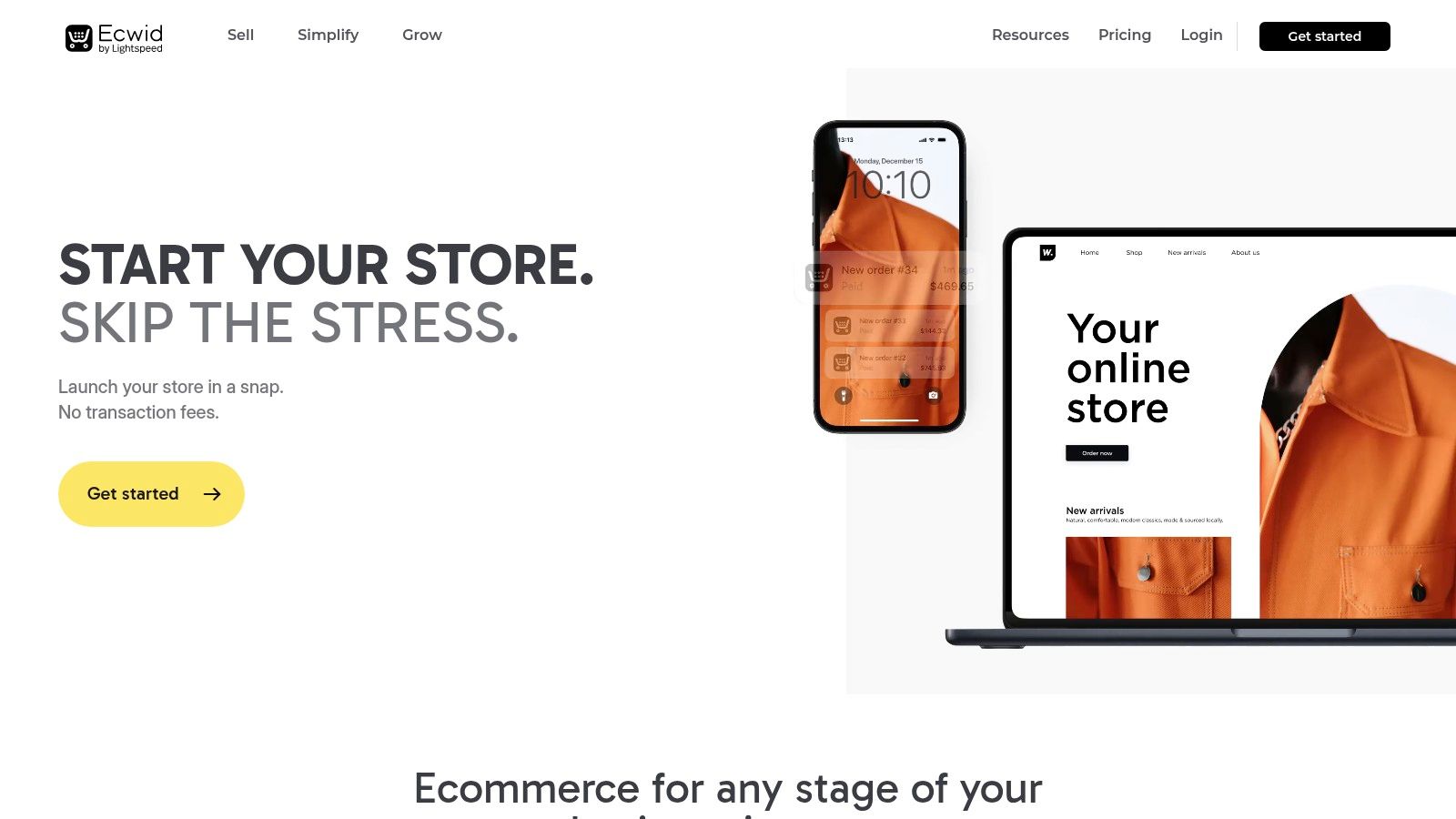
This platform is particularly useful for bloggers, service providers, or Dorset-based businesses with a strong local web presence who now wish to sell products or digital goods. The setup is remarkably simple: you manage all your products, inventory, and payments from a single control panel, and the changes automatically update everywhere you’ve embedded your store. It also supports selling across social media channels like Instagram and Facebook, centralising your multi-channel sales efforts.
Key Considerations for UK Retailers
- Pricing: Ecwid stands out with its permanently free plan, which allows you to sell up to five products, making it perfect for testing the waters. Paid plans then scale up, starting from the ‘Venture’ plan at £19/month, which unlocks more products and features like selling on social media and marketplaces.
- Integration: The core strength of Ecwid is its ‘add-on’ nature. It integrates seamlessly into most website builders and content management systems. This means you don’t lose your existing website’s design, content, or SEO value; you simply enhance it with a powerful shopping cart.
- Ease of Use: The backend is clean and intuitive, designed for those who aren’t technical experts. Adding products, setting up UK shipping rates, and configuring payment options like Stripe and PayPal is straightforward, making it an excellent choice for a small business owner managing their own site.
- Best For: Small businesses, artists, and entrepreneurs who love their current website and just want to add a shop to it. It’s the perfect solution for anyone seeking a fast, low-risk entry into ecommerce without the complexity of migrating to a completely new platform.
Website: https://www.ecwid.com
7. Square Online
Square Online is the natural ecommerce extension for the millions of UK businesses already using Square’s iconic Point of Sale (POS) system. It’s a compelling choice for Dorset cafés, local service providers, and retailers who want a single, unified system for managing both in-person and online sales. The platform’s core strength is its seamless integration, allowing inventory, orders, and customer data to sync automatically between your physical shop and your website.
This platform is arguably the best ecommerce platform for a small business that prioritises operational simplicity over advanced customisation. It allows you to quickly launch an online presence that works in tandem with your existing operations, offering features like local pickup and delivery scheduling right out of the box. For bricks-and-clicks businesses, this removes the headache of managing two separate systems, making it a highly practical and efficient solution.
Key Considerations for UK Retailers
- Pricing: Square offers a genuinely free plan to get started, which is fantastic for new businesses. Paid plans, ‘Plus’ (around £20/month) and ‘Premium’ (around £60/month), unlock features like custom domains, reduced transaction fees, abandoned cart recovery, and advanced shipping rate calculations.
- Integrated Ecosystem: The primary advantage is the single ecosystem. Your payments, inventory, item catalogue, and sales reports are all in one place. This unified view is invaluable for small businesses trying to streamline their daily tasks and get a clear picture of their performance.
- Customisation Limits: While easy to use, Square Online is less customisable than platforms like Shopify or BigCommerce. Businesses with complex product catalogues or those needing highly specific design and merchandising features might find its template-based approach restrictive.
- Best For: Existing Square POS users, service-based businesses (like salons or contractors), restaurants, and local retailers who want to add online ordering, click-and-collect, or local delivery with minimal fuss. It excels at creating a low-friction “bricks-and-clicks” operation.
Website: https://squareup.com/gb/online-store
8. ShopWired
ShopWired is a UK-built and focused ecommerce platform, carving out a strong niche among British SMEs, particularly those in the B2B and wholesale sectors. Unlike many global competitors, its architecture is designed from the ground up with UK business needs in mind, offering a native understanding of local commerce complexities. This makes it a compelling choice for businesses that need robust, built-in trade functionality without relying heavily on third-party apps.
The platform provides a managed, secure hosting environment, allowing you to concentrate on sales and operations rather than technical maintenance. Its main appeal lies in the powerful B2B features available on standard plans, such as customer-specific pricing and trade account management. This focus on UK-centric requirements makes it a strong contender for the title of best ecommerce platform for small business operations that involve both retail and trade sales.
Key Considerations for UK Retailers
- Pricing: ShopWired offers a tiered pricing model, with plans starting from around £34.95/month. It’s crucial to check their website for the most up-to-date pricing, as some features and details may be outlined in support documentation rather than the main pricing page.
- UK & B2B Specialisation: Its greatest strength is its out-of-the-box support for UK-specific needs. This includes features like:
- Advanced VAT controls for different product types and customer groups.
- Trade accounts with per-customer pricing and restricted access areas.
- Integrated UK shipping carrier tools.
- App Ecosystem: While its app library is smaller than global giants like Shopify, it offers essential integrations for marketing (Klaviyo), accounting, and analytics (Google Shopping feeds). It also has its own native subscription app, which is a significant advantage.
- Best For: UK-based small businesses that sell to both the public (B2C) and other businesses (B2B). It’s an ideal solution for wholesalers or manufacturers who need sophisticated pricing and account management tools without the complexity of custom development.
Website: https://www.shopwired.co.uk
9. EKM
EKM is a long-standing UK-based ecommerce platform that carves out a niche by offering a high-touch, managed service model. It’s built specifically for business owners who want a powerful online shop without getting bogged down by the technical details. The platform’s standout feature is its hands-on support, including a dedicated UK-based Ecommerce Manager assigned to your account, making it a strong contender for the best ecommerce platform for a small business that values personalised guidance.

This managed approach covers everything from initial setup and onboarding to ongoing strategic advice on how to grow your sales. EKM handles all hosting, security, and updates, ensuring your store remains online and secure. Its feature set is tailored for the UK market, with built-in VAT tooling and seamless integrations with local couriers like Royal Mail and DPD, simplifying the logistics of selling within Great Britain.
Key Considerations for UK Retailers
- Pricing: Plans are tiered based on your annual turnover, starting from £32.49/month for the ‘Basic’ plan. This all-inclusive pricing covers hosting, support, and the dedicated manager, offering clear value for those who will utilise the support.
- Hands-On Support: The primary benefit is the proactive help. Your Ecommerce Manager isn’t just a support agent; they help with setup, suggest marketing tactics, and assist with design tweaks. This is invaluable for non-technical founders or those new to ecommerce.
- Payment Gateways: EKM offers its own payment solution, EKMPay, but also supports major gateways like PayPal and Klarna. Be aware that using certain third-party gateways may incur additional transaction fees on some plans.
- Best For: UK-based startups and small businesses that want a fully supported, ‘done-with-you’ ecommerce solution. It’s perfect for retailers who would rather focus on product and marketing than website management and are willing to pay a premium for dedicated, expert guidance.
Website: https://www.ekm.com
10. Bluepark
Bluepark is a powerful, UK-hosted ecommerce platform designed with British SMEs in mind. It distinguishes itself by offering a vast array of features built directly into its core system, reducing the need for expensive third-party apps. For small businesses that prefer an all-inclusive solution with local support and fast UK-based servers, Bluepark presents a compelling alternative to mainstream global platforms. Its emphasis is on performance, reliability, and providing rich functionality out of the box.

This platform is particularly well-suited for businesses that want granular control over promotions, product options, and customer groups without navigating a complex app marketplace. The UK-centric approach means excellent support for local payment gateways like Worldpay and Klarna, alongside international standards like Stripe and PayPal. This focus on built-in tools makes it a strong contender for the title of best ecommerce platform small business for those prioritising simplicity and predictable costs.
Key Considerations for UK Retailers
- Pricing: Bluepark offers tiered pricing, starting from a ‘Retail’ plan at £24.99/month, moving up to ‘Business’ at £39.99/month, and an ‘Enterprise’ plan at £79.99/month, all with no transaction fees. The main differences between plans are storage limits and the number of admin user accounts.
- Built-in Features: A key advantage is its feature-rich core. You get advanced promotions, customer groups for wholesale/B2B pricing, and flexible product options without needing to pay for extra add-ons, which helps keep monthly costs stable.
- App Ecosystem: The primary trade-off for its rich core functionality is a smaller app marketplace compared to giants like Shopify or WooCommerce. While key integrations are available, you may find fewer niche options.
- Best For: UK-based SMEs that want a feature-complete platform with exceptional local support and fast-loading speeds. It’s ideal for businesses with both retail and wholesale operations that prefer predictable monthly costs and less reliance on third-party integrations.
Website: https://www.bluepark.co.uk
11. Create.net
Create.net is a UK-based website builder that provides a straightforward and accessible entry point into ecommerce. It’s specifically designed for sole traders, makers, and micro-businesses who need a simple, no-fuss platform without the overwhelming complexity of larger systems. Its key appeal lies in its all-in-one, hosted solution that combines a site builder, blogging tools, and essential ecommerce features under one transparent pricing model.
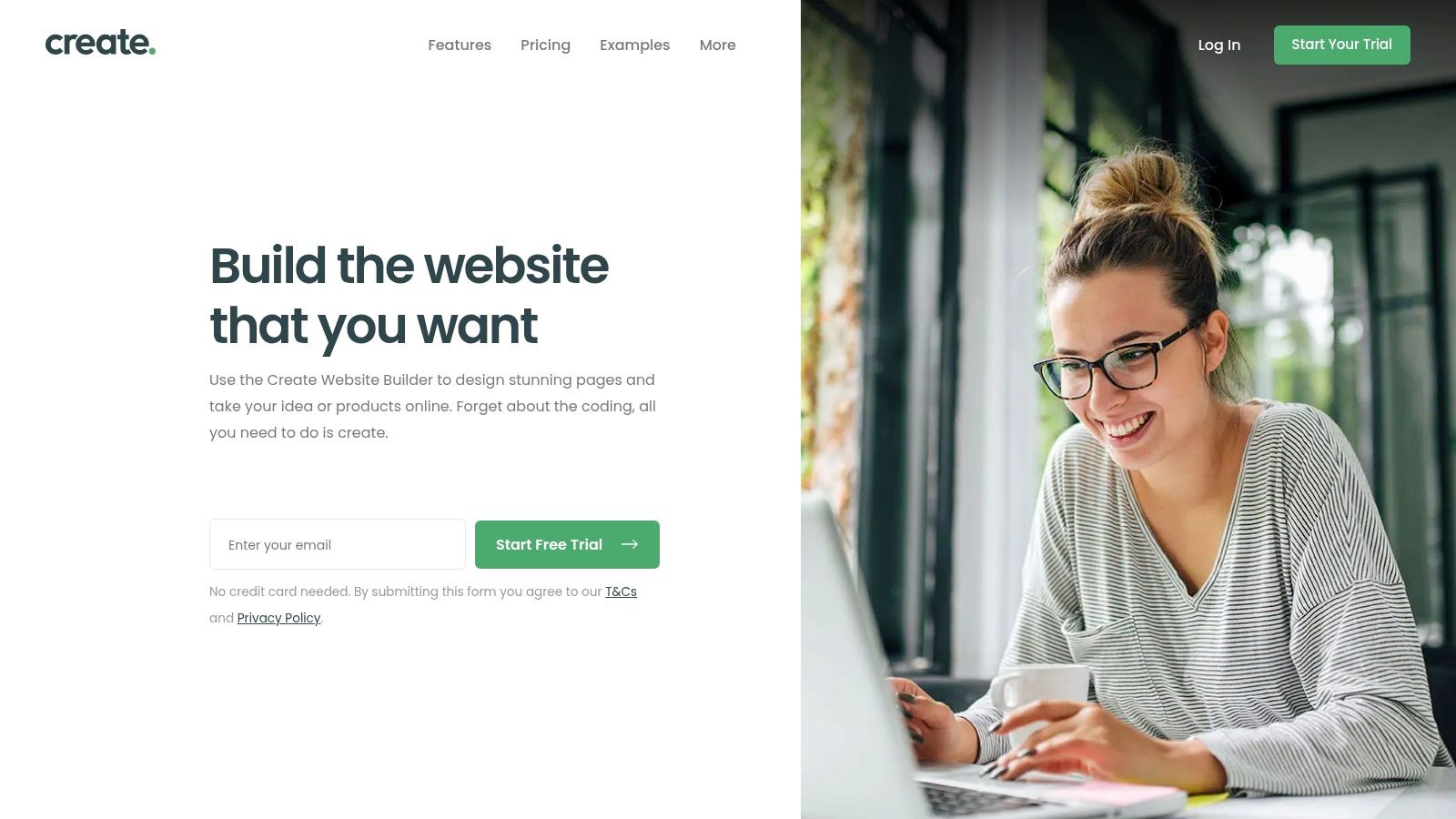
The platform offers a uniquely British focus, with carbon-neutral hosting and UK-based support, which is a significant advantage for local businesses. It handles security with included SSL certificates and provides practical tools like abandoned basket recovery and discount codes, making it a viable choice for those starting their online sales journey.
Key Considerations for UK Retailers
- Pricing: Create.net offers a very clear pricing structure, with plans starting from around £14.99/month for the ‘Website Builder’ and scaling up to ‘Shop Builder Pro’ at £49.99/month. There are no transaction fees, which is a major benefit for small-scale sellers.
- UK-Centric Features: A standout feature for UK sellers is the direct integration with Royal Mail Click & Drop, which streamlines the fulfilment process considerably. This focus on local logistics makes it an excellent choice for businesses primarily serving the domestic market.
- Simplicity vs. Extensibility: While its ease of use is a major pro, it comes with limitations. The platform has a much smaller feature set and fewer third-party integrations compared to global giants like Shopify. This makes it less suitable for businesses with complex needs or ambitious growth plans.
- Best For: Artisans, hobbyists, and new micro-businesses in the UK looking for the simplest, most affordable, and supportive start to online selling. It’s a fantastic contender for the best ecommerce platform small business owners can use when they prioritise ease of setup and UK-based support over advanced functionality.
Website: https://www.create.net
12. GoDaddy Online Store
GoDaddy Online Store is primarily known as a domain registrar and web host, but its website builder includes a competent ecommerce plan designed for simplicity and speed. It serves as an excellent entry point for very small businesses, sole traders in Dorset, or anyone wanting to get a small catalogue of products online with minimal fuss and investment. The platform combines website creation, marketing tools, and sales channels into one easy-to-manage dashboard.
The all-in-one nature means you don’t have to piece together different services. Hosting, security, and basic email marketing are built-in, making it a contender for the best ecommerce platform for a small business that prioritises a quick launch over deep functionality. Its multichannel sync with marketplaces like Amazon and eBay, plus social media platforms, allows merchants to manage listings from a single location.
Key Considerations for UK Retailers
- Pricing: The “Commerce” plan is competitively priced, often starting lower than dedicated ecommerce platforms. This includes website hosting, an SSL certificate, and built-in marketing tools. Be sure to check the latest UK pricing and transaction fees for GoDaddy Payments.
- Simplicity vs. Depth: The platform is incredibly user-friendly with a guided setup process. However, this simplicity comes at the cost of advanced features. Inventory management, reporting, and checkout customisation are more limited compared to platforms like Shopify or BigCommerce.
- Integrations: While it offers key integrations for social selling and marketplaces, its app ecosystem is not as extensive as its more specialised competitors. This can limit your ability to add complex functionality as your business grows.
- Best For: New businesses, artisans, or service providers with a small number of physical or digital products. It’s ideal for those who already use GoDaddy for domains and want a straightforward, low-cost way to start selling online without a steep learning curve.
Website: https://www.godaddy.com/en-uk
12 Small-Business Ecommerce Platform Comparison
| Platform | 👥 Target audience | ✨ Core features / USP (🏆) | ★ UX & support | 💰 Price / value |
|---|---|---|---|---|
| Shopify | 👥 SMEs → scale‑ups | ✨ Hosted storefronts, POS, huge App Store — 🏆 conversion‑optimised checkout | ★★★★☆ Reliable performance, strong partner network | 💰 Mid–high (apps/themes can add up) |
| WooCommerce | 👥 WordPress‑savvy SMEs & agencies | ✨ Open‑source flexibility, SEO/content control — 🏆 full customisation | ★★★★☆ Developer‑friendly; self‑hosted maintenance required | 💰 Variable (low core cost; extensions/hosting vary) |
| Wix eCommerce | 👥 Micro & very small retailers | ✨ Drag‑and‑drop builder, AI site/text creation | ★★★☆☆ Very fast setup; 24/7 support; template‑led | 💰 Low–mid (good for small catalogs) |
| Squarespace Commerce | 👥 Brand‑led SMEs & creators | ✨ Design‑forward templates & unified tools — 🏆 outstanding aesthetics | ★★★★☆ Simple, polished UX; less extensible | 💰 Mid (best for visual brands) |
| BigCommerce | 👥 Growth merchants, B2C & B2B at scale | ✨ Scalable SaaS, multi‑storefronts, no platform fees — 🏆 strong B2B features | ★★★★☆ 24/7 support; enterprise capability | 💰 Mid–high (plan thresholds tied to GMV) |
| Ecwid by Lightspeed | 👥 Sites needing bolt‑on commerce / social sellers | ✨ Embeddable cart, social & marketplace selling | ★★★☆☆ Simple admin; quick integration | 💰 Low entry (free tier); paid tiers for advanced features |
| Square Online | 👥 Cafés/retailers using Square POS | ✨ Native POS + online sync; pickup/delivery support | ★★★☆☆ Low friction for bricks‑and‑clicks | 💰 Low–mid (feature depth tied to paid plans) |
| ShopWired | 👥 UK SMEs & wholesale/trade sellers | ✨ UK VAT/shipping tools, native B2B pricing — 🏆 UK‑centric features | ★★★★☆ UK support & documentation | 💰 Mid (UK‑focused value) |
| EKM | 👥 Non‑technical merchants wanting hands‑on support | ✨ Managed onboarding, dedicated Ecommerce Manager | ★★★★☆ High‑touch support & migration help | 💰 Mid–high (managed service premium) |
| Bluepark | 👥 SMEs preferring built‑in features & UK hosting | ✨ Feature‑rich core platform, fast UK hosting | ★★★★☆ Reliable performance; local support | 💰 Mid (fewer add‑ons; storage limits apply) |
| Create.net | 👥 Very small retailers, makers, micro‑SMEs | ✨ Simple hosted builder, Royal Mail Click & Drop, carbon‑neutral hosting | ★★★☆☆ Easy to use; UK support on higher tiers | 💰 Low (transparent, fixed plans) |
| GoDaddy Online Store | 👥 Very small catalogues & quick starters | ✨ Fast launch, marketplace/social sync | ★★☆☆☆ Basic ecommerce features; fast setup | 💰 Low entry (limited depth) |
Making Your Final Choice: When to Go DIY vs. Hiring an Agency
We’ve journeyed through a comprehensive landscape of ecommerce platforms, from the all-in-one simplicity of Shopify and Wix to the boundless customisation of WooCommerce. You've seen how UK-specific contenders like EKM and ShopWired cater directly to local businesses, and how platforms like Square Online offer seamless integration for Dorset retailers with a physical presence. The sheer volume of choice can feel overwhelming, but the goal isn’t to find a single, universally perfect solution. The goal is to find the one that is perfect for you.
Choosing the best ecommerce platform for your small business is less about features on a spreadsheet and more about aligning technology with your unique business reality. It's about matching your ambition with your budget, your technical confidence with your available time, and your product catalogue with the most effective way to present it. A local artisan in Weymouth selling bespoke crafts has vastly different needs than a Portland-based B2B supplier with a complex inventory. Your final choice should feel like a natural extension of your brand, not a technical hurdle you have to constantly overcome.
Distilling Your Decision: Key Takeaways
Recapping our analysis, certain themes emerge. Platforms like Shopify, Squarespace, and Wix excel in user-friendliness and speed to market, making them ideal for startups or business owners who prioritise ease of use. In contrast, WooCommerce offers unparalleled freedom and scalability, but it comes with a steeper learning curve and a greater need for technical management. BigCommerce sits in a powerful middle ground, offering robust built-in features without the transaction fees that can frustrate growing businesses.
The decision often hinges on one critical fork in the road: your implementation strategy. Are you prepared to build and manage this vital business asset yourself, or is your time better spent focusing on your products, customers, and growth?
The DIY Path vs. the Agency Partnership
To help you make this final, crucial decision, consider which of these two paths resonates most with your situation.
The DIY (Do-It-Yourself) Route is likely for you if:
- You have time to learn: You're comfortable dedicating several hours per week, especially during the initial setup, to learning a new system, designing pages, and configuring settings.
- Your needs are standard: Your business model fits well within the templates and built-in features offered by platforms like Shopify, Wix, or Squarespace. You don't require complex custom functionality.
- Budget is the primary constraint: You need the most cost-effective way to get online, and you're willing to trade your time for lower upfront development costs.
- You enjoy the creative process: You have a clear vision for your brand and feel confident you can execute it using drag-and-drop builders and pre-made themes.
An Agency Partnership is the strategic choice if:
- Time is your most valuable asset: You recognise that your time is better spent on marketing, operations, and customer service rather than troubleshooting website plugins or coding issues.
- You need a competitive edge: You want a bespoke, conversion-optimised design that reflects your unique brand and doesn't look like a standard template. This is crucial for standing out in the bustling Dorset market.
- Your requirements are complex: You need specific integrations, custom features, advanced SEO implementation, or a scalable solution like WooCommerce that can grow with you without limitations.
- You want a long-term digital partner: You're looking for expert guidance not just on the build, but on secure hosting, ongoing maintenance, and digital strategy to ensure your online store thrives.
Ultimately, the platform you choose is the foundation upon which your digital future is built. Whether you opt for a user-friendly, all-in-one solution or invest in a custom-built powerhouse, making a well-researched, strategic decision now will pay dividends for years to come. You have the information; now it's time to build your success.
Ready to move beyond templates and build a powerful, custom ecommerce website that truly represents your brand? At DesignStack, we specialise in creating conversion-focused WordPress and WooCommerce sites for ambitious Dorset businesses, handling everything from design and development to hosting and support. Let's discuss how we can build the perfect platform for your success.