


How to Write Product Descriptions That Sell
You’ve launched the product page. The photos look sharp. The price is sensible. A few people add the item to basket, then sales stall.
That usually isn’t a product problem. It’s a description problem.
Online, your product description does the job a good in-store salesperson would do in person. It answers the buyer’s doubts, makes the product feel relevant, and helps someone decide whether to click “Add to basket” or keep browsing.
Why Your Great Product Is Not Selling Online
Many SME owners write product copy as if the customer is already convinced. They list the material, the dimensions, the colour, and maybe one generic line like “high quality and stylish”. That’s information, but it isn’t persuasion.
The customer is still left doing the hard work. They have to figure out whether the item fits their needs, whether it solves a problem, and whether they trust what they’re reading. Most won’t bother. They’ll leave.
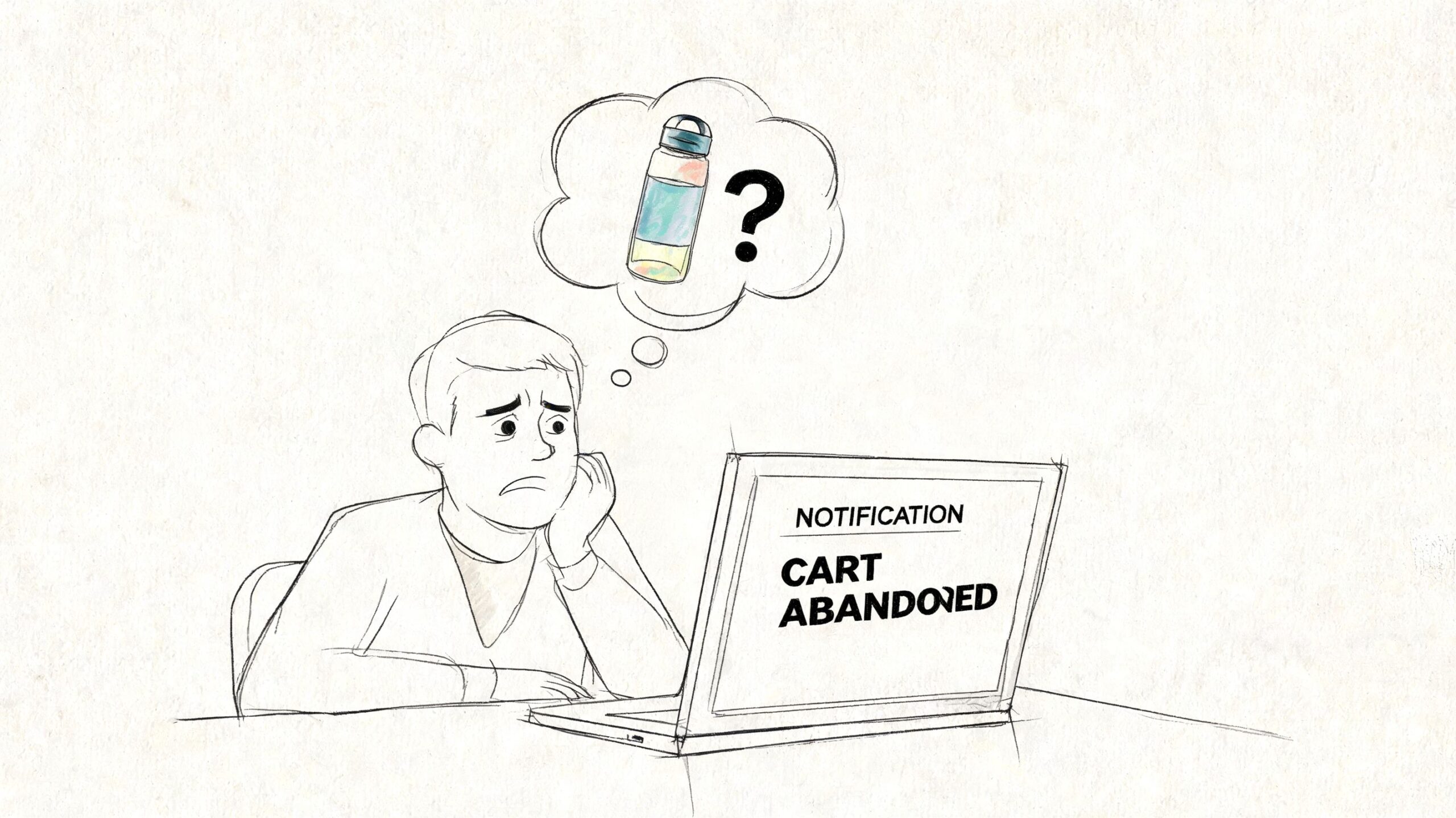
A hard truth sits behind that. Research indicates that up to 20% of online sales in the UK are lost due to inaccurate, incomplete, or missing product information, a loss equivalent to over £23 billion in potential revenue annually based on 2023 ONS data, according to Square’s guide to writing product descriptions.
That’s why learning how to write product descriptions that sell matters. Not because nicer wording looks professional, but because product pages either remove friction or create it.
What weak descriptions usually get wrong
A poor description tends to fail in one of three ways:
- It only lists features: “Ceramic mug, 350ml, dishwasher safe” tells the buyer what it is, not why they should care.
- It sounds copied from a supplier sheet: flat wording makes your shop feel interchangeable with every other store selling something similar.
- It hides useful details: buyers want clarity on use, fit, feel, care, and who the product is for.
A product page should answer the question the buyer is already asking, not the question the business wants to talk about.
If your online shop feels harder to convert than it should, this often sits alongside broader store issues like navigation, page speed, trust signals, and checkout flow. That’s why a wider review of your ecommerce setup helps, and this practical guide on running a successful online store is a useful companion read.
What selling copy actually does
Strong product copy does four jobs at once:
| Job | What it means on the page |
|---|---|
| Clarifies | It explains the product in plain English |
| Translates | It turns features into outcomes |
| Reassures | It reduces uncertainty before purchase |
| Motivates | It gives the buyer a reason to act now |
When those four things are in place, your product page stops behaving like a stock record and starts behaving like a sales tool.
Before You Write Know Your Customer and Core Benefit
Most weak product descriptions are written too early. The business opens WordPress or Shopify, clicks into the product editor, and starts typing before deciding who the page is trying to persuade.
That approach creates vague copy because the writer is guessing. Creating detailed buyer personas is foundational; descriptions written with specific audience psychology in mind achieve measurably higher conversion rates. However, 68% of small business owners skip this step, writing descriptions based on assumptions rather than data, as noted in FatJoe’s product description guide.
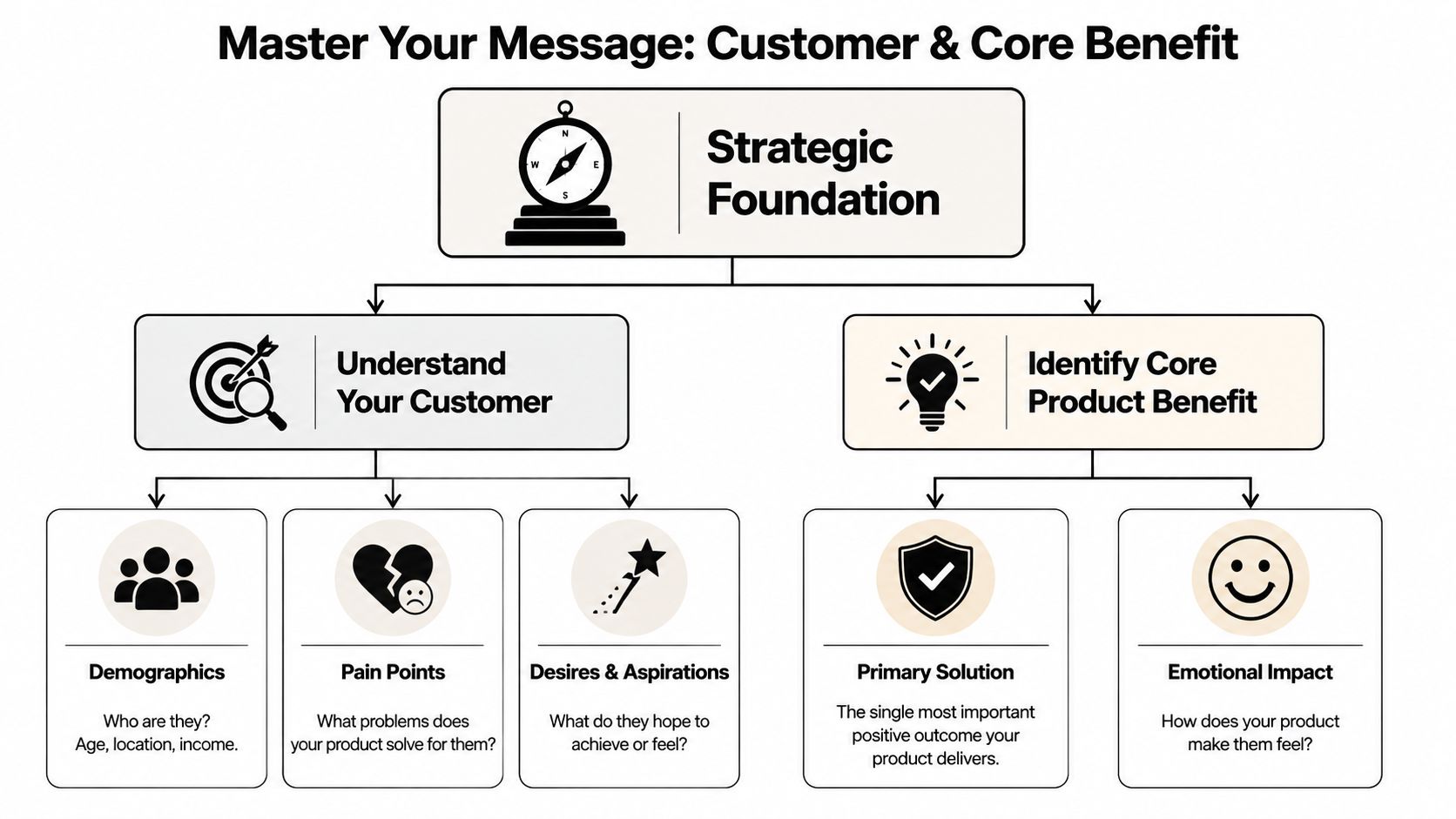
Build a simple buyer picture
You don’t need a long branding workshop to do this well. For most SMEs, one practical buyer profile per product range is enough to improve the writing.
Ask:
- Who is buying this: Is it a parent, office manager, tradesperson, gym-goer, gift buyer, or hobbyist?
- What are they trying to avoid: wasted money, poor fit, low durability, awkward setup, slow delivery, or something else?
- What matters more to them: price, convenience, appearance, performance, sustainability, or reliability?
- What language do they use: technical, casual, aspirational, or straightforward?
- What would make them hesitate: sizing uncertainty, compatibility, care instructions, or trust in the brand?
A Dorset retailer selling waterproof jackets, for example, might have one audience that cares about dog walks and school runs, and another that cares about weekend coastal hikes. Those are different motivations. The same jacket won’t be described in the same way for both.
Find the core benefit before the first sentence
Every product has many features, but it usually has one core benefit that should lead the description.
A coffee cup might have insulated walls, a leak-resistant lid, and a powder-coated finish. Useful, yes. But the core benefit could be much simpler: it keeps your drink hot on the commute without spilling in your bag.
Practical rule: if the buyer remembers only one thing from the product page, make sure it’s the main benefit, not the spec sheet.
A useful way to sharpen this is to finish the sentence: “This product helps the customer…” If the answer sounds flat, the page will sound flat too.
Turn features into benefits
Most copy improves fast when you start with the literal feature, then ask what it changes for the customer.
- Ergonomic handle becomes more comfortable to use for longer jobs
- Organic cotton fabric becomes softer against skin and easier to wear all day
- Double-wall insulation becomes keeps drinks hotter for longer during the morning commute
- Zip organiser pocket becomes stops cables and keys getting lost at the bottom of the bag
Here’s the difference in practice:
| Version | Example |
|---|---|
| Feature-led | “This desk lamp has an adjustable neck and warm LED bulb.” |
| Benefit-led | “Angle the light exactly where you need it and work in a softer glow that’s easier on the eyes during late evenings.” |
If you want a broader look at the buying triggers behind this kind of messaging, the psychology of selling guide is worth reading. It’s useful when you need to match wording to real customer motives rather than gut feel.
Proven Formulas for Structuring Your Description
A blank product editor is where people freeze. The easiest fix is to stop “writing freely” and use a repeatable structure. Good product descriptions don’t need to sound robotic, but they do need shape.
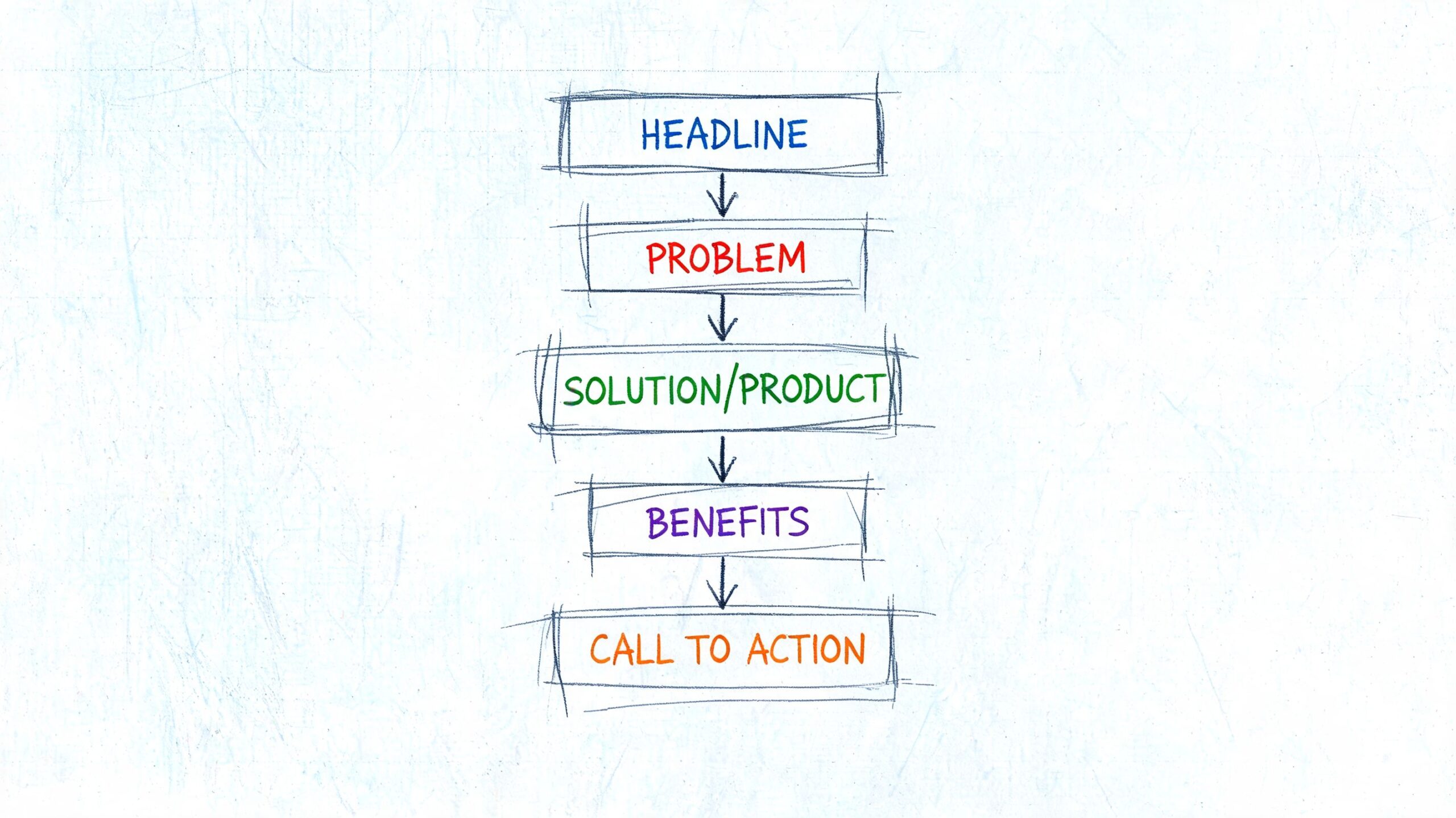
Formula one PAS for practical products
Problem, Agitate, Solve works well when the buyer already feels a frustration.
Take a reusable coffee cup.
- Problem: disposable cups leak, cool quickly, and don’t travel well
- Agitate: nobody wants coffee over their bag or a lukewarm drink before reaching the office
- Solve: your cup keeps drinks hotter and seals properly for commuting
A simple template looks like this:
- Name the irritation
- Show the consequence
- Present the product as the fix
- Add one or two supporting details
Example:
“Fed up with takeaway cups that go cold before the train pulls in? This reusable coffee cup keeps your drink hotter for longer and stays secure in your bag thanks to its leak-resistant lid. The easy-grip finish makes it comfortable to carry from kitchen to commute.”
This formula is strong for homeware, accessories, tools, storage, pet products, and everyday items.
Formula two Benefit Feature Proof
Some products need a calmer, more trust-led structure. Benefit, Feature, Proof is useful when the buyer wants confidence as much as excitement.
Using the same coffee cup:
- Benefit: enjoy a better commute coffee
- Feature: insulated body and secure lid
- Proof: include a customer observation or practical use case
Example:
“Enjoy a hotter, less messy coffee on the move. The insulated stainless steel body helps maintain temperature, while the secure lid reduces spills during travel. Customers often mention how easy it is to carry between the car, train, and office.”
This framework works especially well on Shopify and WooCommerce product pages because it fits neatly into a short opening paragraph followed by bullet points and review snippets.
For marketplace sellers, especially anyone comparing their own site with Amazon performance, this article on boosting CVR with Amazon descriptions gives useful context on how structure affects conversion in tighter listing formats.
Formula three Mini story plus specs
Some products need the buyer to imagine a moment of use. That’s where a short lifestyle scene helps.
Example:
“Built for rushed weekday mornings, this reusable coffee cup slips neatly into your bag, keeps your drink warmer on the commute, and feels good in the hand when you’re dashing for the train.”
Then follow with practical details:
- Capacity: 350ml
- Material: stainless steel interior
- Care: hand wash lid, cup body suitable for everyday use
- Use case: ideal for commuting, travel, and desk use
Don’t let the story swallow the facts. The buyer still needs the details that support a decision.
A short video walkthrough can also help teams see how these frameworks translate into real product-page writing:
Which formula should you pick
Use this quick rule of thumb:
| Product type | Best formula |
|---|---|
| Fixes an obvious annoyance | PAS |
| Needs reassurance and clarity | Benefit Feature Proof |
| Sells on lifestyle or routine | Mini story plus specs |
If your catalogue is large, build one of these into your product template. That’s easier to maintain in WordPress or Shopify than rewriting each listing from scratch with a different structure every time.
Choosing Persuasive Words and a Consistent Tone
Structure gets the description moving. Word choice is what gives it force.
There’s a big difference between “blue fleece jacket with zip pockets” and “soft fleece jacket with secure zip pockets for cold early starts”. One sounds like stock control. The other sounds like it belongs in someone’s life.
That difference matters. Descriptions using storytelling techniques and “power words” increase time-on-page by 47% and improve conversion likelihood by 12-15%, according to A/B testing data in Mailchimp’s guide to writing product descriptions.
What persuasive words actually do
They don’t make weak products magically desirable. They help the buyer feel the value faster.
Good persuasive language usually does one of four things:
- Signals ease: effortless, simple, practical, smooth
- Signals confidence: reliable, secure, trusted, proven
- Signals exclusivity or scarcity: limited, selected, signature, exclusive
- Signals sensory experience: soft, crisp, rich, lightweight, textured
The right category depends on the product. A local food brand might lean on sensory words. A workwear supplier might prioritise reliability. A gift retailer may use more emotional phrasing.
A quick comparison
Here’s how bland copy changes when the tone is more deliberate.
“100% cotton blanket in a neutral colour. Suitable for sofas and beds.”
That isn’t wrong. It just doesn’t help the buyer picture owning it.
Try this instead:
“A soft cotton blanket in a calm neutral shade that works just as well over the sofa as it does at the end of the bed. Easy to style, comfortable to use, and made for everyday cosiness.”
The second version still stays grounded. It doesn’t overclaim. It gives the product texture and context.
Keep the tone aligned with the brand
A common mistake is mixing voices across the same site. One product sounds premium, the next sounds chatty, and another reads like a wholesaler’s catalogue. That inconsistency weakens trust.
A useful rule is to define your tone in three words. For example:
- Practical, clear, reassuring
- Warm, stylish, considered
- Expert, direct, dependable
Then test every line against those words.
If you sell power tools, “sleek and dreamy” probably won’t fit. If you sell handmade candles, “industrial-grade performance” will sound odd. Tone needs to match both the brand and the buyer.
Word bank you can actually use
Keep a small internal list for your team.
- For comfort products: soft, supportive, breathable, gentle, cosy
- For durable products: sturdy, tough, hard-wearing, dependable
- For convenience-led products: quick, easy, grab-and-go, compact
- For premium products: refined, considered, signature, beautifully made
Use them sparingly. If every sentence is packed with “luxurious”, “ultimate”, and “premium”, the page starts sounding inflated. One strong phrase beats five generic superlatives.
Formatting Descriptions for SEO and Mobile Shoppers
Even well-written copy can underperform if it’s hard to scan. On most ecommerce sites, buyers don’t read line by line. They look for the one thing they care about, then decide whether the rest of the page is worth their attention.
That’s why layout matters. With 55% of UK mobile shoppers scanning rather than reading full paragraphs, scannable formatting using bullets and short sentences is critical to retaining attention and driving conversions, according to Squarespace’s product description advice.
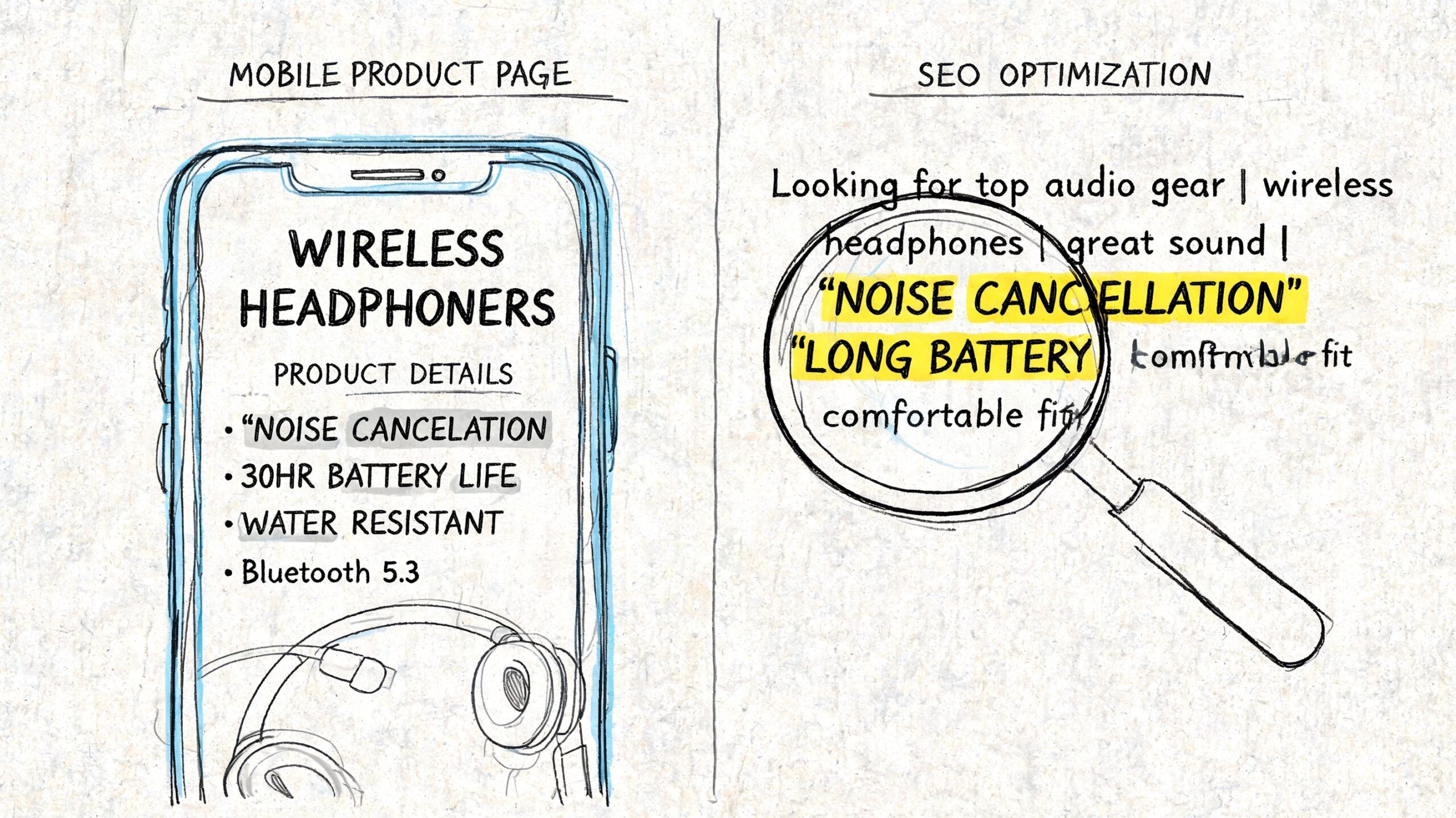
Formatting checklist for product pages
If you’re editing products in WooCommerce, Shopify, or another modern platform, keep the page structure simple:
- Lead with the main benefit: put the strongest value point in the first sentence
- Use short paragraphs: two or three sentences is usually enough on product pages
- Add bullet points for key details: material, size, care, fit, compatibility, delivery notes
- Use bold sparingly: highlight the buyer’s key decision points, not every other word
- Break up long descriptions: add spacing so mobile users don’t face a wall of text
If the page looks tiring on a phone, it will underperform on a phone.
Where SEO fits without ruining the copy
SEO for product descriptions should feel natural. You’re not writing for an algorithm alone. You’re helping search engines understand the page while keeping the wording useful for buyers.
Place your primary keyword in sensible locations:
| Page element | Good use |
|---|---|
| Product title | clear, descriptive product name |
| Opening sentence | natural mention of the item and benefit |
| Subheadings | use category or use-case phrases where relevant |
| Bullet points | include specific product terms naturally |
| Image alt text | describe the product plainly and accurately |
If you’re reviewing your wider on-page setup as well as the product copy itself, this guide to search engine optimisation services gives useful context on how content and technical SEO should support each other.
In practice, “waterproof dog walking jacket” is better than stuffing “waterproof jacket UK best waterproof jacket for walking” across the page. Search visibility improves when the product page is clear, specific, and helpful.
Advanced Tactics Testing and Future-Proofing Your Copy
Once the basics are solid, the next gains usually come from trust signals and testing.
One of the easiest wins is to bring customer voice onto the product page itself. Add a short review excerpt below the opening copy if it answers hesitation. If buyers often mention fit, comfort, or ease of use, surface that language close to the main description rather than hiding it in a tab lower down.
Use reviews to strengthen the sales argument
Don’t just paste praise anywhere. Match the review to the buying objection.
- If buyers worry about fit, feature a review that mentions sizing clarity.
- If they worry about quality, use a comment about durability after real use.
- If they worry about practicality, highlight a review that mentions day-to-day convenience.
That approach works because it feels specific. It also reduces the gap between brand claims and customer experience.
Write for voice search and AI summaries
Many product pages continue to fall short. UK voice commerce is projected to reach £40 billion by 2026. Optimising descriptions for conversational queries like “best waterproof jacket for Dorset hikes” can boost conversions by 20% among key demographics, yet only 15% of UK eCommerce sites currently do so.
So don’t optimise only for short keywords. Add natural phrases that match how people speak.
Try these adjustments:
- Answer real questions: include lines such as “Is this jacket suitable for coastal walks and wet commutes?”
- Use conversational wording: write in the language a person would say to Alexa or Siri, not just what they would type
- Add context to use cases: mention where, when, and how the product gets used
Test one change at a time
If you update everything at once, you won’t know what improved results. Test one meaningful variable per round, such as:
- a benefit-led opening versus a feature-led opening
- bullet-first format versus paragraph-first format
- review snippet near the top versus lower on the page
For anyone measuring product-page performance properly, a solid analytics setup matters as much as the copy. This guide to Google Analytics 4 mastery is useful if you want cleaner reporting on page behaviour, product engagement, and conversion paths.
The practical next step is simple. Pick five products that get traffic but don’t convert as well as they should. Rewrite those first. Measure what changes. Then roll the winning pattern across the rest of the catalogue.
If your ecommerce site needs more than better wording, DesignStack helps UK businesses create conversion-focused WordPress websites, ecommerce builds, and supporting SEO that turn product pages into stronger sales assets.


Leave a Reply