


UK Ecommerce Website Design Cost 2026 A Small Business Guide
So, you're wondering what it costs to build an ecommerce website in the UK. The honest answer is: it depends. A professional, bespoke online shop typically costs between £4,000 and £8,000, but you can get started with a template-based site for as little as £500. The final figure all comes down to the complexity, features, and level of customisation your store needs.
Your Quick Guide to Ecommerce Website Costs in 2026
Trying to pin down a firm price for an ecommerce website can feel like trying to nail jelly to a wall. You'll see quotes ranging from a few hundred pounds for a do-it-yourself job to tens of thousands for a high-end, custom-built system. That’s because a website isn't an off-the-shelf product; it's a blend of services, technology, and creative expertise.
A helpful analogy is to think of it like building a house. You could buy a prefabricated shed (a simple template site), commission a custom-designed family home (a professional agency build), or plan a sprawling commercial complex (an enterprise-level system). Each serves a very different need and, naturally, comes with a very different price tag.
To give you a clearer picture, we've broken down the typical project scopes and their estimated costs for UK small businesses in this table.
At-a-Glance Ecommerce Website Cost Tiers (UK 2026)
| Project Tier | Typical Cost Range | Best For | Key Features |
|---|---|---|---|
| Starter / DIY | £500 – £2,000 | Startups, hobbyists, or businesses testing a new idea. | Template-based design, basic product pages, standard payment gateways. |
| Small Business Professional | £4,000 – £8,000 | Established SMEs ready to grow sales with a polished, unique site. | Custom design, brand alignment, SEO foundation, key integrations. |
| Advanced Custom | £8,000 – £20,000+ | Growing businesses needing complex features or high-volume sales. | Custom functionalities (e.g., subscriptions), CRM/ERP integration, advanced analytics. |
This table should help you identify where your business fits. A starter site is great for getting your foot in the door, but a professional build is where you start seeing serious returns on your investment.
Understanding the Price Tiers in More Detail
That £4,000 to £8,000 range is the sweet spot for most small to medium-sized businesses looking for a professional job from an agency. For stores requiring more advanced features, that figure can easily climb towards £15,000. This bracket usually gets you the essentials done right: a unique design that works flawlessly on mobile, all your core pages set up, and a solid SEO foundation to help customers find you.
A poor user experience is a guaranteed way to lose customers at the checkout, so this initial investment is crucial. If you're looking for a wider overview of general site costs, this guide on how much a small business website costs is a great resource.
This is exactly why we champion a fixed-cost model at DesignStack. It cuts through the uncertainty of spiralling hourly rates. You know the total investment upfront—including design, development, and even post-launch support—which makes budgeting so much simpler.
Here’s a quick breakdown to help you see where your project might land:
DIY & Starter Tier (£500 – £2,000): This is the domain of platforms like Shopify or Wix, where you use pre-made templates. It's perfect for absolute beginners, hobbyists, or anyone testing a new business idea on a tight budget.
Small Business Professional Tier (£4,000 – £8,000): This is our heartland. It’s for established businesses that are ready for a serious, conversion-focused website. This usually means working with an agency to create a custom solution, often using a powerful and flexible combination like WordPress and WooCommerce.
Advanced Custom Tier (£8,000 – £20,000+): This is for businesses scaling up. You might need complex integrations with your stock management system, custom features like a subscription model or a booking engine, or a complete brand and design overhaul. The sky's the limit here.
The Core Cost Drivers: What Are You Actually Paying For?
When you get a quote for a new ecommerce website, the final figure can feel a bit abstract. It’s often hard to see exactly where your money is going. But that price tag isn't just one big number; it's a combination of several distinct, critical services that come together to build your online store.
Understanding these core cost drivers helps you have much better conversations with agencies. You can see the value behind the numbers and really grasp where your investment is being channelled.
Think of it like commissioning a kitchen renovation. You’re not just paying for the finished room. You’re paying for the quality of the cabinetry, the skill of the fitter, the complexity of the plumbing and electrics, and the durability of the worktops. An ecommerce website design cost works the same way—it’s a blend of creative design, technical development, strategic setup, and powerful content.
This hierarchy shows how projects scale, from a simple DIY site to a fully bespoke, agency-led build. As the investment grows, so does the level of customisation and the potential of the final product.
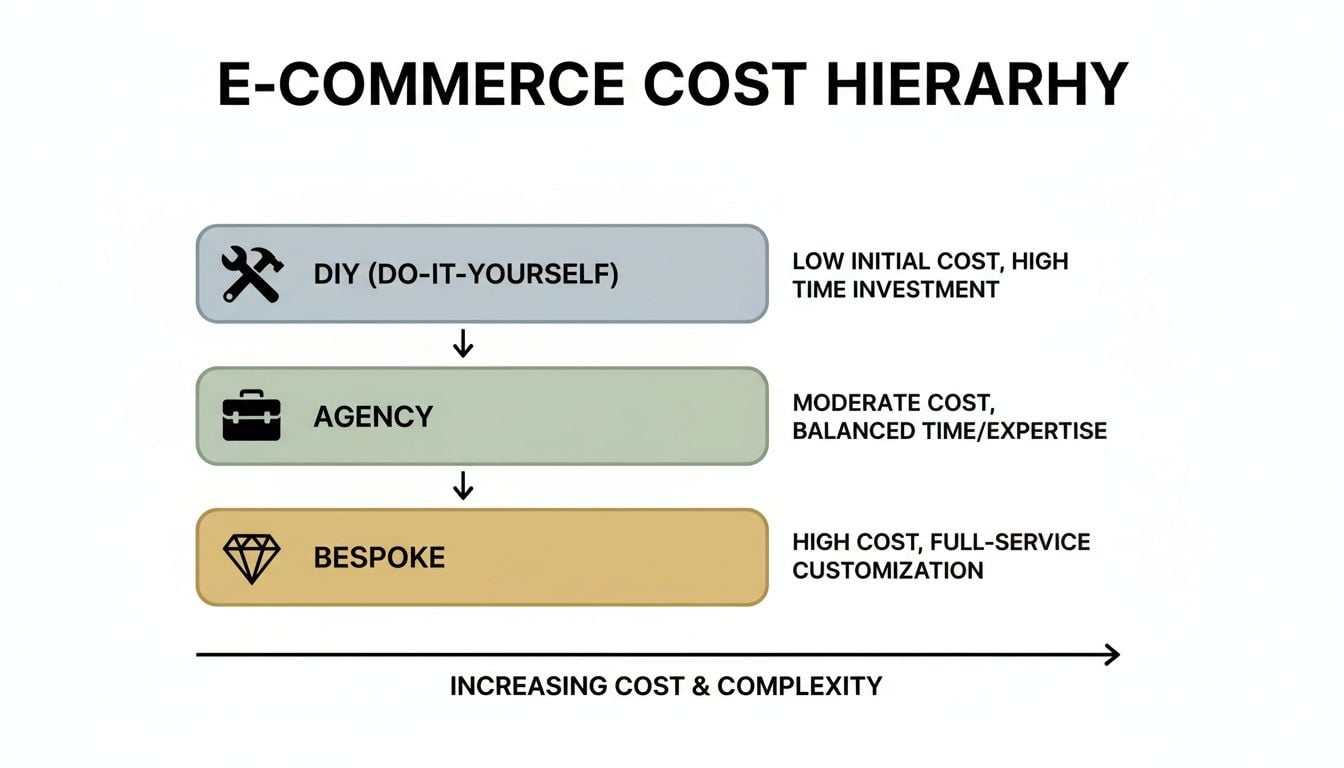
As you can see, moving up from DIY tools to a professional agency build requires a bigger budget, but the trade-off is a higher-calibre, tailor-made store built for growth. Let's break down the five main elements that make up that investment.
The Big Five Cost Drivers
Your total budget will be shaped primarily by these five areas. Each one is a lever you can pull—scaling it up or down depending on your business goals and what you need your site to achieve.
1. Design (Custom vs. Template)
A huge chunk of the cost lies in the design itself. A pre-made template is the most budget-friendly starting point. Think of it like an off-the-peg suit: it’s quick and does the job, but it might not fit your brand perfectly or create a memorable experience for your customers.
A custom design, on the other hand, is the Savile Row equivalent. It's built from the ground up, specifically for your business, your brand, and your ideal customer. Every colour, button, and user journey is meticulously planned to guide visitors towards a sale.
2. Platform Choice and Development
The platform you build on is the very foundation of your store. Hosted platforms like Shopify are popular for their simplicity, which comes with a recurring monthly fee. On the other side, you have open-source solutions like WordPress with WooCommerce, which offer complete ownership and almost limitless flexibility.
Development costs cover all the technical work: installing and configuring the platform, writing the code for custom features, and making sure the site is fast, secure, and looks great on any device.
3. Features and Third-Party Integrations
This is where your store’s functionality truly comes to life. Do you just need a simple Stripe or PayPal button? Or do you need a more complex system that connects with your accounting software like Xero, your CRM, or a warehouse inventory system? Every connection and feature adds a layer of technical complexity and, therefore, cost.
Features are the tools that make your store actually work. The basics include product pages and a shopping cart, but if you need things like subscription boxes, a booking calendar, or multi-language support, the development time and project cost will naturally increase.
4. Content and Product Assets
An ecommerce site is just an empty shell without high-quality content. This means compelling product descriptions that sell, professional photography that shows your products at their best, and brand stories that connect with customers.
You can, of course, create all this yourself to keep costs down. However, many business owners find that investing in professional copywriting and photography pays for itself many times over. A site filled with blurry phone pictures and thin descriptions can actively harm sales, which is a perfect example of the hidden costs of cheap website design.
5. Initial SEO Setup
A beautiful, functional website is completely useless if nobody can find it. Foundational Search Engine Optimisation (SEO) is not an optional extra; it's a vital part of any professional launch.
This initial work involves researching the keywords your customers are searching for, optimising your page titles and meta descriptions, creating a logical URL structure, and submitting your sitemap to Google. It’s what gets your site on the map from day one, laying the groundwork for all future organic growth.
Why A Custom Design Is A Worthwhile Investment
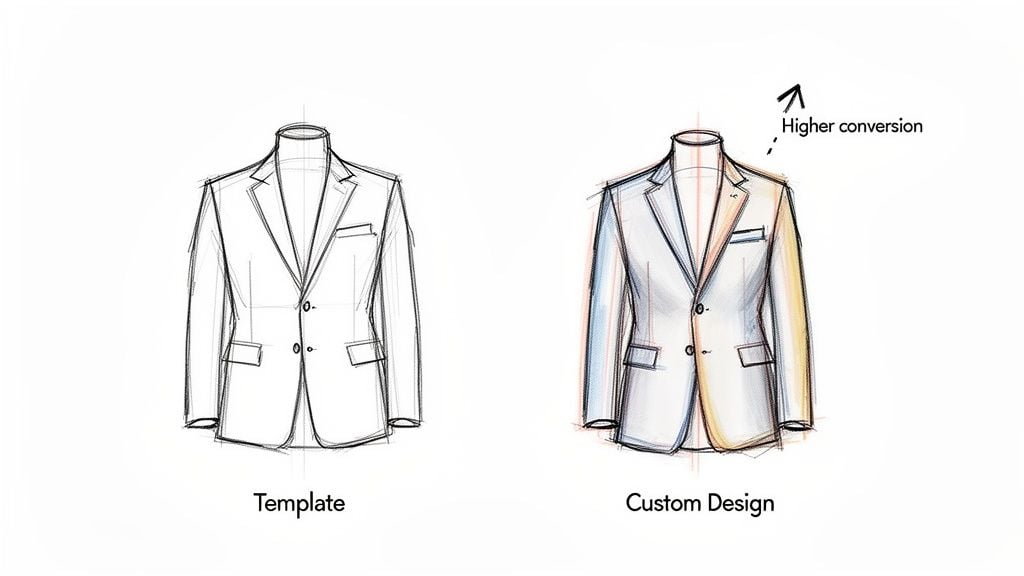
It’s easy to see the lower upfront cost of a generic website template and assume it's the smartest financial move. But treating a custom design as a pure expense is a fundamental mistake. It’s a direct investment in your business’s future, one that’s built from the ground up to deliver real returns through more sales and happier, more loyal customers.
Think of it like this: you can buy a suit off the rack, or you can have one tailored. The off-the-rack suit (your template) might fit okay and get the job done. But a tailored suit (your custom design) is made to fit you perfectly. It makes you look sharper, feel more confident, and leaves a lasting impression. Your website is your digital storefront, and you only get one chance to make a first impression.
From First Click To Final Sale
A professionally built website does far more than just look pretty. Its success hinges on two core ideas that work hand-in-hand: User Interface (UI) and User Experience (UX).
- User Interface (UI): This is the visual layer—the colours, fonts, buttons, and images. A strong UI makes your brand look professional and trustworthy.
- User Experience (UX): This is the feeling a person gets when they use your site. Is it easy? Is it enjoyable? Great UX guides a visitor from browsing to buying without any friction.
When these two elements are dialled in, they create a smooth journey that actively encourages people to complete their purchase. A confusing menu, slow-loading pages, or a clunky checkout are guaranteed ways to lose sales.
The link between good design and revenue is startlingly direct. In fact, a poor user experience is one of the main reasons customers abandon their shopping carts. So, investing in a professional ecommerce website design cost isn't about vanity; it’s about plugging the leaks in your sales funnel.
A landmark study revealed that 88% of online shoppers are less likely to return to a website after a bad experience. This means a poorly designed site doesn't just fail to win new customers—it actively pushes away the ones you already have, sending them straight to your competitors.
An Actionable Checklist For A Better User Experience
So, how do you improve that all-important user experience? It doesn't always require a complete overhaul. Here are five practical steps you can discuss with your designer to help boost conversions:
- Simplify Your Navigation: Your main menu should be crystal clear. A customer should be able to find any product category in three clicks or less.
- Optimise Product Pages: Use high-quality photos from multiple angles, write descriptions that sell the benefits, and make your "Add to Cart" button stand out.
- Streamline Your Checkout: Get rid of any unnecessary steps or form fields. Always offer a guest checkout option to reduce friction for first-time buyers.
- Prioritise Mobile Performance: Your site has to be flawless on a smartphone. Is it fast? Can you read the text easily? Are the buttons simple to tap? A huge chunk of your traffic will come from mobile.
- Use Clear Calls-to-Action (CTAs): Every page needs a purpose. Tell your visitors what to do next with action-focused text like "Shop Now," "Explore the Collection," or "Buy Today."
Focusing on these areas transforms your website from a simple online brochure into a hard-working sales machine. Of course, finding the right partner to help you do this is key. For more on that, take a look at our guide on how to find a website designer who understands your vision.
The True Cost Of A Memorable Brand
Beyond the immediate sales impact, a custom design gives you a unique brand identity that sticks in your customers' minds. A template-based site will almost always look generic, blending in with thousands of other online stores. A custom site, on the other hand, becomes a true digital extension of your brand’s story and values.
The costs involved in a proper design process—from initial wireframes to the final visual branding—are an investment in making your business different. In the UK, a custom UI/UX design for the key pages of an ecommerce site can range anywhere from £2,000 to over £10,000, with larger, more complex builds costing more.
While that might seem like a big number, it prevents the even costlier redesign that often happens when a business inevitably outgrows its basic template. This is a common growing pain we see with many SMEs. As covered in this analysis of ecommerce development costs in the UK from DigitalSuits, this upfront investment ultimately pays for itself by creating a brand experience that builds trust and encourages repeat business, turning one-time buyers into loyal fans.
Budgeting For The Long Term: Hosting, Maintenance, And Growth
Getting your new website live is a brilliant milestone, but it's the starting gun, not the finish line. That initial ecommerce website design cost is just one piece of the puzzle. To run a truly sustainable online business, you have to plan for the ongoing costs that keep your digital shopfront secure, fast, and ready to grow.
Think of it like owning a high street shop. Once you've paid for the initial fit-out, you've still got rent, utilities, and security to cover every month. It’s the exact same in the digital world; these costs just have different names, like web hosting, maintenance, and future updates. The trick is to see them as predictable running costs, not unpleasant surprises.
Breaking Down Your Ongoing Digital Expenses
To plan your budget properly, you need to know what you’re paying for. Some of these costs pop up monthly, others annually, but they’re all vital for keeping your store online and running like a well-oiled machine.
Here are the key long-term costs you’ll need to factor in:
- Web Hosting: This is essentially the 'rent' you pay for your website's plot of land on the internet. For most small to medium-sized businesses, you can expect to pay somewhere between £150 and £250 annually for solid, reliable hosting that won’t buckle under pressure.
- Platform and Plugin Fees: If you’re on a platform like Shopify, this will be your monthly subscription. For WordPress and WooCommerce sites, you’ll likely have annual fees for the premium plugins that provide your site with its most powerful features.
- SSL Certificate: This is the little padlock in the browser bar that encrypts your customers' data. It's an absolute must-have for building trust and security. While often bundled with hosting packages, premium certificates can be an additional annual cost.
- Maintenance Plan: Think of this as your website’s insurance policy. A good plan covers all the crucial software updates, security scanning, and regular backups. Skipping this is a huge gamble that can lead to hacks or site crashes, which are always far more expensive to fix than the maintenance plan would have been.
Planning For Growth And Future Features
Your business isn't going to stand still, and your website shouldn't either. A well-built site is a scalable asset, meaning you can plan for future improvements as your business thrives.
Budgeting for growth isn't about spending more; it's about investing strategically. By setting aside a small portion of your revenue for site enhancements, you can add new features, improve user experience, and scale your hosting as your traffic grows, ensuring your website continues to be a powerful sales tool.
For example, after a year of solid trading, you might decide it’s time to add a customer loyalty programme, integrate a 'buy now, pay later' option, or launch a subscription box service. By anticipating these kinds of developments, you can work with your agency to phase in new features without needing a massive, one-off investment. When choosing your initial platform, it's vital to pick one that can grow alongside you. You can check out our comprehensive review of popular website content management systems to help with that decision.
UK-wide data shows ongoing expenses can range from £400 to over £8,000 a year for huge, custom-built solutions. However, for the small and medium-sized Dorset businesses we work with, these costs are far more manageable and slot perfectly into the fixed-cost model we offer. To dig deeper into the data for e-commerce costs, you can learn about the latest findings from SigmaSolve's research.
Actionable Steps To Control Your Ecommerce Website Costs
Knowing what drives the cost of an ecommerce website is one thing. Actually controlling it is another. But with a bit of strategy, you can make your investment work much harder and get a brilliant online shop without the budget spiralling out of control.
It's all about shifting your mindset. Instead of seeing the project as a long list of expenses you have to pay, think of it as a series of smart choices you can make. This practical approach gives you the clarity and confidence to manage your project properly.
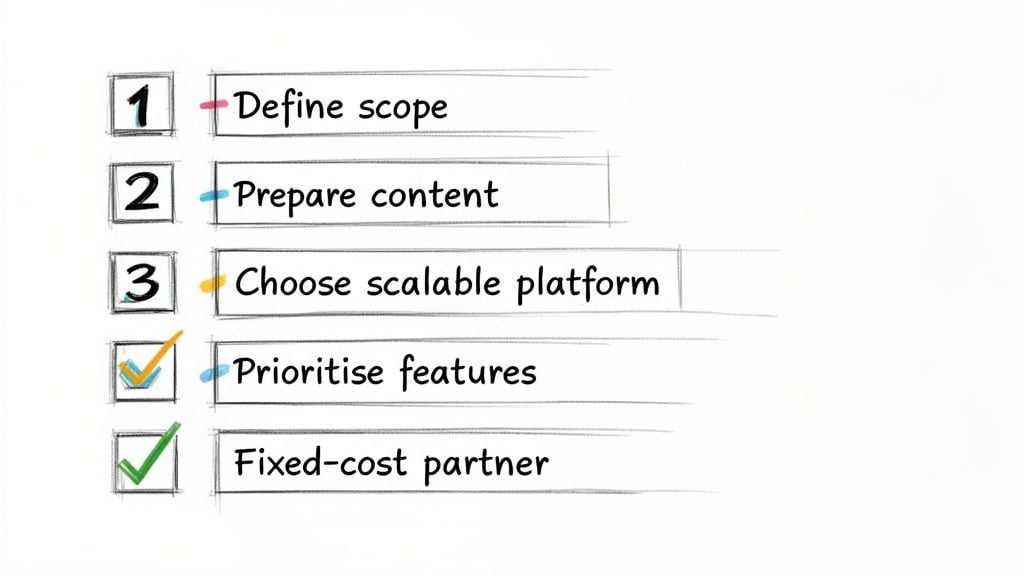
An Actionable 5-Step List to Control Your Budget
To keep your spending firmly on track, follow these five steps. It’s all about making smart, informed decisions at every stage of the build.
- Define Your Scope: Write down the absolute essential features you need for launch day. What must the site be able to do to start making sales? Create a list of "must-have" features (e.g., secure payments, product pages) and a separate "nice-to-have" list (e.g., customer accounts, blog). Focus your initial budget on the must-haves.
- Organise Your Assets: Get a folder and fill it with all your final product images, descriptions, and brand files. Having everything ready to go from the start saves a surprising amount of time and money, as your agency won't need to chase you or create content from scratch.
- Choose a Scalable Platform: Go for a system that can grow with you, like WordPress with WooCommerce. This lets you start with the basics and bolt on more advanced functions later, avoiding a painful and expensive replatforming project. Remember, beyond the build, ongoing website design and hosting costs are also a key part of the long-term picture.
- Launch in Phases (MVP Approach): Don't fall into the trap of trying to build your ultimate "dream site" in one go. Focus on launching a Minimum Viable Product (MVP)—a solid, professional site that gets you trading. You can then reinvest profits into a second phase for those more advanced features.
- Partner for a Fixed Cost: Work with an agency like DesignStack that offers fixed-cost packages. This completely removes the risk of spiralling costs and surprise invoices, giving you total certainty over your budget from the very beginning.
The best website projects are always partnerships. By preparing your content and defining your scope, you’re not just saving money—you’re freeing up your design partner to focus on what they do best: building a website that delivers real results for your business.
Create A Crystal-Clear Project Brief
Before you even think about talking to a designer, the single best way to keep costs in check is to define exactly what you need. A vague idea like "I need a new online shop" is a recipe for disaster. It leaves far too much open to interpretation, which almost always leads to scope creep and a bigger final bill.
Instead, write it all down in a detailed brief. This isn't a formal exam; it’s a simple document outlining your goals, who you’re selling to, and most importantly, your list of "must-have" features versus "nice-to-have" ones. This little bit of homework forces you to prioritise and gives any agency a solid understanding of the project from day one.
Prepare All Your Content In Advance
Believe it or not, a huge chunk of an agency's time—and your money—can be soaked up by chasing down content, editing text, or creating things from scratch. You can slash this cost by getting all your assets ready before the project kicks off.
This means gathering all the raw materials for the site. We’re talking about final product descriptions, high-quality product photos, your company logo, the 'About Us' story, and any other words or images. When you hand this over as a complete, organised package, you make the entire build process smoother, which saves on billable hours and gets you trading faster.
Why Fixed-Cost Pricing Is Your Safest Bet
Let's be honest: one of the biggest worries when commissioning a new website is the budget. You get a quote, but in the back of your mind, you're wondering if that initial figure will slowly creep up, turning into a much bigger, scarier number. It’s a real fear, and it’s why a fixed-cost pricing model is almost always the best way to go.
Unlike billing by the hour, where every email, phone call, or small change can add to the final invoice, a fixed-cost agreement gives you total clarity from the start. You know exactly what you're paying, which lets you budget properly and avoids that dreaded 'scope creep' that can derail a project.
The Problem With Hourly Billing
Imagine you’ve hired a builder to refit your shop. They give you a rough estimate, but as they start working, they find unexpected problems or communications take longer than planned. The hours start piling up, and suddenly your budget is completely blown.
This is exactly what can happen with hourly billing in web design. Small delays, a few extra rounds of feedback, or a technical snag can quickly inflate the cost. You’re then left with a horrible choice: pay more than you planned or cut corners on the website you need. It can also create an awkward dynamic where the agency earns more the longer the project takes, which isn’t always in your best interest.
The Power of A Fixed-Cost Partnership
A fixed-cost proposal changes the entire relationship. It’s no longer just about paying for time; it’s about your agency committing to deliver a specific outcome for an agreed price. It turns the project into a genuine partnership.
This approach gives the agency every reason to work efficiently and creatively to get you the best result within the agreed budget.
With fixed-cost pricing, the focus shifts from tracking hours to achieving milestones. It ensures your agency is invested in delivering a finished product that grows your business, not just billing for their time.
This model gives you peace of mind. You can talk freely with your design team without watching the clock, fostering a much more collaborative and creative process. But to make sure you’re properly protected, you need to know what to look for in the proposal itself.
What A Good Fixed-Cost Proposal Includes
Not all fixed-cost quotes are the same. A transparent and professional proposal will set out every last detail to make sure there are no surprises down the line. Here’s a checklist of what you should expect to see:
- A Detailed Project Scope: The document should clearly define what’s included and, just as importantly, what’s not. This should cover everything from the number of pages to specific features like payment gateways or booking systems.
- A Set Number of Revisions: A good partner, like DesignStack, will include a specific number of design revisions in the price. We offer three as standard, which gives you plenty of opportunity to give feedback without being charged extra.
- Defined Post-Launch Support: The agreement should lay out a period of support after the site goes live to handle any bugs or minor tweaks. This is your safety net to ensure everything runs smoothly once your customers start using it.
- Clear Milestones and Timelines: A professional proposal will break the project into clear phases with target dates. This way, you always know what’s happening and when to expect the next stage to be completed.
By insisting on a clear, comprehensive fixed-cost proposal, you’re not just managing your budget—you’re protecting your investment. It removes the financial stress and lets you focus on the exciting part: launching a brilliant website that will help your business thrive.
Frequently Asked Questions
It's completely normal to have questions when you're looking into building an online shop. The costs, the timelines, the tech—it can feel like a lot. To help clear things up, here are the answers to a few questions we hear all the time from UK business owners.
How Long Does It Take To Build An Ecommerce Website?
This really comes down to the level of customisation you need. If you're using a simple, off-the-shelf template, you could be looking at a launch in as little as 2-4 weeks.
But for a professional ecommerce site, built from the ground up to reflect your brand and work exactly how your business operates, you should plan for 6 to 12 weeks. That extra time is crucial. It gives us room for proper discovery, a truly bespoke design process, careful development, and rigorous testing to make sure everything works perfectly from day one.
Is WordPress A Good Choice For An Ecommerce Website?
Without a doubt. When you combine WordPress with the WooCommerce plugin, you get an incredibly powerful and flexible platform. In fact, it runs over 30% of all online stores in the world for good reason.
For a growing business, the benefits are huge:
- No Creative Limits: You’re never boxed in by what the platform thinks you should do. If you can imagine it, it can be built.
- You Own Everything: Your website, your customer data—it’s all yours. That gives you total control and peace of mind.
- It Grows With You: The system scales beautifully, whether you're selling ten products today or ten thousand next year.
The big difference is that you're not locked into a proprietary system. That freedom is why we see it as such a smart long-term investment.
Do I Really Need To Pay For Ongoing Website Maintenance?
Yes, absolutely. Think of it like the annual MOT and service for your car—you wouldn't skip it and hope for the best. Website maintenance is what keeps your online store secure, fast, and healthy.
Neglecting your website doesn't save you money. It just means that when something does go wrong—a security breach, a data loss, or a site crash—the fix will be far more disruptive and expensive than a simple monthly maintenance plan.
This isn't just about busywork. It’s proactive care that involves updating plugins to patch security holes, running regular backups, and making sure your site stays quick and dependable for your customers.
What Is The ROI On A Professionally Designed Ecommerce Website?
While the exact numbers will change from one industry to another, the return you get from a professionally built site is massive. A better user experience has a direct and measurable impact on your bottom line—it pushes up conversion rates, increases the average order value, and encourages customers to come back.
Even something as simple as smoothing out the friction in your checkout process can slash your abandoned cart rate. A professional website isn't just another business expense; it's one of the most powerful investments you can make, paying for itself again and again through more sales and a stronger brand.
Ready to invest in an ecommerce website that delivers real results, without the guesswork on costs? At DesignStack, we build our projects on a fixed-cost basis, giving you complete clarity from the start. Get in touch with us today for a clear, no-obligation quote.
Leave a Reply